

Also available in e-book format:

Amazon Kindle

Google Books

Snapplify Reader
Grasses of East Africa
TAKE A CLOSER LOOK
| Author: | Dino J. Martins |
|---|
R400.00
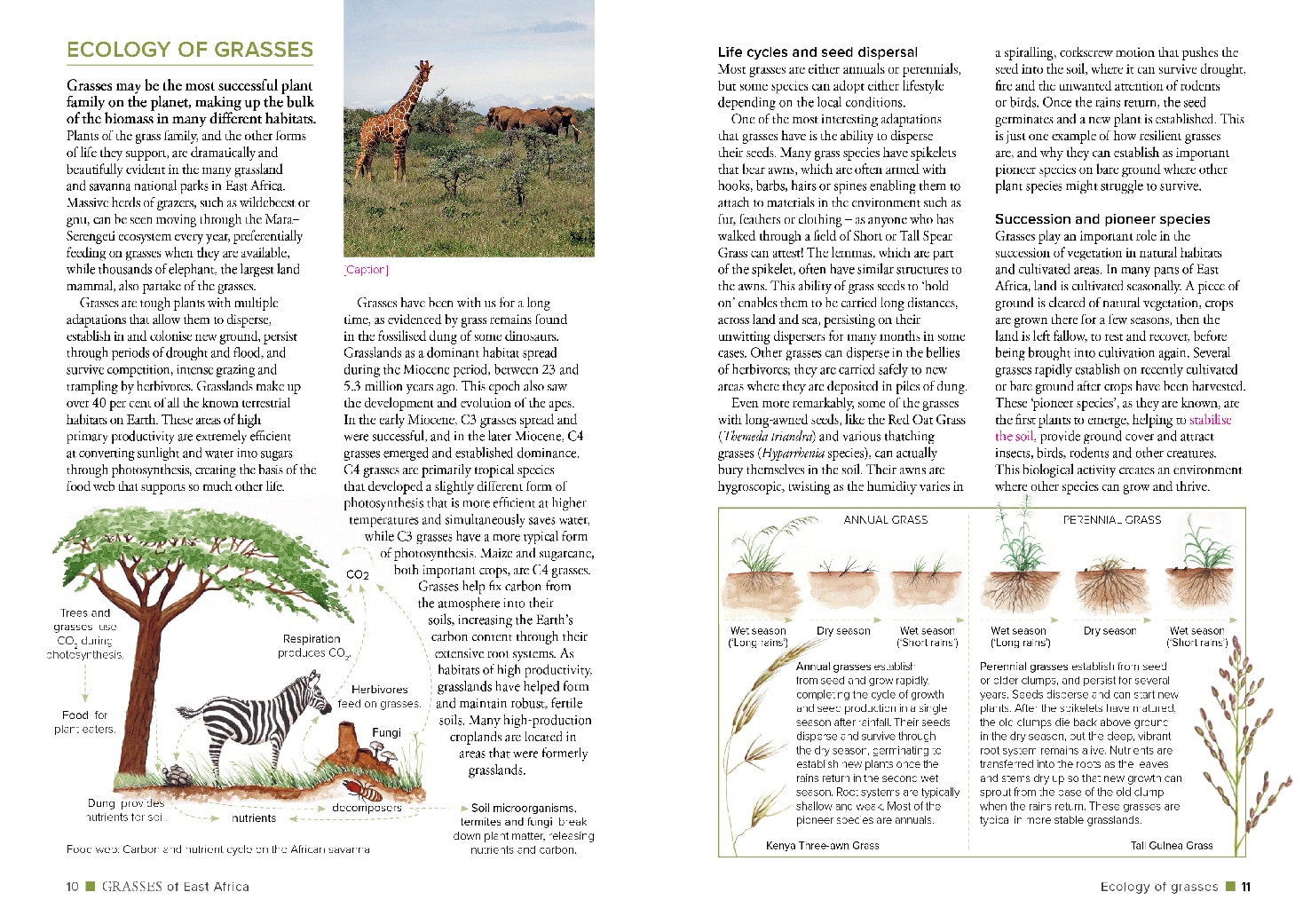
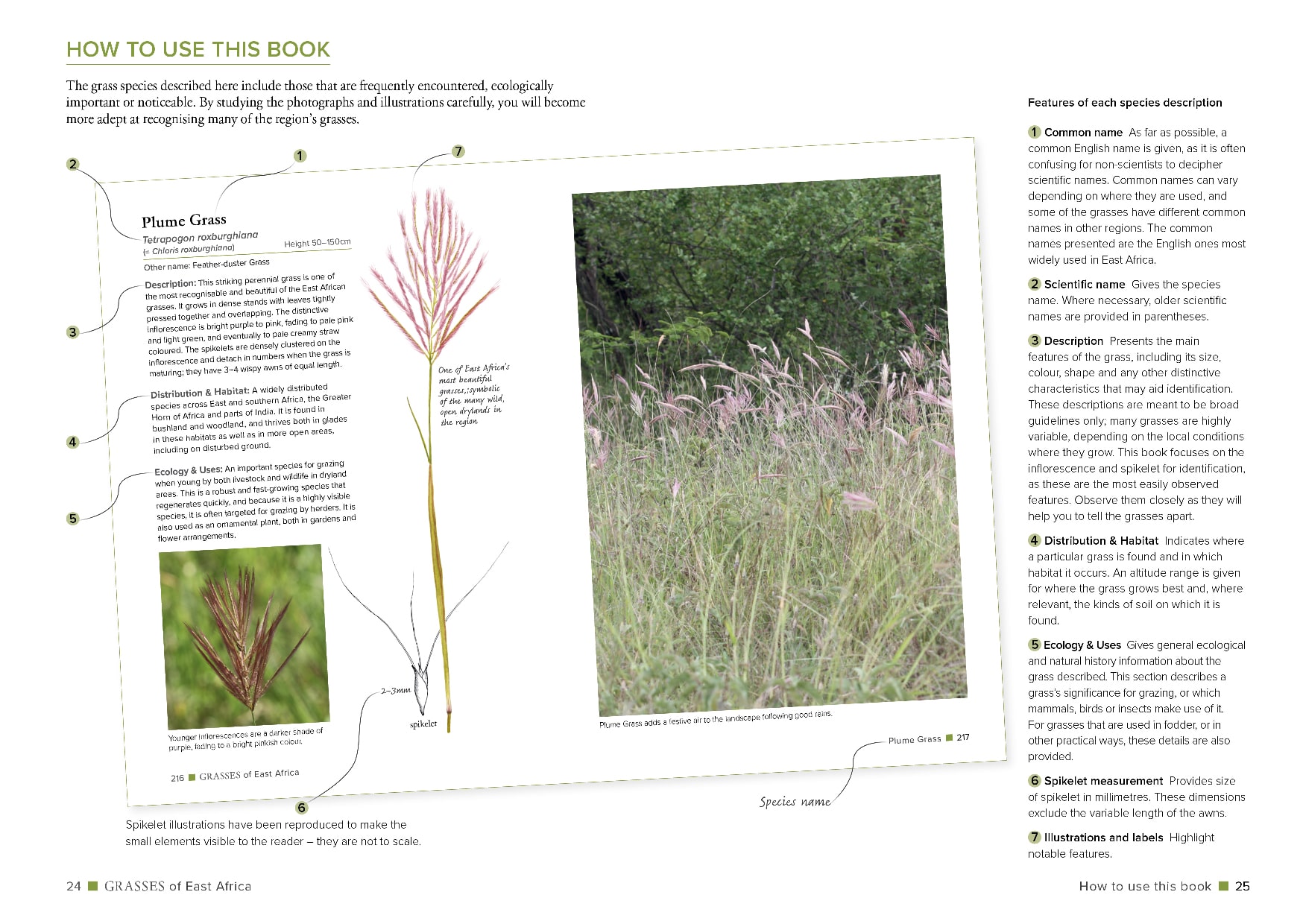
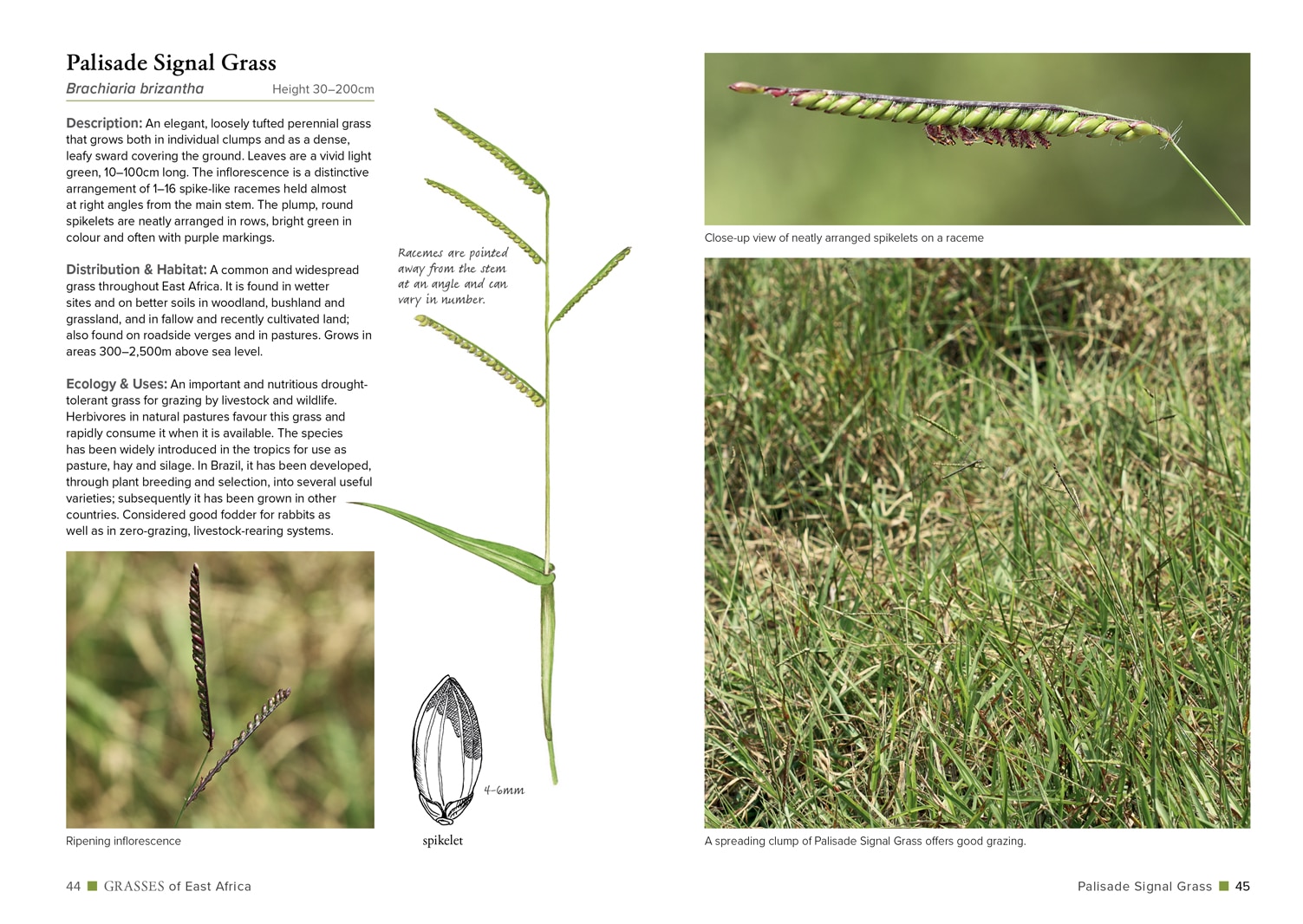
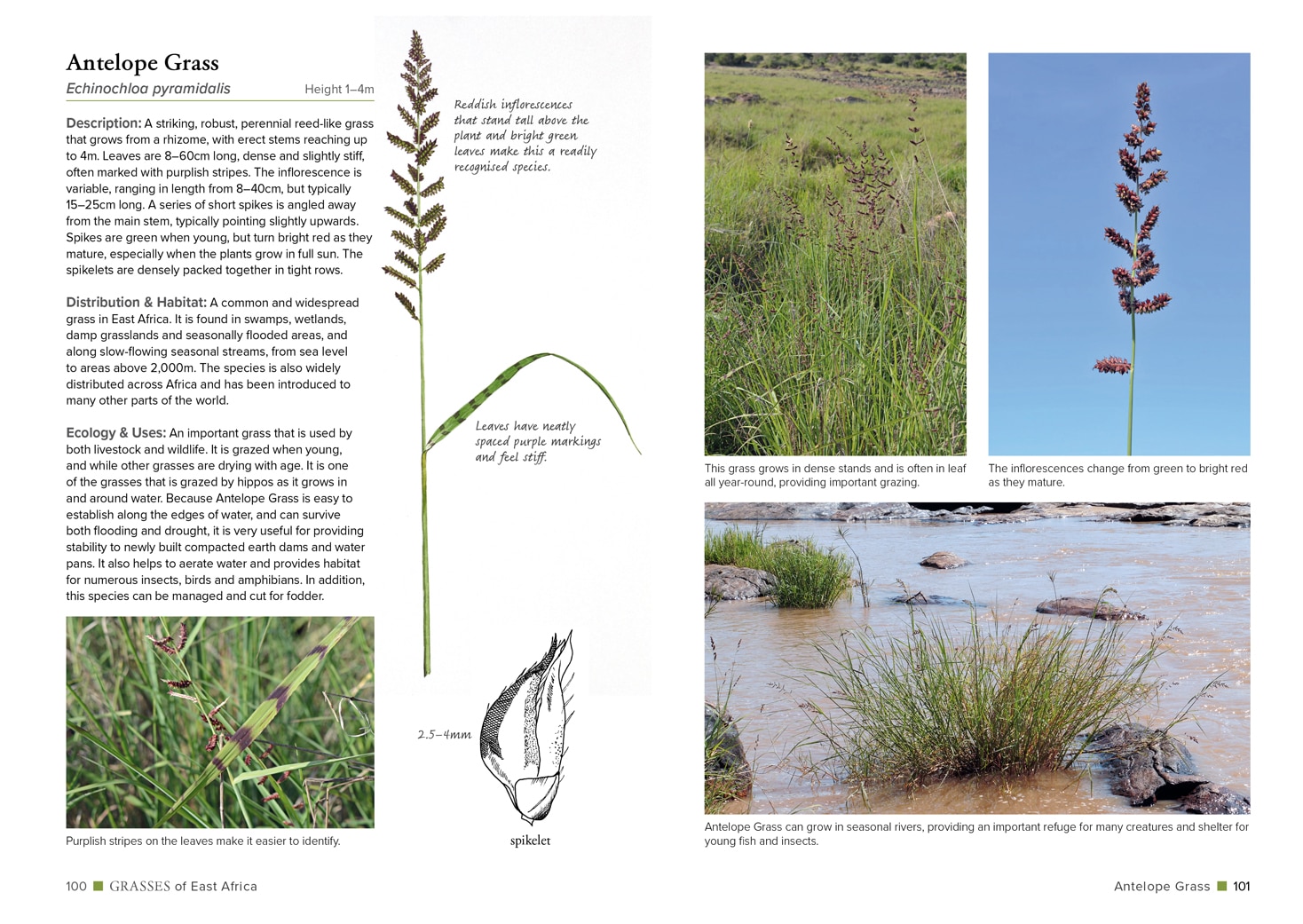
Grasses of East Africa describes 100 species of common, ecologically important or remarkable grasses found in Kenya, Tanzania, Uganda, Rwanda and Burundi. Grasses comprise one of the largest plant families on Earth, but are possibly the most overlooked. Yet it is these ubiquitous and important plants that have the greatest impact on our daily lives – providing a wide range of staple foods for humans globally, a fundamental source of grazing for livestock, and food and shelter for an infinite variety of wildlife.
In stock
Customer Reviews
There are no reviews yet.
Related products
-

Plants of the Baviaanskloof
R560.00Tucked away in the southwestern corner of the Eastern Cape lies a narrow valley, flanked by the Baviaanskloof and Kouga mountain ranges. Named after the chacma baboons that long ago made this 200-km-long kloof their home, the Baviaanskloof is part of the Cape Floral Region World Heritage Site. It is a meeting point of several different ecosystems, with almost all of South Africa’s eight biomes represented, making for an exceptional diversity of species, including many endemics.
Plants of the Baviaanskloof describes well over 1,000 plant species. It includes:
– Succinct descriptions of each plant species with full-colour photographs
– Brief family and genus descriptions, and species counts for the area
– An introduction covering the geology, climate and vegetation types of the regionCompiled over two decades, Plants of the Baviaanskloof is sure to become an enduring record of the diversity of plant life found here. The only botanical guide for this area, it is a must-have for botanists, gardeners, road-trippers, hikers, travellers and all who have a deep interest in plants.
-

100 Trees to See on Safari
R260.00East Africa is a premier wildlife destination, well known for its mass migrations of herds and fearsome predators. But as iconic are the trees that grow there: among them mangroves, cycads, palms, marulas, acacias, sausage trees, fever trees, toothbrush trees and giant bamboos. This book showcases 100 of the region’s most visible and significant trees, arranged by the habitats in which they occur. It features:
Concise descriptions of each tree and its parts, plus notes about the various uses of the tree parts
Multiple images showing the full tree and key ID features, including flowers, leaves, fruit and bark
Where to see the trees, including the national parks and nature reserves
A brief introduction to the trees of the region and their vegetation zonesColourful, interesting and geared for quick tree identification, this handy guide will enhance any safari experience in East Africa.
-

Burchell’s African Odyssey
R470.00The English naturalist William Burchell set from Cape Town in June 1811 to explore the flora and fauna of the vast southern African interior. Over a four-year period, and travelling in a custom-built ox wagon, he amassed an astonishing 63 000 specimens of plants, bulbs, insects, reptiles and mammals – many not previously documented for science – and produced more than 500 paintings and illustrations. While the outbound trek is well described in Burchell’s famous Travels in the Interior of Southern Africa, the challenges
and discoveries made on his return journey to Cape Town, from 1812-1815 have not been described. In Burchell’s African Odyssey, authors Roger Stewart and Marion Whitehead embark on a similarly daunting task – to reveal the homeward leg of
Burchell’s epic trek from the southern Kalahari via the Karoo and southern coastal belt back to Cape Town. Drawing on primary and secondary sources, including Burchell’s letters, his handwritten records archived at the Royal Botanic Gardens, Kew and the detailed
map he created to record his trek, the authors have crafted a thought-provoking and beautifully illustrated account that encompasses both the genius of the man and the natural history of the region that so intrigued him. -

Quick ID Guide: Wildflowers Cape Peninsula
R220.00Written with the non-specialist in mind, this guide is a must-have for flower lovers, hikers, tour guides and tourists – anyone interested in identifying the wild flowers that grace the Cape Peninsula. Quick ID Guide: Wild Flowers of the Cape Peninsula covers the most remarkable and commonly seen wild flowers of Table Mountain, Silvermine and Cape Point. The book was originally published as Common Wild Flowers of Table Mountain in 2007, then revised in 2013 to include the flowers of Silvermine.
This new edition offers:
360 (previously 208) of the region’s most remarkable and commonly seen wild flowers
Clear photographs of all featured flowers and concise, informative text
Flowers grouped according to colour, to help with quick ID
Walking routes in the Peninsula’s famed reserves, plotted on 3 clear maps.
Illustrated glossary of terms -

Field Guide to Succulents of Southern Africa
R450.00Southern Africa is the natural home of the richest and most diverse succulent flora in the world. These plants come in all shapes and sizes, from trees such as the baobab at more than 20 m tall, to miniature soil huggers, just a few millimetres high, which mimic their pebble-desert surroundings. This user-friendly, richly illustrated field guide features more than 700 southern African succulents, focusing on the most interesting and commonly encountered species. An introduction to families and their key features will help readers identify the relevant plant group, while concise accounts describing the plants’ diagnostic features, along with distribution maps, will enable quick ID of species. More than just an ID guide for plant lovers, this book will inspire gardeners who are turning to indigenous, low-maintenance and water-wise plants for cultivation.
-

Veldgids Bome van Suider Afrika
R650.00NUWE UITGAWE JULIE 2013
Hierdie omvattend uitgebreide, hersiene uitgawe van die beste verkoper onder boom-veldgidse vir die streek bied veel meer as die hoogs suksesvolle eerste uitgawe. Volledig bygewerkte teks (insluitend bykomende spesie-inskrywings) en verspreidingskaarte, talle nuwe foto’s en ’n nuwe seksie van 87 bladsye met foto’s van die hele boom maak dié gewilde gids nog meer noodsaaklik in die veld.
Suider-Afrika het ’n ryk verskeidenheid bome, met sowat 2 100 inheemse en meer as 100 genaturaliseerde uitheemse spesies. Veldgids tot Bome van Suider-Afrika beskryf en illustreer meer as 1 000 hiervan, met die klem op die algemeenste bome en dié wat waarskynlik die meeste teëgekom word. Spesies is op grond van maklik waarneembare blaar- en stingelkenmerke logies in 43 groepe gerangskik, elke inskrywing met volkleurfoto’s van die diagnostiese dele van die plant. Praktiese gebruike van die plante word ook genoem.
Also available in English
-

How to Identify Trees in Southern Africa (NE)
R400.00A direct, straightforward and effective guide to tree identification.
This book’s title says it all! Now in an updated second edition, it provides a clear understanding of how trees are constructed and what to look for when identifying a tree. The book is divided into two parts:
Part 1 describes and clearly illustrates the different parts of a tree and their role in tree identification.
Part 2 features a key to 43 tree groups, based on easy-to-observe stem and leaf features. It carefully outlines each group and the southern African tree families represented in the different groups.Numerous colour photographs and explanatory illustrations support the text, making this an accessible and easy-to-use guide. How to Identify Trees in Southern Africa will equip readers with a sound understanding of how trees are constructed and what to look for in order to make a positive identification.
-

First Field Guide: Trees of Southern Africa
R130.00These natural history guides have been developed to encourage young people and anyone with a budding interest in natural history to learn about the wonders of southern Africa’s fascinating fauna and flora. They are an invaluable resource for the beginner, providing information at a glance: each of the species presented is described in easy-to-read text, with a photograph and distribution map. A short introduction gives context to the topic.
Be the first to review “Grasses of East Africa”
You must be logged in to post a review.