

Also available in e-book format:

Amazon Kindle

Google Books

Snapplify Reader
Grasses of East Africa
TAKE A CLOSER LOOK
| Author: | Dino J. Martins |
|---|
R400.00
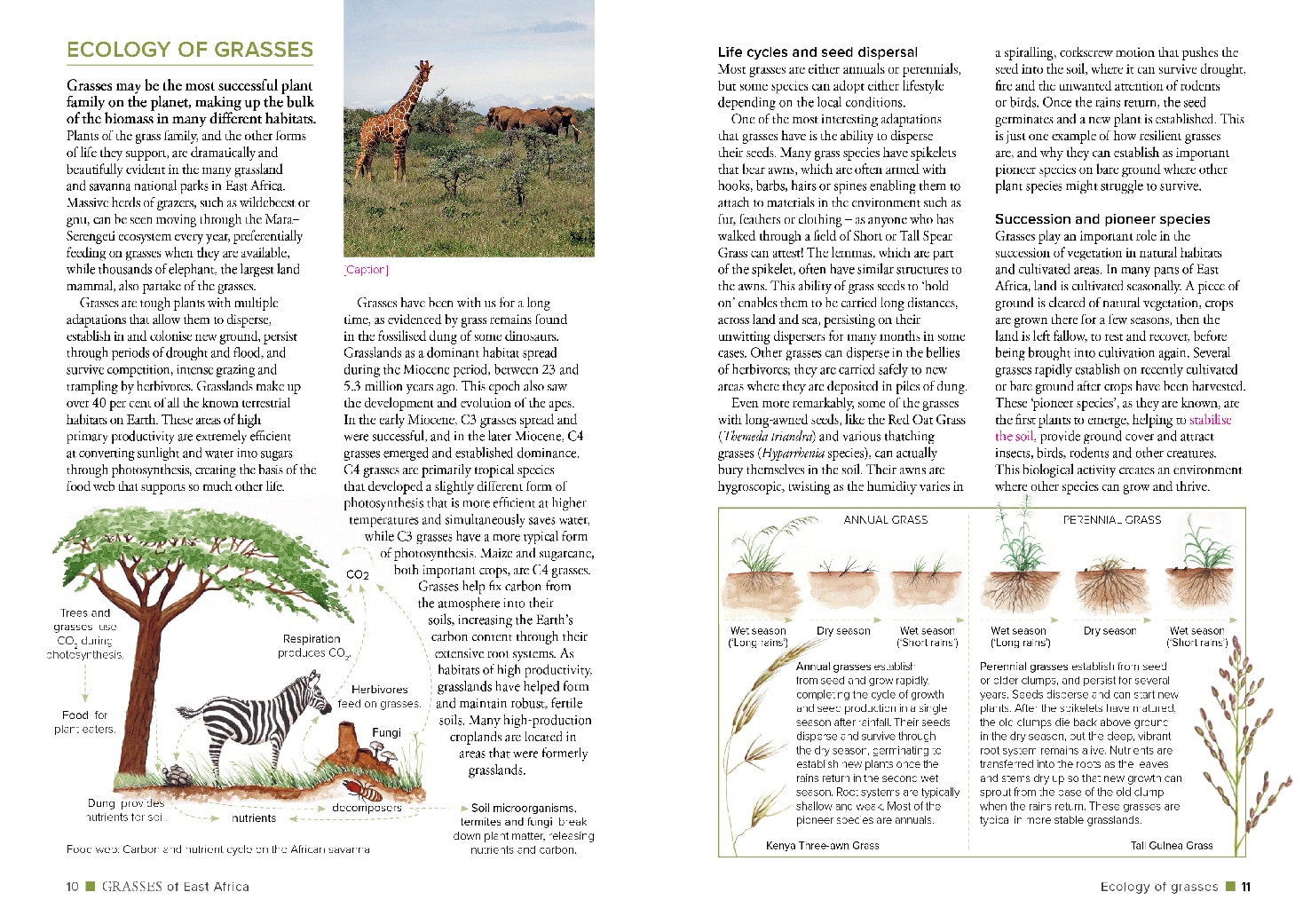
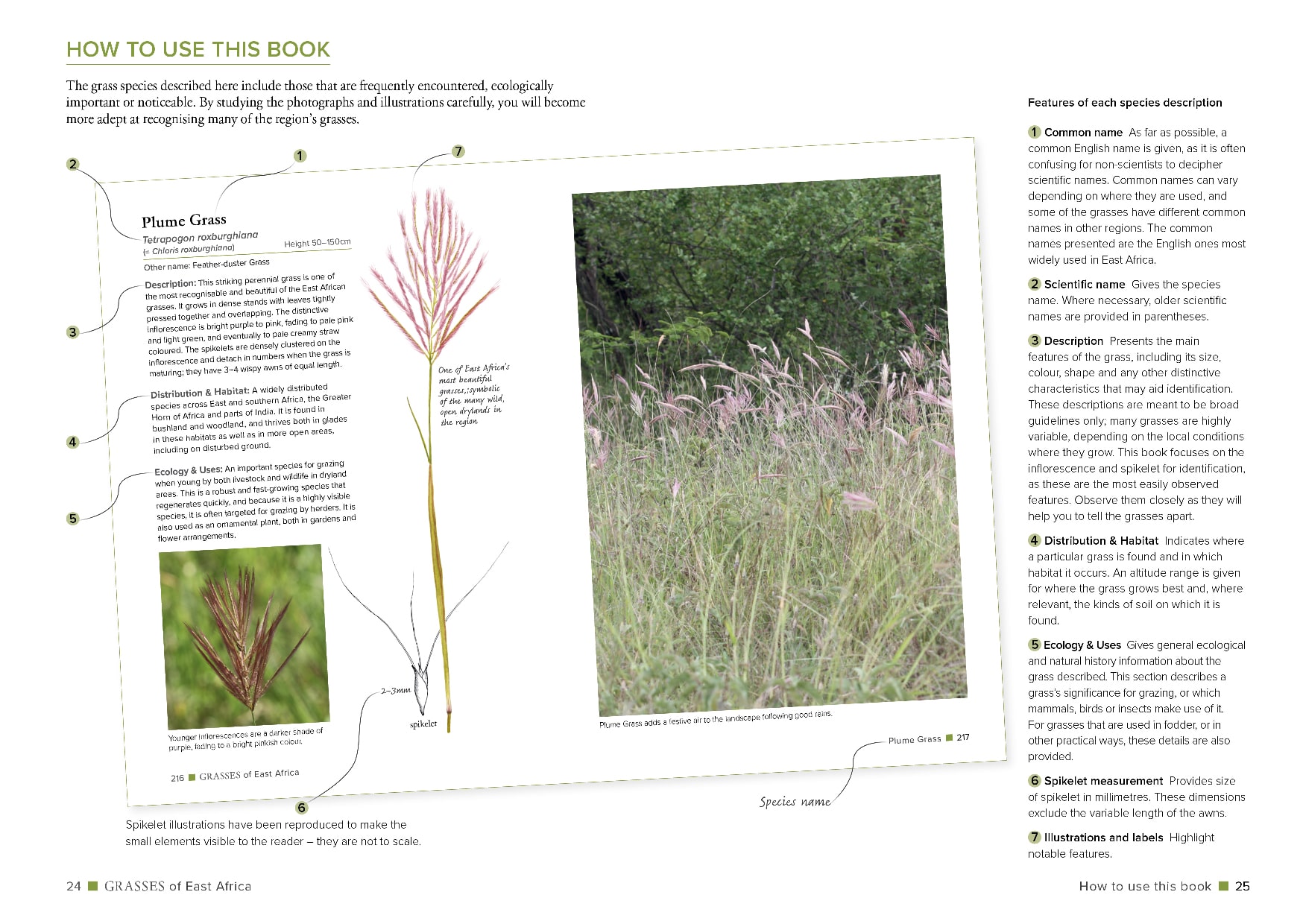
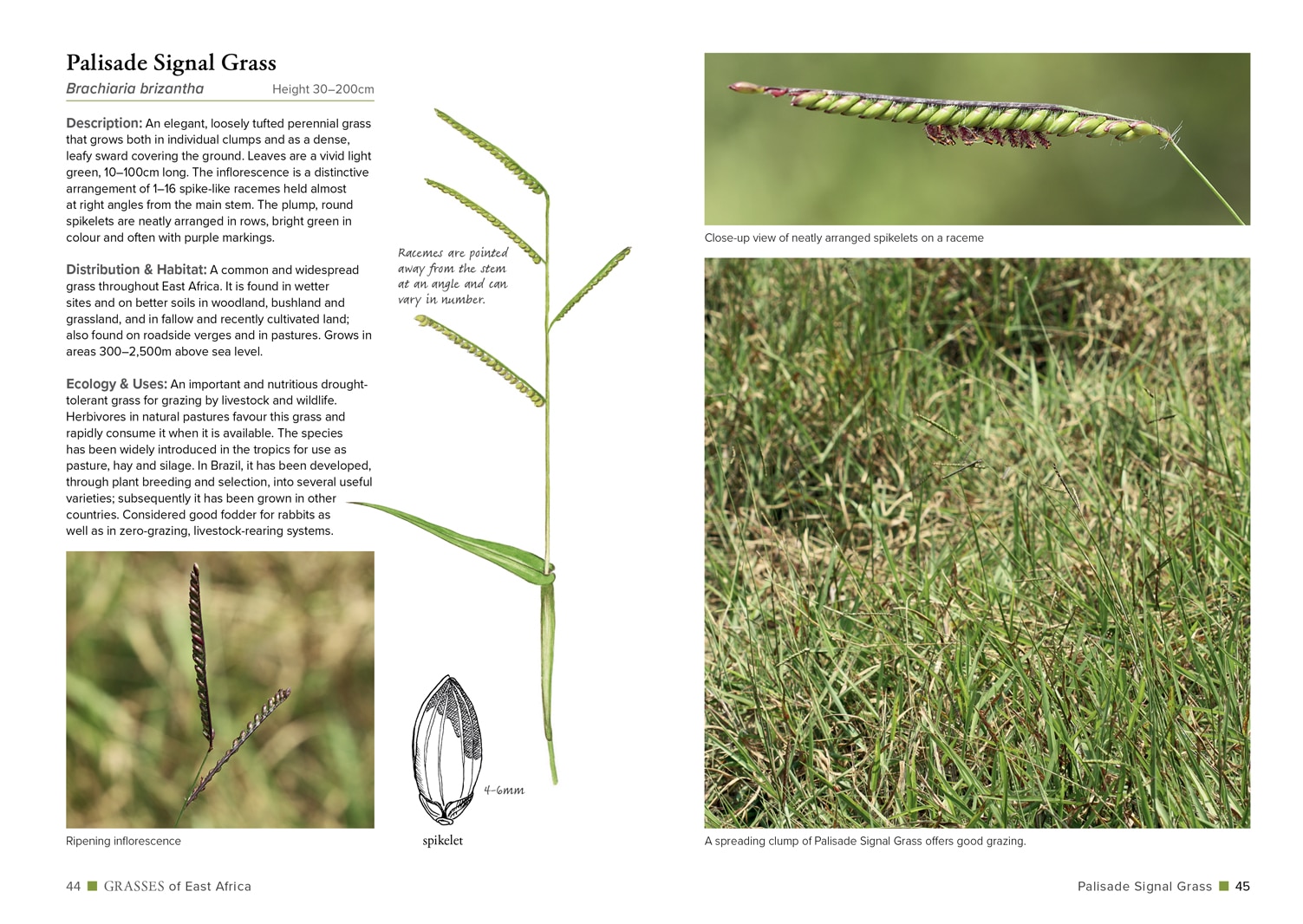
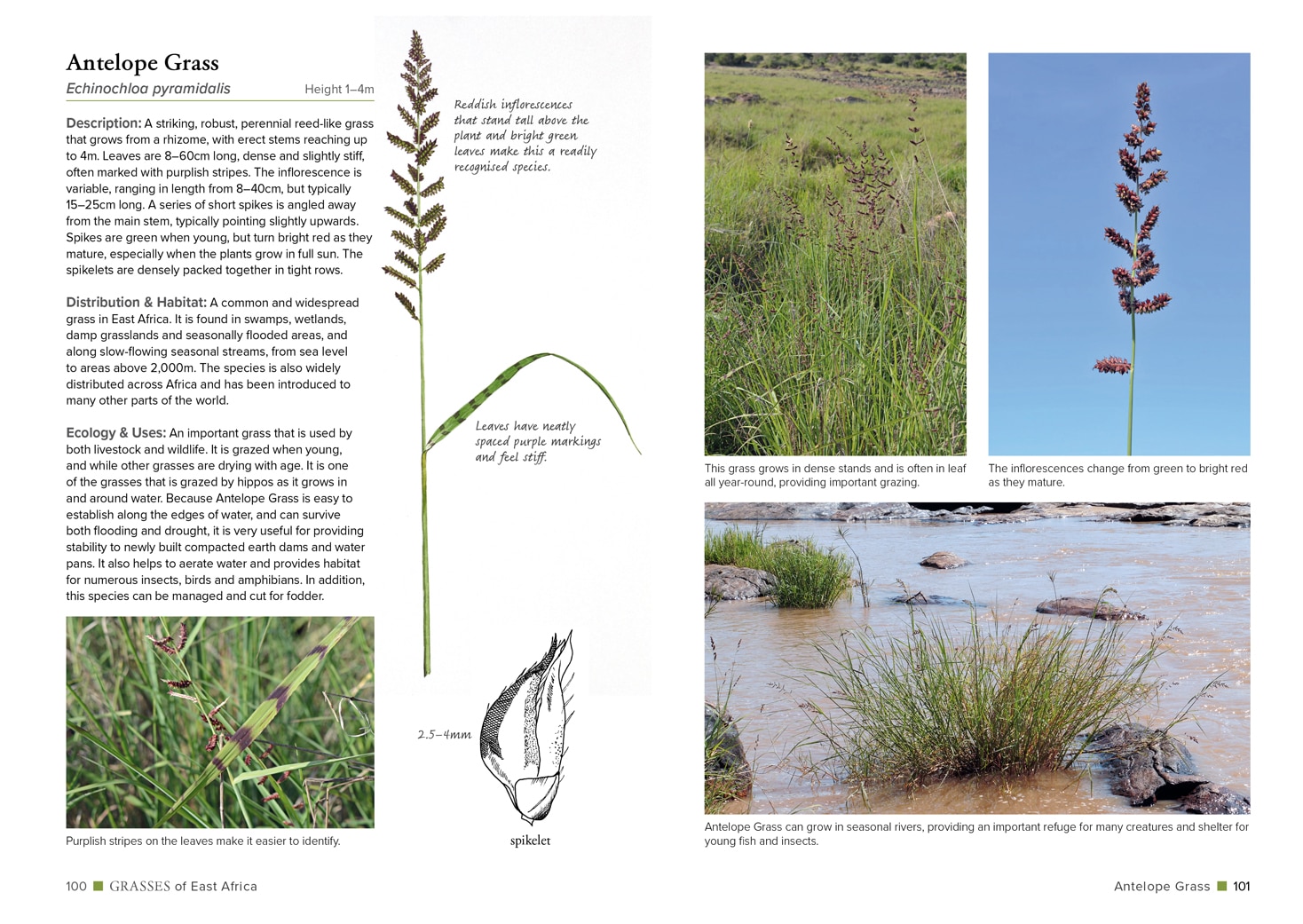
Grasses of East Africa describes 100 species of common, ecologically important or remarkable grasses found in Kenya, Tanzania, Uganda, Rwanda and Burundi. Grasses comprise one of the largest plant families on Earth, but are possibly the most overlooked. Yet it is these ubiquitous and important plants that have the greatest impact on our daily lives – providing a wide range of staple foods for humans globally, a fundamental source of grazing for livestock, and food and shelter for an infinite variety of wildlife.
In stock
Customer Reviews
There are no reviews yet.
Related products
-

First Field Guide: Trees of Southern Africa
R130.00These natural history guides have been developed to encourage young people and anyone with a budding interest in natural history to learn about the wonders of southern Africa’s fascinating fauna and flora. They are an invaluable resource for the beginner, providing information at a glance: each of the species presented is described in easy-to-read text, with a photograph and distribution map. A short introduction gives context to the topic.
-

Field Guide to Renosterveld of the Overberg
R550.00Part of the Fynbos biome, Renosterveld is one of the world’s most threatened vegetation types, with just 5% of its original extent remaining. Focusing specifically on the Renosterveld of the Overberg region in the Western Cape, this field guide is the first of its kind to cover this highly endangered ecosystem, characterised by nutrient-rich soil which has been exploited for agriculture.
An in-depth introduction sets the scene, defining what Renosterveld is and giving some historical background to the ecology of the area.
The plants section follows, featuring over 980 plant species from the common and ‘showy’ to the weird, obscure and often-overlooked.
A shorter section of 140 animal species showcases the diversity of creatures found here despite severe habitat loss and fragmentation.
Additional features include a glossary with supporting illustrations, guidelines for landowners and farmers, and a comprehensive index.
Field Guide to Renosterveld of the Overberg promises to be an enduring record of this unique and severely threatened ecosystem. It will be a vital addition to any nature lover’s bookshelf. -

An Illustrated Guide to Medicinal Plants of East Africa
R500.00Medicinal Plants of East Africa is the first photographically illustrated guide to showcase the most important healing plants of the region. e book describes 136 plant species in everyday use in Kenya, Tanzania and Uganda. Brief descriptions of each species cover that plant’s appearance, ecology and specific medicinal uses. To aid identification, more than 600 colour photographs have been included. Also included are recipes for remedies to treat a wide range of ailments. An easy-to-understand summary of the science behind the treatments concludes each section.
Supplementary features:
– Introduction to the medicinal virtues and active ingredients of plants
– Common methods of preparing medicines from plant materials
– Summary of ailments and the plants prescribed to treat them
– Glossaries of medical and botanical terminology and extensive reference lists.Medicinal Plants of East Africa will appeal to ethnobotanists, health and wellness practitioners, travellers and all with an interest in the remarkable healing properties of plants.
-

Field Guide to Fynbos
R610.00Field Guide to Fynbos features over 1,000 species from the Cape Floristic Region – home to one of the world’s richest floras. This fully updated edition focuses on the most common and ‘showy’ plants.
An introduction unpacks the world of fynbos – including origins, diversity, climate and adaptations – and is followed by a photographic key and descriptions of the fynbos families. Species descriptions are accompanied by photographs, distribution maps, comparisons with similar species, and notes on traditional uses.
For botanists and amateurs alike, this will remain an indispensable guide to South Africa’s most renowned flora.
-

Eerste veldgids: Bome van Suider-Afrika
R130.00Sasol Eerste Veldgids tot Bome van Suider-Afrika bied ’n fassinerende blik op die bome van die subkontinent.
Met behulp van volkleurfoto’s en verspreidingskaarte, asook maklik leesbare teks, sal die beginner en ontluikende natuurliefhebber die meer algemene bome in Suider-Afrika kan identifiseer, kan vasstel waar hulle groei, en meer te wete kom oor hul unieke eienskappe.
-

Saunders Field Guide to Gladioli of Southern Africa
R580.00The genus Gladiolus has fascinated plant collectors, taxonomists and the general public for centuries. Known for their spectacular flowers, these highly adapted and specialised plants occur throughout Africa, Madagascar, Europe and the Middle East. South Africa is home to more than half of the world’s Gladiolus species and the Western Cape is the heart of species diversity. Saunders’ Field Guide to Gladioli of South Africa is the first of its kind to offer a complete photographic record of the 166 species that occur in the region. Posthumously completed, this book is the culmination of the Saunders’ long search to find and photograph every known species of Gladiolus in South Africa. It includes:
– An introduction comprising a brief history of gladioli, information about the morphology and taxonomy of the genus, and guidelines for use in the field.
– Detailed descriptions of the main floral parts of each species, along with information about ecology, pollinators, similar species and conservation status; field notes were written by Rachel Saunders.
– Over 1,000 exquisite photographs taken in situ detailing morphology and habitat.
– Up-to-date distribution maps indicating where species have been recorded.
– A glossary of terms with illustrations unpacking difficult terminology.
-

Field Guide to the Amaryllis Family of Southern Africa and Surrounding Territories
R500.00The Amaryllidaceae family is distributed in warm temperate and tropical parts of the world. With 18 genera and 265 taxa occurring in the region, southern Africa is recognised as a major centre of diversity for this intriguing family. This compelling guide features all the species found in the region, conveniently grouped according to the biome of their natural habitat, and includes a useful key to genera and species.
Species accounts feature:
– Comprehensive text suitable for laypersons and scientists
– Information on distribution, similar taxons, life cycle and flowering period
– Notes on cultivation, history, medicinal properties and conservation
– Distribution maps
– Colour photographs and watercolour platesAn invaluable addition to the library of any plant or nature lover.
-

First Field Guide: Succulents of Southern Africa
R130.00This series of natural history field guides has been developed in the hope that young people and anyone with a budding interest in natural history will take up the challenge to learn the secrets of southern Africa’s fascinating fauna and flora. These little guides are an invaluable resource for the beginner, providing information at a glance through superb photographs, maps, and easy-to-read text.
Be the first to review “Grasses of East Africa”
You must be logged in to post a review.