

Also available in e-book format:

Amazon Kindle

Google Books

Snapplify Reader
Grasses of East Africa
TAKE A CLOSER LOOK
| Author: | Dino J. Martins |
|---|
R400.00
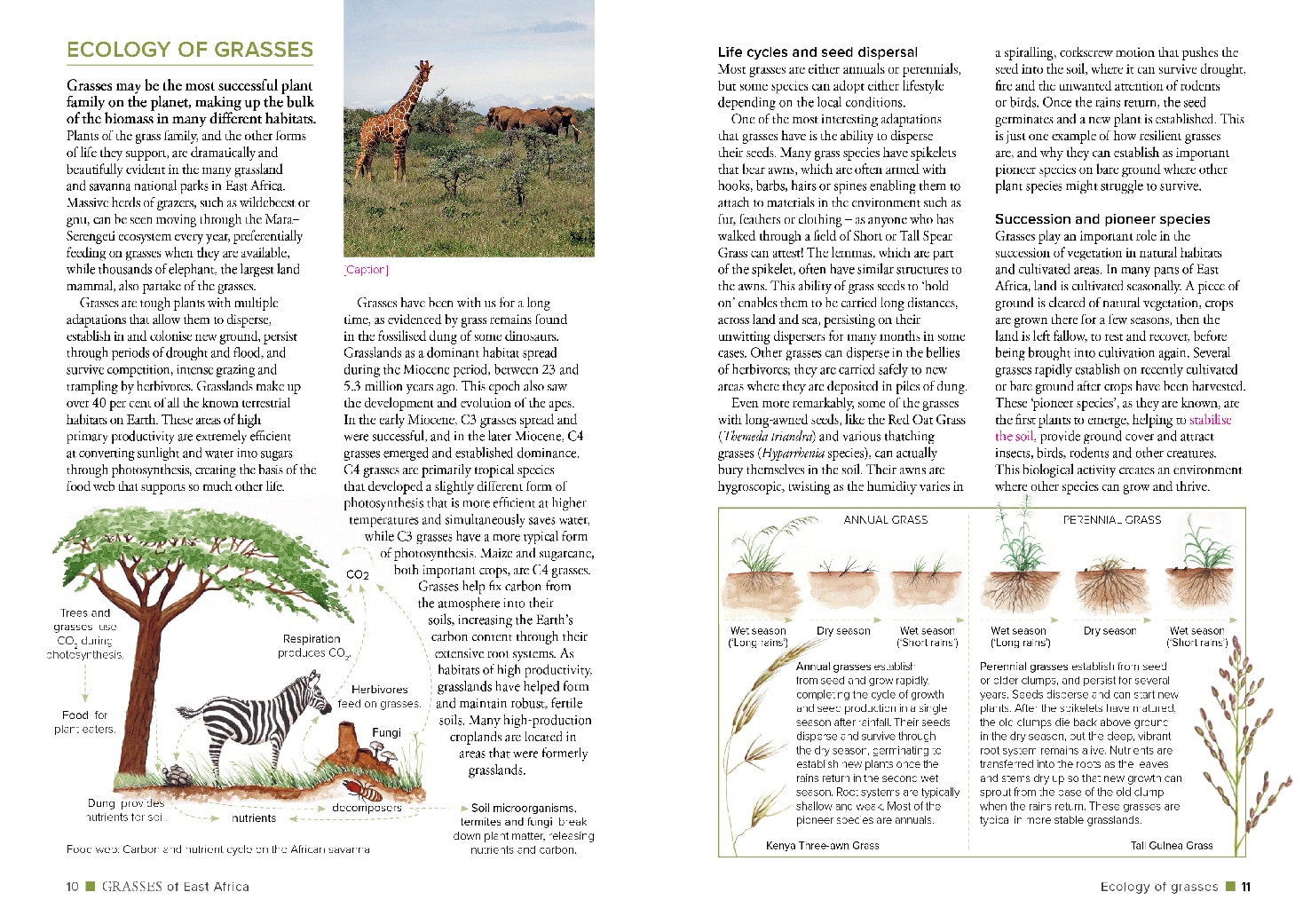
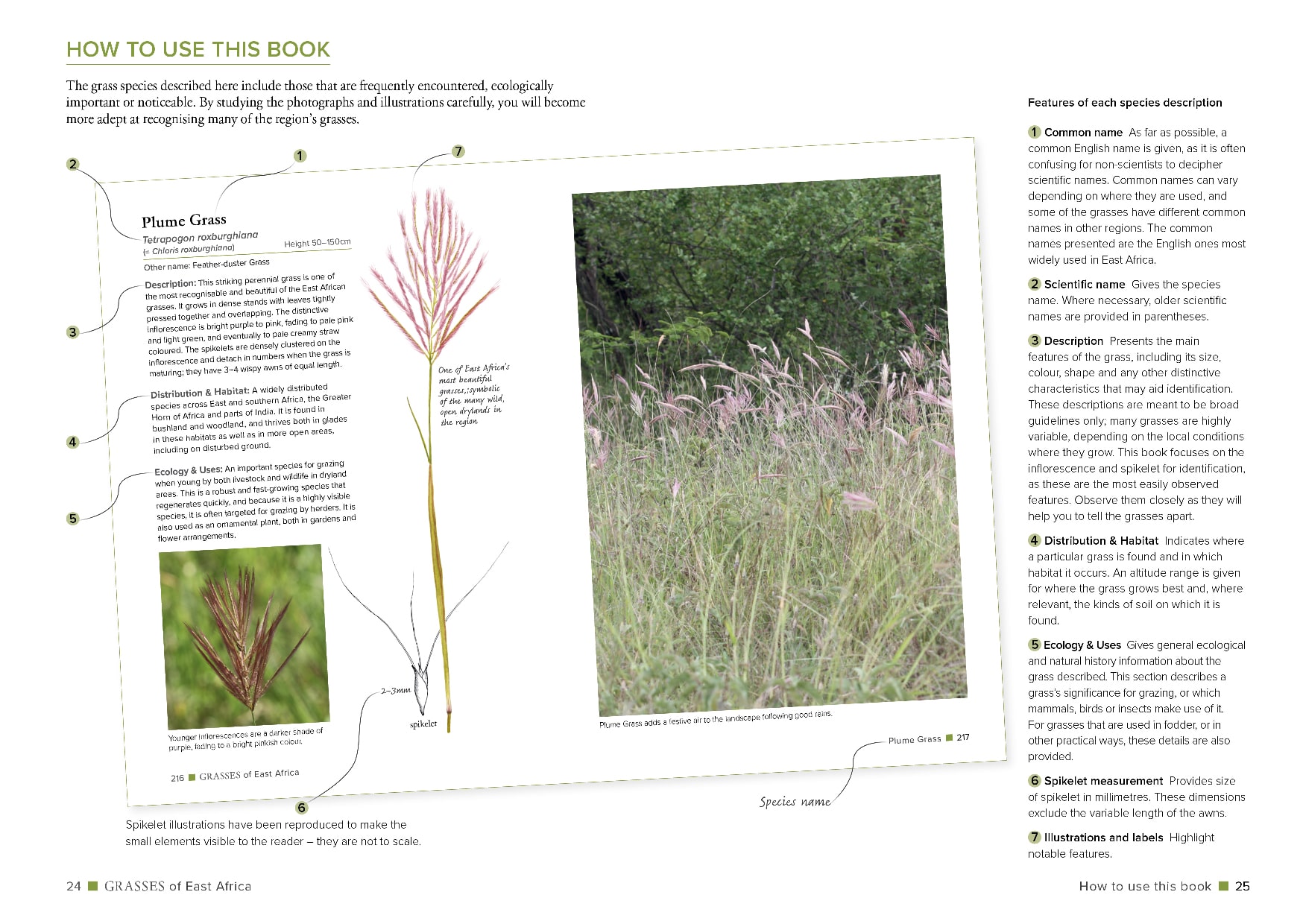
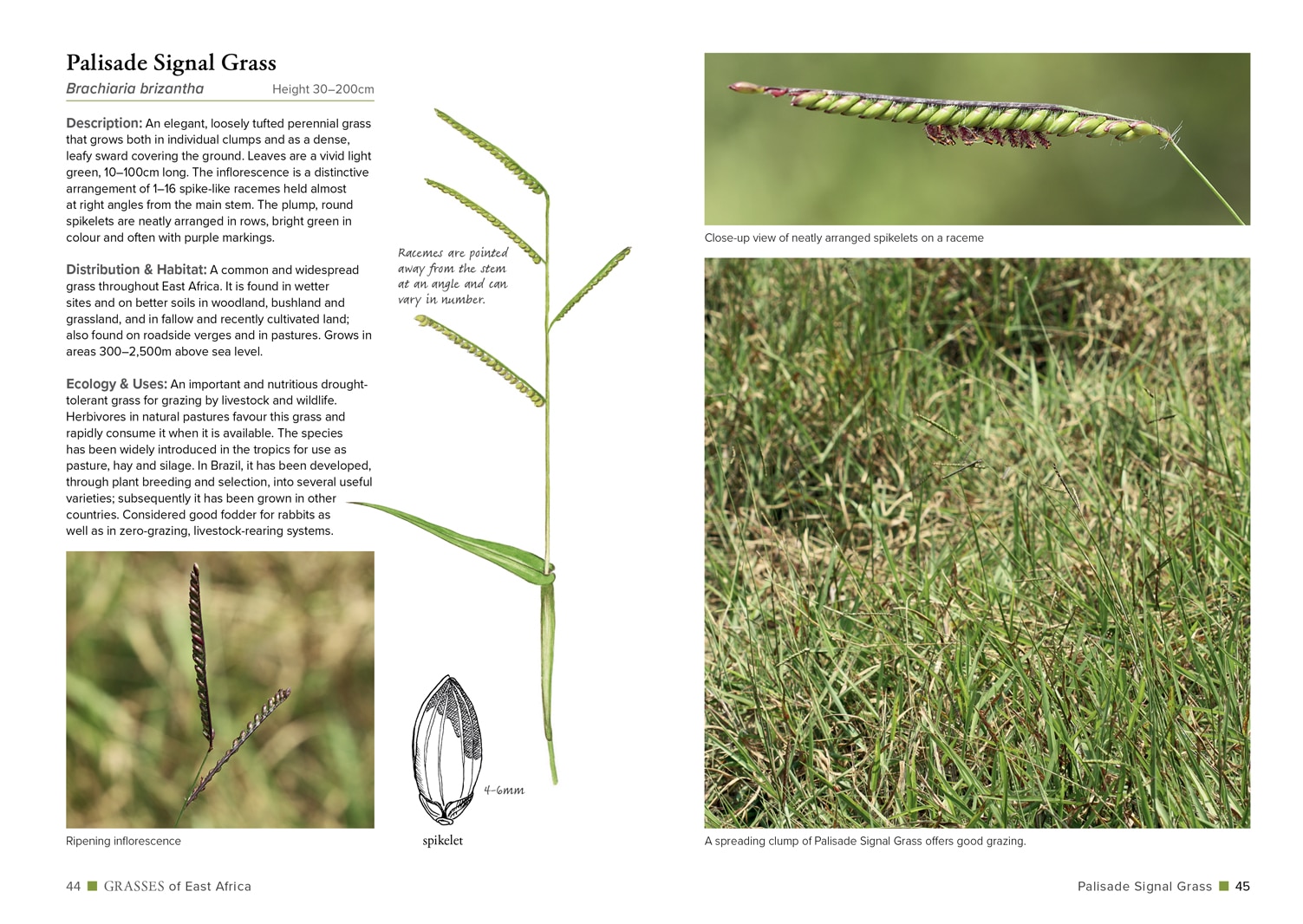
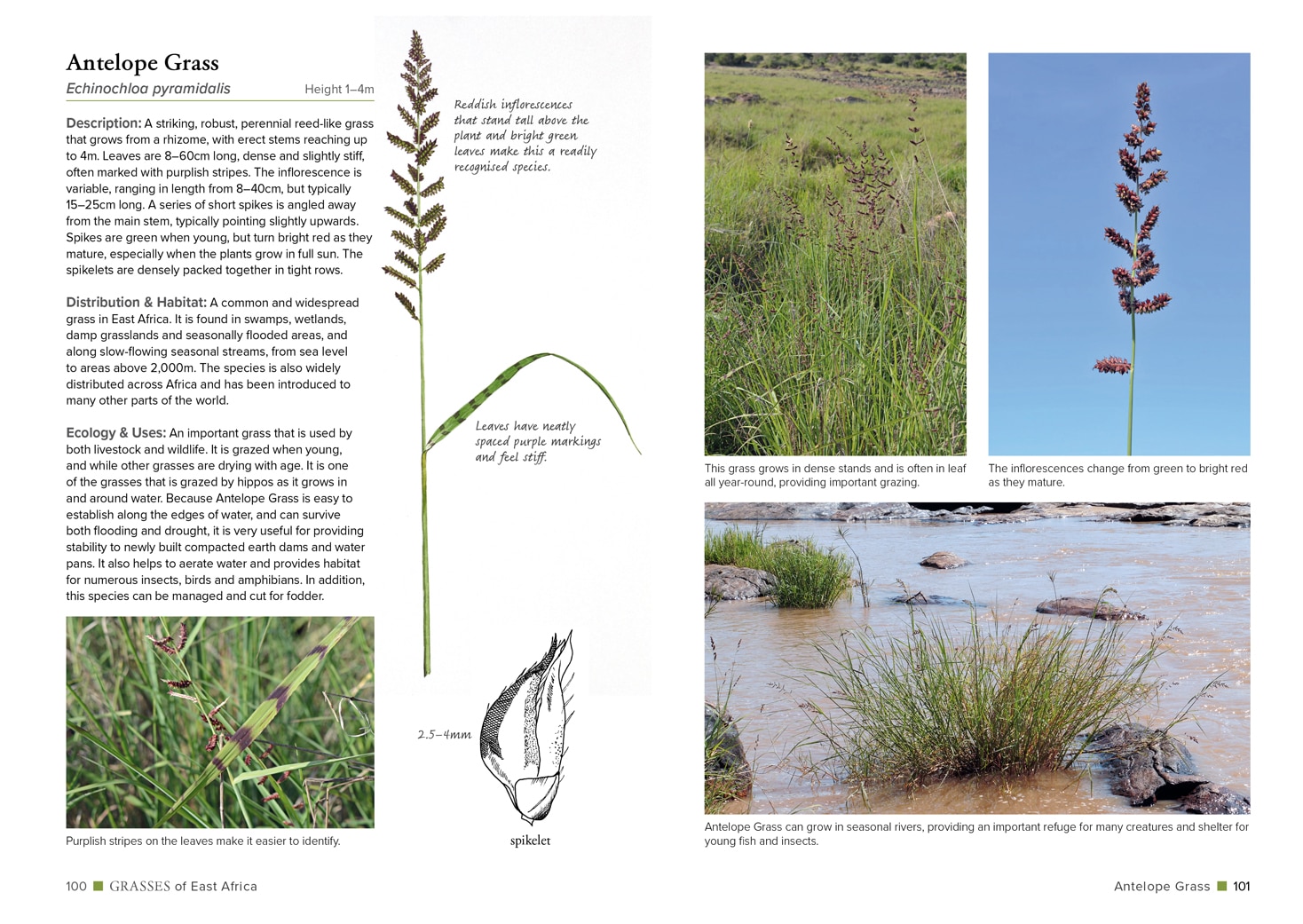
Grasses of East Africa describes 100 species of common, ecologically important or remarkable grasses found in Kenya, Tanzania, Uganda, Rwanda and Burundi. Grasses comprise one of the largest plant families on Earth, but are possibly the most overlooked. Yet it is these ubiquitous and important plants that have the greatest impact on our daily lives – providing a wide range of staple foods for humans globally, a fundamental source of grazing for livestock, and food and shelter for an infinite variety of wildlife.
In stock
Customer Reviews
There are no reviews yet.
Related products
-

Field Guide to Trees of Southern Africa
R650.00NEW EDITION JULY 2013
This comprehensively updated and expanded edition of the region’s best-selling field guide to trees offers much, much more than the highly successful first edition. Fully updated text (including additional species entries) and distribution maps, numerous new photographs and a new 87-page section of full-tree photographs makes this well-loved guide even more indispensable in the field.
Southern Africa has a rich variety of tree species, with an estimated 2 100 indigenous species and more than 100 naturalised aliens. Field Guide to Trees of Southern Africa describes and illustrates more than 1 000 of these, focusing on trees that are the most common and most likely to be encountered. Species are logically arranged in 43 groups based on easy-to-observe leaf and stem features, and each account is illustrated by full-colour photographs of the plant’s diagnostic parts. The text also touches on the practical uses of the plants.
Ook beskikbaar in Afrikaans
-

Field Guide to Succulents of Southern Africa
R450.00Southern Africa is the natural home of the richest and most diverse succulent flora in the world. These plants come in all shapes and sizes, from trees such as the baobab at more than 20 m tall, to miniature soil huggers, just a few millimetres high, which mimic their pebble-desert surroundings. This user-friendly, richly illustrated field guide features more than 700 southern African succulents, focusing on the most interesting and commonly encountered species. An introduction to families and their key features will help readers identify the relevant plant group, while concise accounts describing the plants’ diagnostic features, along with distribution maps, will enable quick ID of species. More than just an ID guide for plant lovers, this book will inspire gardeners who are turning to indigenous, low-maintenance and water-wise plants for cultivation.
-

Field Guide to Mushrooms & other Fungi of SA
R520.00Neither plant nor animal, mushrooms constitute a unique group of organisms. They appear in a staggering variety of shapes, sizes and colours, and identifying them can be difficult. This compact, beautifully illustrated guide is the perfect tool for identification in the field. It features 200 of the most distinctive and conspicuous mushrooms and other fungi found in South Africa. Each species is presented with a clear description and several full-colour photographs to aid quick and accurate identification. Notes on distribution, ecology, size, edibility, toxicity and other interesting facts complete the entries.
A brief introduction outlines the basic anatomy and biology of mushrooms and the vital role they play in sustaining all life. There are also guidelines to foraging and to photographing mushrooms, and a small selection of simple but delicious mushroom recipes.
Packed with more than 850 photographs, this is both a practical guide and a beautiful book that will inspire nature lovers, foragers, epicureans and anyone curious about these extraordinary life forms.
-

Field Guide to Fynbos
R610.00Field Guide to Fynbos features over 1,000 species from the Cape Floristic Region – home to one of the world’s richest floras. This fully updated edition focuses on the most common and ‘showy’ plants.
An introduction unpacks the world of fynbos – including origins, diversity, climate and adaptations – and is followed by a photographic key and descriptions of the fynbos families. Species descriptions are accompanied by photographs, distribution maps, comparisons with similar species, and notes on traditional uses.
For botanists and amateurs alike, this will remain an indispensable guide to South Africa’s most renowned flora.
-

Field Guide to the Amaryllis Family of Southern Africa and Surrounding Territories
R500.00The Amaryllidaceae family is distributed in warm temperate and tropical parts of the world. With 18 genera and 265 taxa occurring in the region, southern Africa is recognised as a major centre of diversity for this intriguing family. This compelling guide features all the species found in the region, conveniently grouped according to the biome of their natural habitat, and includes a useful key to genera and species.
Species accounts feature:
– Comprehensive text suitable for laypersons and scientists
– Information on distribution, similar taxons, life cycle and flowering period
– Notes on cultivation, history, medicinal properties and conservation
– Distribution maps
– Colour photographs and watercolour platesAn invaluable addition to the library of any plant or nature lover.
-

Burchell’s African Odyssey
R470.00The English naturalist William Burchell set from Cape Town in June 1811 to explore the flora and fauna of the vast southern African interior. Over a four-year period, and travelling in a custom-built ox wagon, he amassed an astonishing 63 000 specimens of plants, bulbs, insects, reptiles and mammals – many not previously documented for science – and produced more than 500 paintings and illustrations. While the outbound trek is well described in Burchell’s famous Travels in the Interior of Southern Africa, the challenges
and discoveries made on his return journey to Cape Town, from 1812-1815 have not been described. In Burchell’s African Odyssey, authors Roger Stewart and Marion Whitehead embark on a similarly daunting task – to reveal the homeward leg of
Burchell’s epic trek from the southern Kalahari via the Karoo and southern coastal belt back to Cape Town. Drawing on primary and secondary sources, including Burchell’s letters, his handwritten records archived at the Royal Botanic Gardens, Kew and the detailed
map he created to record his trek, the authors have crafted a thought-provoking and beautifully illustrated account that encompasses both the genius of the man and the natural history of the region that so intrigued him. -

Wild Flowers of Namaqualand
R610.00Namaqualand is justifiably famous for the floral wonderland it becomes in spring, when seas of bright flowers carpet the land. Astonishingly, the carpet comprises some 3,800 species, of which 28% are endemic.
This book introduces nearly 600 species, highlighting those most commonly found, most conspicuous, spectacular or interesting, as well as endemics. An introduction touches on the species selection for the book, the climatic and topographical subregions within Namaqualand, plant names and uses, and conservation issues.
The concise species descriptions also give seed and fruit details, uses, local growing conditions and flowering times, along with beautiful full-colour photographs. This is a must-have guide for visitors to Namaqualand, or for anyone interested in the wild flowers of southern Africa.
-

Pocket Guide to Trees of Southern Africa
R280.00Southern Africa boasts a rich variety of tree species, both indigenous and exotic. Pocket Guide Trees of Southern Africa is an authoritative introduction to the region’s trees, describing and illustrating 132 species. This publication has its origins in Van Wyk’s A Photographic Guide to Trees of Southern Africa and has been fully revised and updated by well-known authority Braam van Wyk. Each species account highlights the key identification features, and also touches on the medicinal and commercial uses of the trees.
This compact, easy-to-use guide makes an ideal travelling companion and will help readers to become more knowledgeable about trees.
Be the first to review “Grasses of East Africa”
You must be logged in to post a review.