


Also available in e-book format:

Amazon Kindle

Google Books

Snapplify Reader
Field Guide to Fynbos
TAKE A CLOSER LOOK
| Author: | John Manning |
|---|
R610.00 R427.00
Field Guide to Fynbos features over 1,000 species from the Cape Floristic Region – home to one of the world’s richest floras. This fully updated edition focuses on the most common and ‘showy’ plants.
An introduction unpacks the world of fynbos – including origins, diversity, climate and adaptations – and is followed by a photographic key and descriptions of the fynbos families. Species descriptions are accompanied by photographs, distribution maps, comparisons with similar species, and notes on traditional uses.
For botanists and amateurs alike, this will remain an indispensable guide to South Africa’s most renowned flora.
In stock
Customer Reviews
There are no reviews yet.
Related products
-

Field Guide to Mushrooms & other Fungi of SA
R520.00Neither plant nor animal, mushrooms constitute a unique group of organisms. They appear in a staggering variety of shapes, sizes and colours, and identifying them can be difficult. This compact, beautifully illustrated guide is the perfect tool for identification in the field. It features 200 of the most distinctive and conspicuous mushrooms and other fungi found in South Africa. Each species is presented with a clear description and several full-colour photographs to aid quick and accurate identification. Notes on distribution, ecology, size, edibility, toxicity and other interesting facts complete the entries.
A brief introduction outlines the basic anatomy and biology of mushrooms and the vital role they play in sustaining all life. There are also guidelines to foraging and to photographing mushrooms, and a small selection of simple but delicious mushroom recipes.
Packed with more than 850 photographs, this is both a practical guide and a beautiful book that will inspire nature lovers, foragers, epicureans and anyone curious about these extraordinary life forms.
-
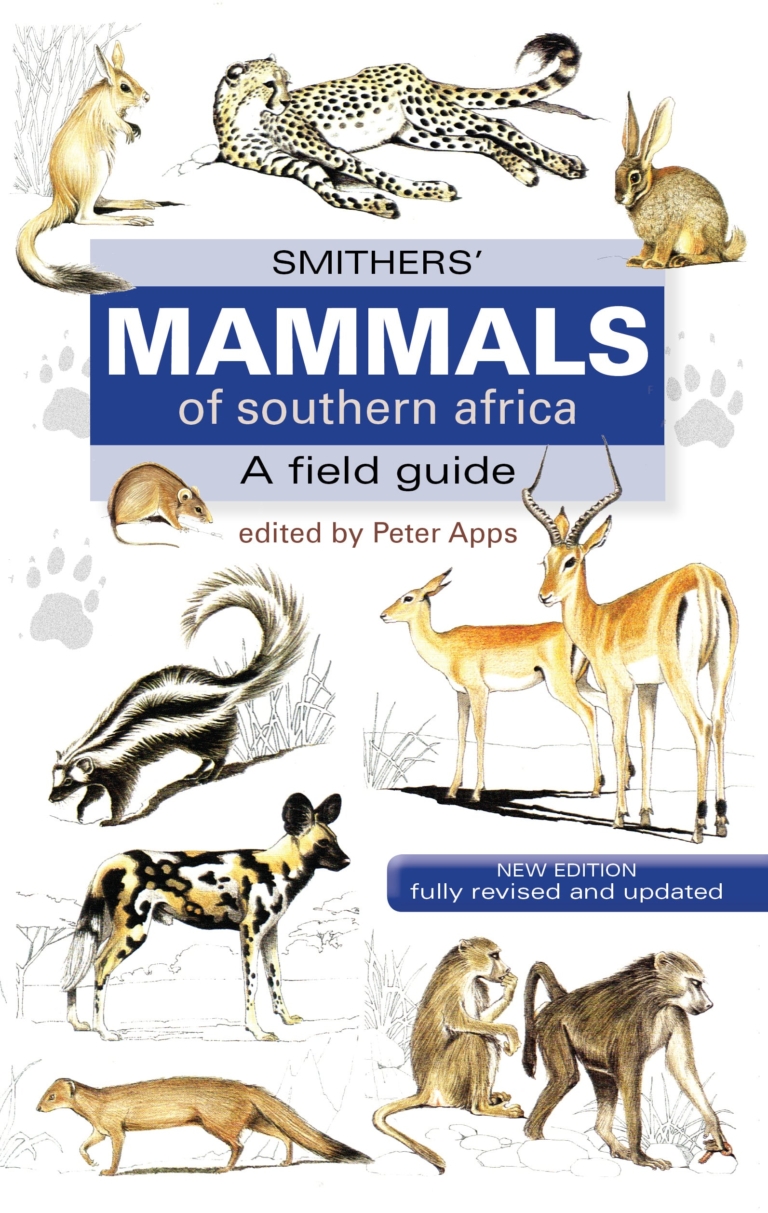
Smithers Mammals Southern Africa: A Field Guide
R550.00First published in 1986, Smithers’ Mammals is an authoritative and popular guide to the mammals of Southern Africa. This revised and updated edition incorporates the latest information brought to light by molecular genetics, while remaining accessible to the layperson and handy in the field. Each entry includes an in-depth species description; notes on habitat, behaviour, diet and conservation status; accurate illustrations and spoor drawings; and a distribution map. The book also details the whales, dolphins and seals seen along our coast.
This highly regarded field guide will appeal to general readers and wildlife enthusiasts, as well as to specialists in the field of mammals.
-

Field Guide to the Amaryllis Family of Southern Africa and Surrounding Territories
The Amaryllidaceae family is distributed in warm temperate and tropical parts of the world. With 18 genera and 265 taxa occurring in the region, southern Africa is recognised as a major centre of diversity for this intriguing family. This compelling guide features all the species found in the region, conveniently grouped according to the biome of their natural habitat, and includes a useful key to genera and species.
Species accounts feature:
– Comprehensive text suitable for laypersons and scientists
– Information on distribution, similar taxons, life cycle and flowering period
– Notes on cultivation, history, medicinal properties and conservation
– Distribution maps
– Colour photographs and watercolour platesAn invaluable addition to the library of any plant or nature lover.
R500.00R350.00 -

Guide to Birds of the Kruger National Park
R400.00The Kruger National Park, one of the largest and best-known conservation areas in the world, supports a remarkable diversity of birdlife. This attractive guide presents more than 500 species that have been recorded there. Of these, more than 400 of the most common or likely to be seen species are described and supported by full-colour photographs and unique distribution maps based on actual sightings of the birds. An informative introduction describes the park’s underlying geology, vegetation types, climate and rainfall, and how these dictate bird distribution within the area.
-

Veldgids Bome van Suider Afrika
NUWE UITGAWE JULIE 2013
Hierdie omvattend uitgebreide, hersiene uitgawe van die beste verkoper onder boom-veldgidse vir die streek bied veel meer as die hoogs suksesvolle eerste uitgawe. Volledig bygewerkte teks (insluitend bykomende spesie-inskrywings) en verspreidingskaarte, talle nuwe foto’s en ’n nuwe seksie van 87 bladsye met foto’s van die hele boom maak dié gewilde gids nog meer noodsaaklik in die veld.
Suider-Afrika het ’n ryk verskeidenheid bome, met sowat 2 100 inheemse en meer as 100 genaturaliseerde uitheemse spesies. Veldgids tot Bome van Suider-Afrika beskryf en illustreer meer as 1 000 hiervan, met die klem op die algemeenste bome en dié wat waarskynlik die meeste teëgekom word. Spesies is op grond van maklik waarneembare blaar- en stingelkenmerke logies in 43 groepe gerangskik, elke inskrywing met volkleurfoto’s van die diagnostiese dele van die plant. Praktiese gebruike van die plante word ook genoem.
Also available in English
R650.00R455.00 -

Stuarts’ Field Guide to the Larger Mammals of Africa
R610.00Of the more than 5,500 mammals species worldwide, at least 1,200 occur in Africa. Stuarts’ Field Guide to the Larger Mammals of Africa concentrates on the more visible and easily distinguished larger species, as well as some of the more frequently seen smaller mammals.This new edition has been extensively revised, expanded and redesigned and includes:- the most recent research and taxonomy
- revised distribution maps and many new images
- colour-coded grouping of orders
- size icons
- detailed descriptions of each species, offering insight into key identification characters, typical behaviour, preferred habitat, food choice, reproduction and longevity
- whales and dolphins now featured too
-

100 Trees to See on Safari
R260.00East Africa is a premier wildlife destination, well known for its mass migrations of herds and fearsome predators. But as iconic are the trees that grow there: among them mangroves, cycads, palms, marulas, acacias, sausage trees, fever trees, toothbrush trees and giant bamboos. This book showcases 100 of the region’s most visible and significant trees, arranged by the habitats in which they occur. It features:
Concise descriptions of each tree and its parts, plus notes about the various uses of the tree parts
Multiple images showing the full tree and key ID features, including flowers, leaves, fruit and bark
Where to see the trees, including the national parks and nature reserves
A brief introduction to the trees of the region and their vegetation zonesColourful, interesting and geared for quick tree identification, this handy guide will enhance any safari experience in East Africa.
-

Field Guide to the Spiders of Southern Africa
Thoroughly revised and updated, this long-awaited new edition of Field Guide to the Spiders of South Africa remains the most comprehensive guide to South African spiders published to date. It features over 780 of the more common spider species encountered in the field and in homes and gardens, as well as representative species from some of the rarer spider families.
– ‘Quick Keys’ to the 72 South African spider families provide a useful starting point to identification.
– Succinct genus and species accounts cover identifying characteristics, breeding, behaviour, distribution and conservation status.
– Colour photographs and/or illustrations as well as distribution maps support each entry.
– Introductory chapter discusses spider morphology, spider life cycle, the functions of silk, as well as spider collection techniques.
– Section on venom identifies species that pose a danger to humans, unpacks neurotoxic and cytotoxic venom, and details the symptoms and treatment of spider bites.R560.00R392.00
Be the first to review “Field Guide to Fynbos”
You must be logged in to post a review.