


Also available in e-book format:

Amazon Kindle

Google Books

Snapplify Reader
Fauna und Flora im Sudlichen Afrika
TAKE A CLOSER LOOK
| Author: | Vincent Carruthers |
|---|
R470.00
Published for the first time in German, this is the first local field guide to cover all the commonly encountered plants and animals of the southern African region in one compact and easy-to-use volume. More than 2 000 species (1 200 of them illustrated)
In stock
Customer Reviews
There are no reviews yet.
Related products
-

Field Guide to the Amaryllis Family of Southern Africa and Surrounding Territories
R500.00The Amaryllidaceae family is distributed in warm temperate and tropical parts of the world. With 18 genera and 265 taxa occurring in the region, southern Africa is recognised as a major centre of diversity for this intriguing family. This compelling guide features all the species found in the region, conveniently grouped according to the biome of their natural habitat, and includes a useful key to genera and species.
Species accounts feature:
– Comprehensive text suitable for laypersons and scientists
– Information on distribution, similar taxons, life cycle and flowering period
– Notes on cultivation, history, medicinal properties and conservation
– Distribution maps
– Colour photographs and watercolour platesAn invaluable addition to the library of any plant or nature lover.
-
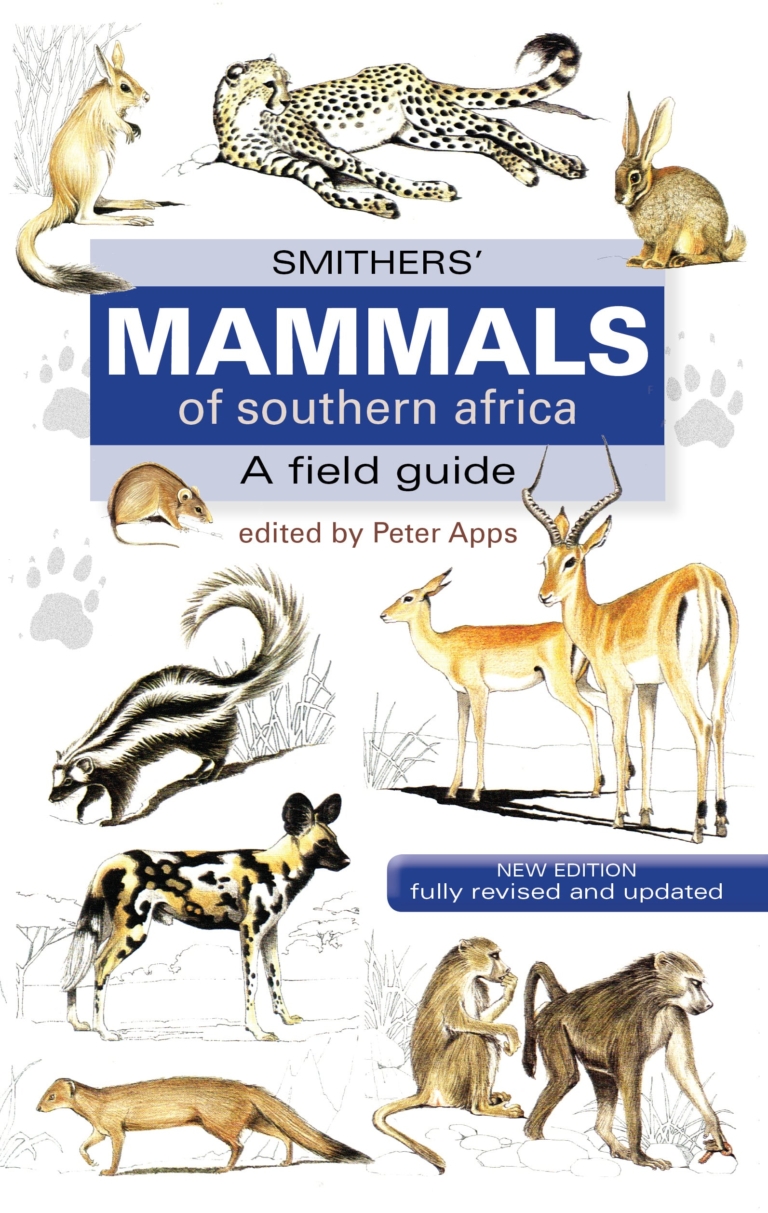
Smithers Mammals Southern Africa: A Field Guide
R550.00First published in 1986, Smithers’ Mammals is an authoritative and popular guide to the mammals of Southern Africa. This revised and updated edition incorporates the latest information brought to light by molecular genetics, while remaining accessible to the layperson and handy in the field. Each entry includes an in-depth species description; notes on habitat, behaviour, diet and conservation status; accurate illustrations and spoor drawings; and a distribution map. The book also details the whales, dolphins and seals seen along our coast.
This highly regarded field guide will appeal to general readers and wildlife enthusiasts, as well as to specialists in the field of mammals.
-

Field Guide to Butterflies of Southern Africa
R580.00Fully revised, the new edition of Field Guide to Butterflies of South Africa features all of South Africa’s 671 butterfly species. This lavishly illustrated popular guide includes newly described species and subspecies, and the most recent taxonomic changes based on DNA studies.
As in the first edition, the photography is exceptional and 70% of the images in the book are new. Images show male and female forms (where they differ) and upper- and undersides (where possible).
The species accounts have been comprehensively updated and expanded, covering identification, habits, flight periods, broods, typical habitat, distribution and larval food sources. A helpful introductory section with over 100 images, including 55 early stages images, discusses butterfly biology, taxonomy, classification, anatomy and behaviour.
-

‘n Volledige gids tot die slange van Suider-afrika
R580.00Hierdie langverwagte derde uitgawe van ‘n Volledige Gids tot die Slange van Suider-Afrika is ten volle opgedateer. Nuwe inligting gebasseer op wetenskaplike navorsing is ingesluit, en hou verband met gedrag, identifikasie, voortplanting en gif. Kenmerke van hierdie boek:
– Dek al die noodsaaklike aspekte van biologie en slang gedrag.
– Spesies se beskrywings word vergesel van volkleur fotos en verspreidingskaarte.
– Eenvoudige simbole maak belangrike inligting dadelik beskikbaar.
– ‘n Aparte ‘Kyk uit vir’ blokkie help om spesies in die veld gou te identifiseer.
– Hoofstukke oor klassifikasie en identifikasie, aanhou van slange, en die behandeling van slangbyte vul die inligting aan. -

Stuarts’ Field Guide to the Larger Mammals of Africa
R610.00Of the more than 5,500 mammals species worldwide, at least 1,200 occur in Africa. Stuarts’ Field Guide to the Larger Mammals of Africa concentrates on the more visible and easily distinguished larger species, as well as some of the more frequently seen smaller mammals.This new edition has been extensively revised, expanded and redesigned and includes:- the most recent research and taxonomy
- revised distribution maps and many new images
- colour-coded grouping of orders
- size icons
- detailed descriptions of each species, offering insight into key identification characters, typical behaviour, preferred habitat, food choice, reproduction and longevity
- whales and dolphins now featured too
-

Field Guide to Insects of South Africa (NE)
R610.00This trusted best-seller has been comprehensively updated and expanded to feature accounts of over 1,500 species and insect groups. Included are the most common, most economically and ecologically important, interesting and attractive insects in the region.
It features: vivid photographs, easy-to-read text, detailed accounts covering identification, biology, distribution and related species, a helpful introduction detailing the significance, life history, collection and photography of insects, and quick reference guides on the inside covers to facilitate identification.
Entomologists both amateur and professional, students, gardeners, farmers, tourists and anyone with an interest in the natural world will appreciate this illuminating and invaluable guide.
-

Guide to Dragonflies & Damselflies of South Africa (NE)
R500.00In this fully revised edition of A Guide to Dragonflies & Damselflies of South Africa, all 164 species known to occur in South Africa, Lesotho and Swaziland are described and illustrated, grouped according to family (six dragonfly and six damselfly families). The species entries feature scans of live insects (close-up and side-view images) and photographs of specimens in their natural environment and showing key behaviours. Detailed descriptions focus on size, identifying features and occurrence. An introductory chapter unpacks the life cycle, behaviour, biology and breeding of this fascinating group of insects. Presented in a classic field guide format, this revised edition now also features:
Expanded annotations to all illustrations, highlighting diagnostic features to ensure accurate identification
New distribution maps
Additional colour plates and photographsBeautifully presented, informative and authoritative, this book will appeal to anyone with an interest in South Africa’s insect life, and to nature lovers in general.
-

Frogs of Southern Africa: A Complete Guide
R690.00Frogs of Southern Africa: A Complete Guide remains the most authoritative and comprehensive treatment of the frogs of the region ever produced, covering all aspects of frog and tadpole biology and behaviour.
This new edition (with a slight name change) has been thoroughly updated to reflect taxonomic changes based on the most recent research and DNA studies, and includes 12 new species and more than 130 new images. All 169 southern African frog species, and their tadpole stages, are fully described, along with their conservation status, calls, habitat and habits. Identification is made easy with the aid of over 1000 large, full-colour images, keys to species and summary panels on ‘Key ID points’ and ‘Distinctive characters’.
Calls for most species can be accessed instantly via QR codes in the book or downloaded from a dedicated website. Spectrograms of the calls are also included in the book.
Written by respected authorities in the field, this timely updated edition will be of benefit to all nature lovers, amateur ‘froggers’, students and professional scientists.
Be the first to review “Fauna und Flora im Sudlichen Afrika”
You must be logged in to post a review.