
-

Succulent Flora of Southern Africa
R500.00Succulent Flora of Southern Africa, first published in 1981, has long served as an authoritative guide for academics and lay enthusiasts alike. This long-awaited third edition takes into account intervening taxonomic advances and the discovery and naming of ever more species. All information has been fully revised, updated and supplemented in line with the latest thinking, and the book has been newly designed for clarity and ease of reference. Given the phenomenal extent and variety of our region’s succulent flora, this revised version is a timely – and classic – addition to the botanical literature of southern Africa.
-

My First Book of Southern Africa Creepy-Crawlies
R180.00My First Book of Southern African Creepy-crawlies is the newest title in this very successful children’s series, and a companion to its sister edition on Southern African Insects. The book covers 58 spiders, snails, millipedes and other creatures (excluding insects) that are likely to be seen around the home and garden.
An illustrated introduction gives context to the subject, and then each page features:
* a vivid, full-colour illustration
* clear, informative text and visual clues for both pre- and beginner readers
* simple graphics conveying the creature’s size, what it eats and when it is activeThis inspiring and beautifully illustrated book will introduce everyday creatures to both pre-readers and those beginning to read in their mother tongue.
All text appears in English, Afrikaans, Xhosa and Zulu.
-
Newman’s Birds of Southern Africa Commemorative Ed
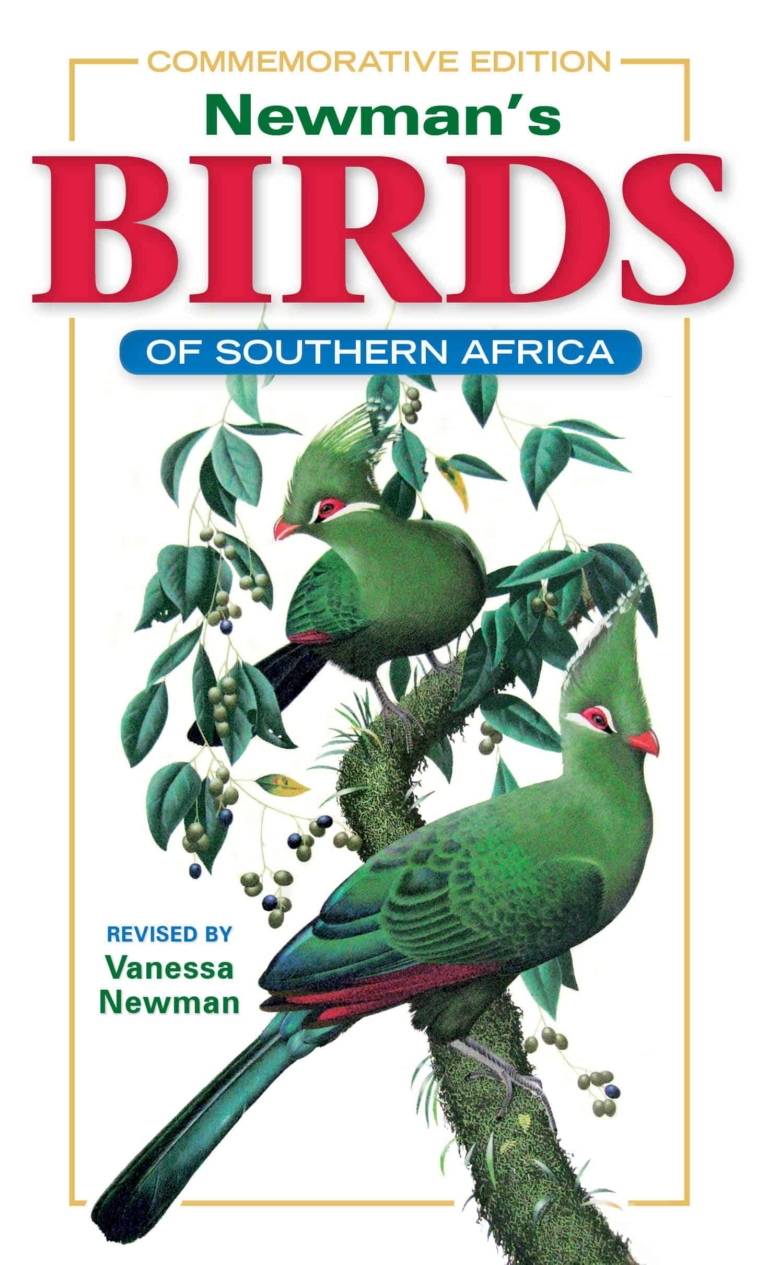
R530.00This Commemorative edition of Newman’s Birds of Southern Africa at once updates a classic and pays tribute to one of the region’s best loved birding authors, the late Kenneth Newman. With the support of bird expert Faansie Peacock, the author’s daughter, Vanessa Newman, has thoroughly revised, updated and expanded this new edition to reflect the latest research, both in terms of text and illustrations. Covering all the birds recorded from the Antarctic to the Zambezi River, its range includes the birds from the southern seas as well as those of South Africa, Zimbabwe, Namibia, Botswana, Swaziland, Lesotho and Mozambique. The familiar, user-friendly format of Newman’s Birds uses colour coding to indicate major bird groups and, as always, large accurate paintings of each species reflect the bird as it is seen in the field, now labeled with diagnostic features. A revised introductory section takes readers step-by-step through how to use this latest edition of Newman’s Birds of Southern Africa in the field.
Also available in Afrikaans as Newman se Voëls van Suider-Afrika.
-

My First Book of Southern Africa Seashore Life
R180.00My First Book of Southern African Seashore Life presents 58 sea creatures and plants that are likely to be seen at the shore.
An illustrated introduction gives context to the subject, and then for each species there’s:
* a vivid, full-colour illustration
* simple, informative text
* visual clues about the creatures’ diet, size, distribution round our coast, locomotion and exactly where they live relative to the water line.This beautiful and inspiring introduction to southern Africa’s shores will appeal to children – and parents – of all ages.
All text appears in English, Afrikaans, Xhosa and Zulu.
-
Chamberlain’s Field Guides Birds of Southern Africa
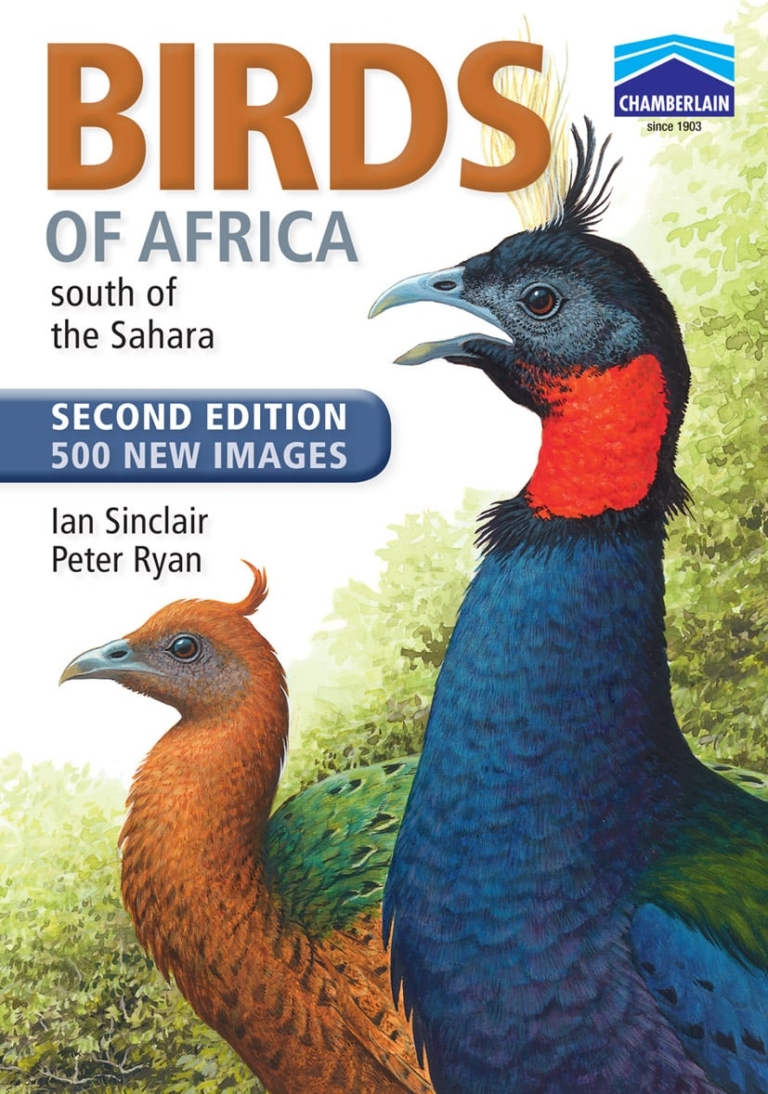
R680.00Fully revised, Birds of Africa south of the Sahara provides unrivalled coverage of African birds in a single volume, and is the first book to describe and illustrate all of the birds found in Africa south of the Sahara Desert (the Afrotropic Region), including Socotra, Pemba and islands in the Gulf of Guinea. Over 2 500 colour photographs show age and sex plumage variations, perched and in-flight birds, and colour morphs where relevant. Text – by Africa’s top birding authors – forcuses on identification, call, habitat and status, breeding details and diet. Colour-coded distribution maps show resident and migratory status and bird density. Annual calendar bars indicate, at a glace, w hen species are present and when they breed. Despite its exceptional coverage, this guide is compact enough to use in the field, and follows the standard field guide format, with texts and range maps appearing opposite the colour plates.
-

African Seashores to Read, Colour & Keep
R150.00Children will enjoy hours of fun colouring in this selection of our most striking seashore life – more than 40 of the brightest, most fascinating, commonly known creatures and plants from our local shores. In the middle of the book is a full-colour gallery of all the featured shore life, giving a clear guide as to which shade of crayon or paint to use when colouring in the outlined images throughout the book. As they work through the book, budding artists and inquisitive children will also be able to pick up snippets of knowledge about the creatures, such as how the colourful sea anemone overpowers its prey; whether the sponge is an animal; how the starfish pulls its stomach outside of its body to eat; why the hermit crab’s homes are all second-hand; and the bag of tricks used by that master of disguise, the octopus.
-

My first book of Southern African Wildlife
R370.00My first book of Southern African Wildlife introduces the young reader to a selection of southern Africa’s most commonly seen and fascinating wildlife species. Divided into three sections, the title covers 58 mammals, 58 birds and 56 reptiles, with an illustrated introduction to each section that gives context to the information. Highly visual with full-colour illustrations of each creature, the book also features line drawings indicating what food they eat, what spoor they leave, etc.
All text appears in English, Afrikaans, Xhosa and Zulu.
-

My First Book of Southern African Birds V2
R180.00Following the success of My first book of Southern African Birds– a very first guide to birding – volume 2 introduces a further 58 fascinating birds found at the seashore, rivers and lakes, in grasslands and forests, and also in suburban gardens. A brief introduction explains how the book works and provides simple guidelines for watching birds, then each page introduces a new bird. Most of the information is visual, in the form of full-colour bird illustrations and line drawings of food eaten, typical nest and the bird’s track. A visual guide to the bird’s size is given at the base of the page.
All text appears in English, Afrikaans, Xhosa and Zulu.
-

Wildlife of South Africa: A Photographic Guide
R400.00Wildlife of South Africa is a handy, all-in-one photographic field guide, an accessible introduction to the country’s more conspicuous and interesting mammals, birds, reptiles, frogs and trees. To facilitate identification, each account includes a photograph, distribution map and information on the habitat and best viewing localities. Concise text describes each species’ appearance, habits, size and conservation status. This book is an invaluable guide for visitors to national parks and other wildlife-rich places.
Ook beskikbaar in Afrikaans
-

Fauna und Flora im Sudlichen Afrika
R470.00Published for the first time in German, this is the first local field guide to cover all the commonly encountered plants and animals of the southern African region in one compact and easy-to-use volume. More than 2 000 species (1 200 of them illustrated)
-

Volledige fotografiese veldgids voëls van Suider-Afrika
R630.00Die grootste en omvattendste fotogids van Suider-Afrika se voëls in een boekdeel, die boek verleen ’n nuwe dimensie aan die uitkenning van voëls in die streek. Dit beskryf en illustreer al 958 voëlspesies plus 17 spesies van Antarktika en die eilande van die Suidelike Yssee. Meer as 2 500 kleurfoto’s wys verekleedverskille en kleurmorfe. Die teks fokus op uitkenning, roepe, habitat, status, broeibesonderhede en kos. Verspreidingskaarte wys stand- en trekvoëlstatus en voëldigtheid, en kalenderbalke wys wanneer spesies broei. ’n Onontbeerlike metgesel in die veld.
-

Complete Photographic Field Guide of Birds Southern Africa
R630.00The most comprehensive photographic guide of southern Africa’s birds in one volume, this brings a new dimension to bird ID in the region. It describes and illustrates all 958 birds, plus 17 species from Antarctica and Southern Ocean islands. Over 2 500 photographs show plumage variations and colour morphs. Text by Africa’s top birding authors focuses on identification, call, habitat, status, breeding and diet. Distribution maps show migratory status and bird density, and calendar bars show species’ prevalence and breeding. With its extensive coverage, this guide will serve as an indispensable companion in the field.
-

My First Book of Southern Africa Insects
R180.00Children are fascinated by ‘bugs’ of all kinds, and insects are a familiar part of their everyday environment. Dragonflies and ants, beetles and stick insects, butterflies and bees are just some of the many insects that are found in the home and garden, providing youngsters with a handy introduction to the natural world.
My First Book of Southern African Insects offers:
* 58 of the most common, intriguing and beautiful species accurately illustrated in full-colour
* concise text and simple graphics conveying the insect’s size, when it is active and what it eats
* straightforward text for children beginning to read in their mother tongueAll text appears in English, Afrikaans, Xhosa and Zulu.
-

Pocket Guide to Birds of Southern Africa
R280.00Struik Nature’s pocket guide series – in a handy new format – combines the best of both worlds: it covers an astonishing 500 southern African birds yet is small enough to fit in your pocket. With identification text by one of South Africa’s foremost bird experts, habitat, status, voice, size and breeding details, seasonality bars, up-to-date distribution maps and full-colour photographs of each species, this compact field guide is excellent value for money.
-

Pocket Guide to Mammals of East Africa
R280.00East Africa comprises a range of habitats that provide living space for more than 360 diverse species of mammal. These vary in size from the massive elephant to the tiniest bats, shrews and mice. This compact guide covers all of the common and some of the less common mammal species of the region. For each species it offers: * key identification features, behaviour, diet, breeding biology, occurrence and size * clear, full-colour photographs * track illustrations * silhouettes to indicate size relative to human figure * distribution map A section on droppings/dung of many of the animals, as well a chart of comparative spoor, conclude the book. Compact and easy-to-use, this is the ideal companion for both regulars and visitors to the region.
-

Weefselsoute vir Heilsaamheid
R270.00Hierdie boek is waarskynlik een van die mees ongewone wat jy ooit sal lees – een wat jou denke oor gesondheid en jou hantering van stres in die daaglikse lewe sal verander. Weefselsoute – ook bekend as sel- of biochemiese soute – is ’n groep van 12 minerale wat perfek gebalanseerd in ons liggame teenwoordig behoort te wees sodat ons heeltemal gesond kan wees. Dié soute word in die natuur in die aarde se gesteentes en grond aangetref en kom natuurlik voor in gewasse wat organies in mineraalryke grond gekweek is.
-

Tissue Salts for Healthy Living
R270.00Tissue Salts are a group of 12 minerals that should be present in our bodies to ensure good health and well-being. These salts are found naturally in the earth’s rocks and soil, and are present in food grown organically in mineral-rich soils.
-

My First Book of East African Birds
R180.00My First Book Of East African Birds introduces children to the birds most commonly seen in gardens and wildlife areas in East Africa. The 58 birds are featured in full-colour illustrations, with visual clues to each bird’s size, the food it eats, its nest and the footprint it leaves behind. This lively approach will appeal to young readers, as well as to learners of all ages who wish to improve their knowledge of other languages.
All text appears in English, Swahili, German and French.
-

Big Five of Africa
R420.00Think of an African safari and the ‘Big Five’ – lion, leopard, rhino, buffalo and elephant – immediately come to mind. Award-winning wildlife photographer Gerald Hinde has long been enthralled by these magnificent animals and has spent countless hours in the field, experiencing them in different moods and behaviours. Big Five of Africa beautifully reproduces some of the more remarkable moments he has captured on film during his visits to the wildlife sanctuaries of southern and East Africa. Brief but informative text introduces each animal in turn, providing interesting insights into the nature of these formidable, yet compelling, creatures.
-

Bird Calls for Beginners
R190.00Think of an African safari and the ‘Big Five’ – lion, leopard, rhino, buffalo and elephant – immediately come to mind. Award-winning wildlife photographer Gerald Hinde has long been enthralled by these magnificent animals and has spent countless hours in the field, experiencing them in different moods and behaviours. Big Five of Africa beautifully reproduces some of the more remarkable moments he has captured on film during his visits to the wildlife sanctuaries of southern and East Africa. Brief but informative text introduces each animal in turn, providing interesting insights into the nature of these formidable, yet compelling, creatures.
-

My First Book of Southern Africa Mammals
R180.00Mammals come in a huge variety of shapes and sizes, from tiny bats and mice to massive elephants and whales. My First Book of Southern African Mammals introduces a cross-section of southern African mammals – 58 animals illustrated in full colour, along with simple text and visual clues as to the animals’ size, their tracks and what they eat. Written by a mammal specialist, My first book of Southern African Mammals will appeal to young readers, as well as to learners of all ages who wish to improve their knowledge of other languages.
All text appears in English, Afrikaans, Xhosa and Zulu.
-

African Insects to Read, Colour & Keep
R150.00How do Corn Crickets produce their high-pitched sounds? Which insect has a forked horn on the front of its head? Where does the Small Scarlet Dragonfly scatter its eggs? Which bug is named after a famous artist? Children will find the answers to these questions – and many other interesting facts – while enjoying hours of fun colouring in a selection of our most striking insects. There are more than 40 images to colour in, providing budding artists and young children with enticing snippets of knowledge as they work through the book. In the middle of the book is a gallery of the insects, but this time in colour, giving a clear guide as to which shade of crayon or paint to use when colouring in the outlines on the other pages.
-

Signs of the Wild: Southern Africa
R440.00This compact field guide to the identification of Southern African mammals based on their spoor, droppings and skulls has long been a top seller. This edition offers up-to-date information on identification through signs; provides new illustrations for a number of species; and features illustrations of skulls for all of the carnivores. It also offers an 8-page section of comparative spoor, updated with the most recent information available. It includes distribution maps and full-colour photographs of each species.
-

My First Book of Southern Africa Snakes & Reptiles
R180.00Children are both fascinated by, and afraid of, snakes and other reptiles, making them a receptive market for this topic. My First Book of Southern African Snakes and Other Reptiles introduces 56 different species. Accurate, full-colour illustrations accompany concise text and simple graphics that depict where the reptile lives, what it eats, how it reproduces, and how big it is when fully grown. In addition to snakes, the book also features lizards, geckos, skinks, tortoises and turtles – of all shapes and sizes, whether dangerous, harmless or rare. The clear text is geared for young readers (aged 3–8); parallel translations make this book suitable for mother-tongue learners in four official languages, as well as for older children and adults wanting to improve their knowledge of a second or third language.
All text appears in English, Afrikaans, Xhosa and Zulu.
-

Guide to Reptiles of Southern Africa
R610.00Southern Africa is home to a remarkably diverse and rich reptile fauna. A Guide to the Reptiles of Southern Africa present the 517 species currently described in the region, in three main groups – snakes and lizards; crocodiles; and shelled reptiles. Based on the latest scientific research, the introduction covers reptile identification, diversity, biology, distribution patterns, and where to find and observe them, as well as unravelling the facts and fallacies of snakebite.
Written in a lively and accessible way, the subsequent chapters offer insight into: identification to group level, with an inclusive list of related species; a detailed description of appearance, together with colourful images; biology and behaviour of each group; conservation status of species; reproduction details; and distribution. Informative panels provide key information at a glance, with distribution maps and clear icons giving typical habitat and period of activity.
A wealth of full-colour photographs throughout brings the subject matter vividly to life. This book will appeal to all wildlife enthusiasts, both professional and amateur.
Visit Johan Marais’ website at https://www.africansnakebiteinstitute.com
Click here to download a free poster about the dangerous snakes in South Africa from Johan Marais’ website https://www.africansnakebiteinstitute.com/posters
-

Chameleons of Southern Africa
R320.00Chameleons are fascinating creatures: they almost always evoke in people a strong response, be it delight, wonder or fear. Chameleons of Southern Africa explores this interesting group of lizards and discusses their strange and unusual, sometimes unnerving, characteristics. It presents an overview of all types of chameleons (of which there are up to 160 species in total, worldwide), their history, geographic distribution (restricted mainly to Madagascar and Africa), reproduction, behaviour and their inter-relationships. It also contains a clear identification guide to all southern African species – some 25 have been identified to date – together with distribution maps and colourful photographs of their many features and guises. Chameleons of Southern Africa will appeal to students, gardeners, naturalists and even just those who are curious about to these intriguing lizards.
-

African Birds to Read, Colour & Keep
R150.00Why does the African Jacana have long toes? What colour is the Cape Parrot? Which bird feasts on wild figs? And where does the Diderick Cuckoo lay its eggs? Children will find the answers to these questions – and lots more interesting facts – while enjoying hours of fun colouring in a selection of our most beautiful birds. There are more than 40 to colour in, helping budding artists and young children learn something about each as they work through the book. In the middle of the book is a gallery of all the birds, but this time in colour, giving a clear guide as to which crayons or paints to use when colouring in the outlines on the other pages.
-

Geological Journeys South Africa
R500.00Geological journeys – a traveller’s guide to South Africa’s rocks and landforms is an essential companion for car journeys. For those who wonder about the jaunty tilt of a mountain ahead, the unusual patterns of a road cutting, the colour and texture of the roadside soil, or the purpose of a distant minehead, this volume offers answers and explanations about features along all the major routes across South Africa, and some of the lesser, but geologically interesting, routes too.
Also included are the three main metropolitan areas – Johannesburg, Cape Town and Durban – so that city residents can understand the geological features surrounding them. Using familiar landmarks to pinpoint sites and subtle phenomena, the authors bring to light our rich geological heritage, its likely roots and often tumultuous history.
Along the way, they also discuss the historical background, personalities and stories that relate to the landscape.
-

My First Book of Southern African Birds V1
R180.00A very first guide to birds for children aged 3 to 7, this book presents 56 of the most striking and commonly seen southern African birds. After a brief introduction that explains how the book works and provides simple guidelines for watching birds, each new page introduces a new bird. Most of the information supplied is visual, in the form of a full colour illustration of the bird and line drawings of food eaten, typical nest and the bird’s track. A visual guide to the bird’s size is given at the base of the page.
All text appears in English, Afrikaans, Xhosa and Zulu.
-

Southern African Birdfinder
R520.00The essential companion to all local bird field guides, this book fills a gap in the market for a comprehensive guide to the region’s top birding spots and to finding southern Africa and Madagascar’s most desirable birds. The authors outline and describe 39 key bird routes and more than 330 birding sites (and their associated birds) across South Africa, Namibia, Botswana, Zimbabwe, Madagascar and the little-documented but increasingly popular areas of Angola, Mozambique, Zambia and Malawi. All sites are ranked into one of three categories of priority: essential (the region’s best); excellent (top sites but expendable to a time-limited visitor) and local interest (ideal for those looking for new areas to explore). Sites include practical details of access, best times to visit, habitat diversity and the birds that occur there and general natural history; the more important sites feature a detailed map. A guide to finding the region’s top 150 birds and an annotated checklist conclude the book.
-

Story of Earth and Life
R580.00Southern Africa is without equal in terms of geology, a treasure trove of valuable minerals with a geological history dating back some 3 600 million years. In addition, the evolution of plants and animals, especially mammals and dinosaurs, is well preserved in the region, which also has among the best records of the origin of modern man. The Story of Earth and Life provides a fascinating insight into this remarkable history: how southern Africa’s mineral deposits were formed; how its life evolved and its landscape was shaped; the Big Bang that marked the beginning of time and matter; drifting and colliding continents; folding and fracturing rocks; meteors colliding with the Earth; volcanic eruptions, and the start of life. Other topics include why South Africa is so rich in minerals, how glacial deposits came to be found in the Karoo, why dinosaurs became extinct, how mammals developed from reptiles, and how closely humans are related to the apes. This fascinating book is comprehensively illustrated with explanatory diagrams and full colour photographs. Click here for athe dedicated website: http://www.struiknews.co.za/thestoryofearth&life
-

African Wildlife to Read, Colour & Keep
R150.00This book is a fun and educational way for children to learn about Africa’s diverse wildlife. It offers 24 realistic pictures of wild animals to be coloured in, as well as informative verses about each animal. A perfect book for holidays or leisure time!
-

When Bat Was a Bird
R230.00Why does Monkey fear Leopard? Why does the Reed Warbler babble? How did Jabulani outwit the Lion? These and other intriguing questions are answered in When Bat was a Bird. Twenty-four fresh and exciting stories feature memorable creatures both real and magical. In his latest collection, author Nick Greaves draws once more from the lore, mythology and history of various southern African tribes to relate a new collection of tales that is bound to become a firm favourite along with the highly successful When Hippo was Hairy, When Lion Could Fly, and When Elephant was King.
-

Get Bushwise: A Bushveld Safari
R280.00In Get Bushwise – A Bushveld Safari, Jabu the Shangaan guide takes the reader on a trail through the lowveld, or more specifically, through the Kruger National Park. Chapters are organised around a range of topics, such as ‘Bushveld supermarket’ (items from nature that have practical applications), ‘Feeding levels’ (showing how and where different animals feed – from roots and grass through to the tree tops), ‘Self defence’ (how animals defend themselves), and ‘The night shift’ (focusing on the habits of nocturnal animals). In each scenario, Jabu discusses the balance and efficiency of nature, points out its extraordinary features , and explains how people have, in the past, lived in harmony with nature – and why it’s important for us to continue to do so. Visit the Get Bushwise website at http://www.getbushwise.co.za


