


Big Five of Africa
TAKE A CLOSER LOOK
| Author: | Gerald Hinde |
|---|
R420.00 R294.00
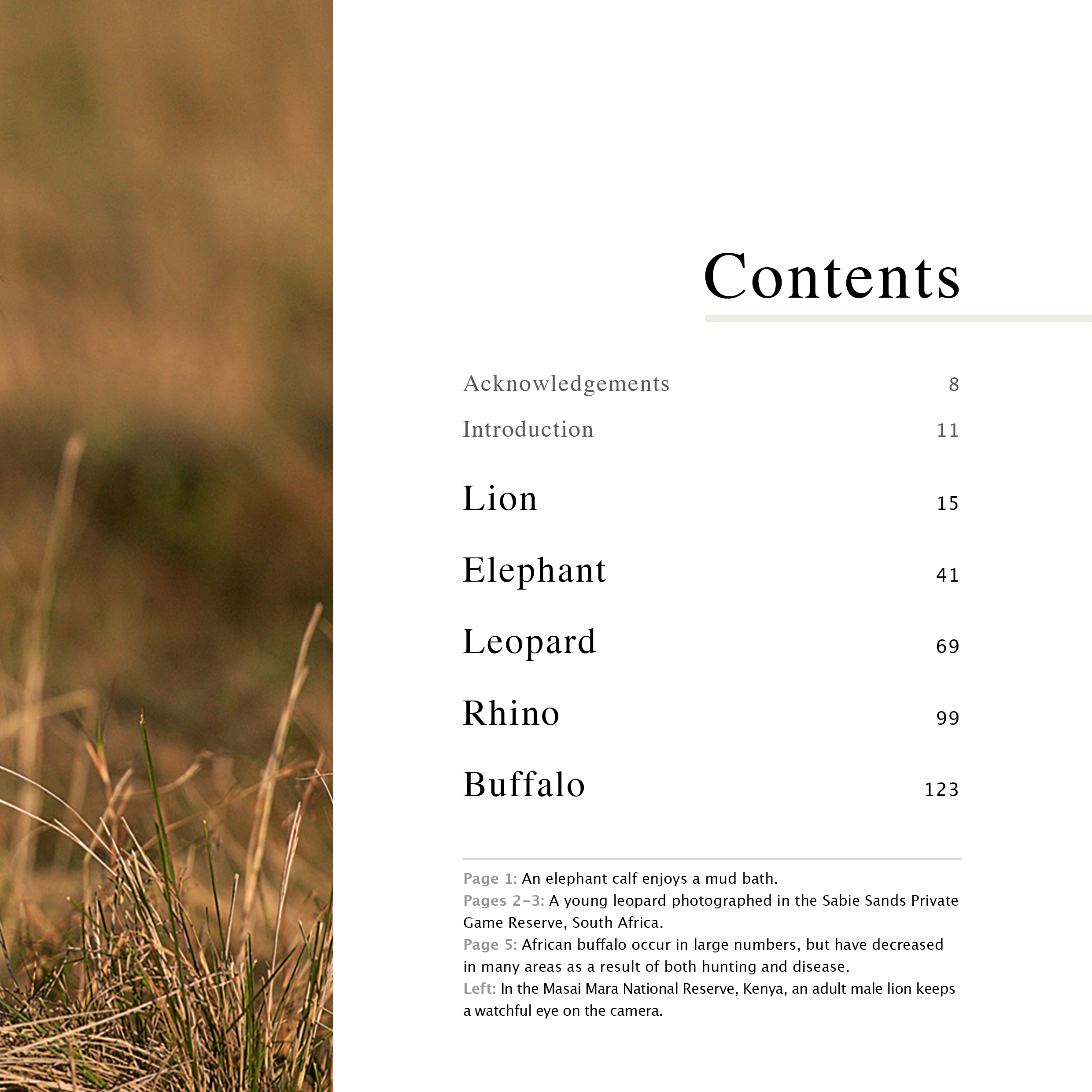
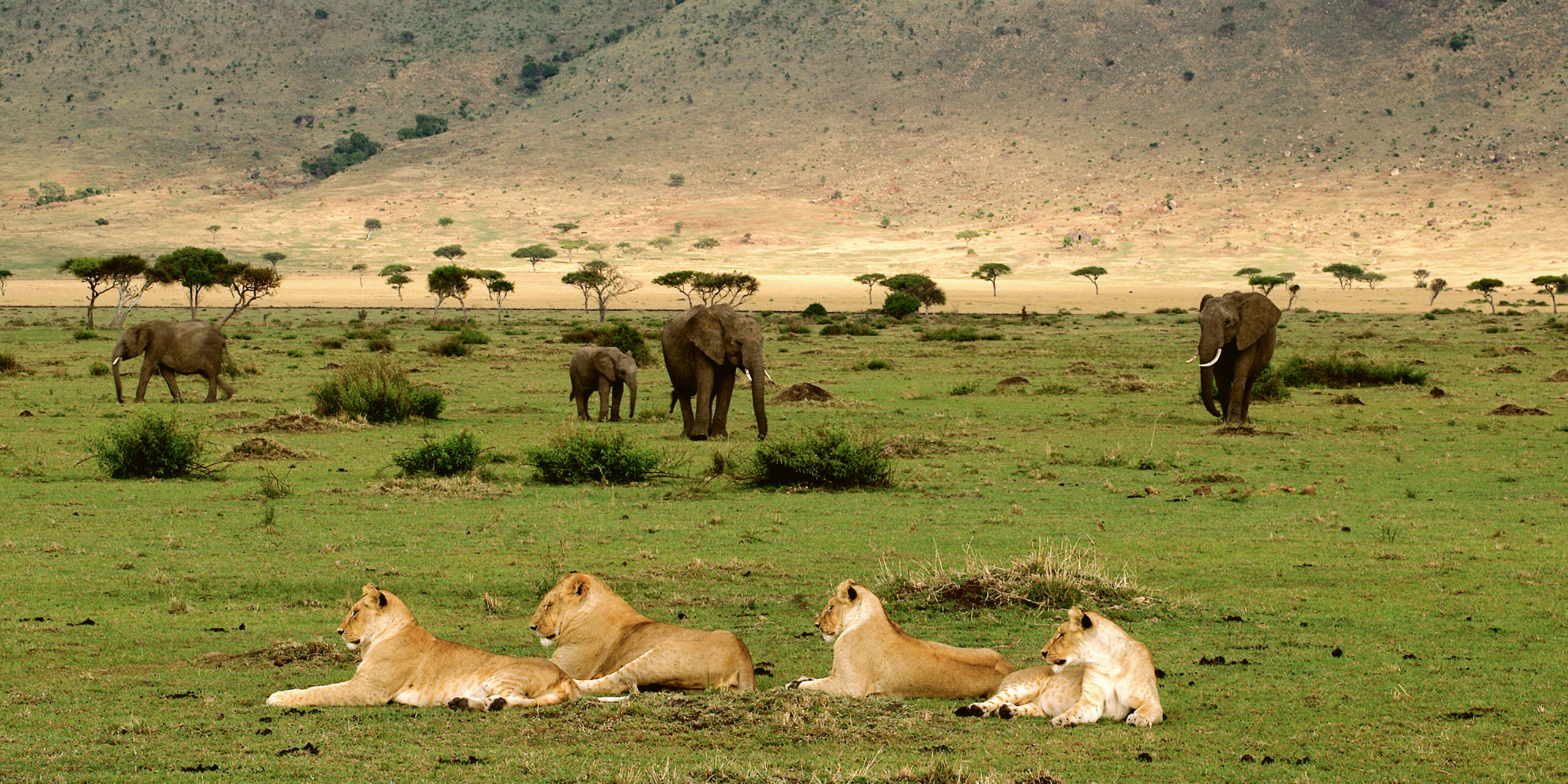
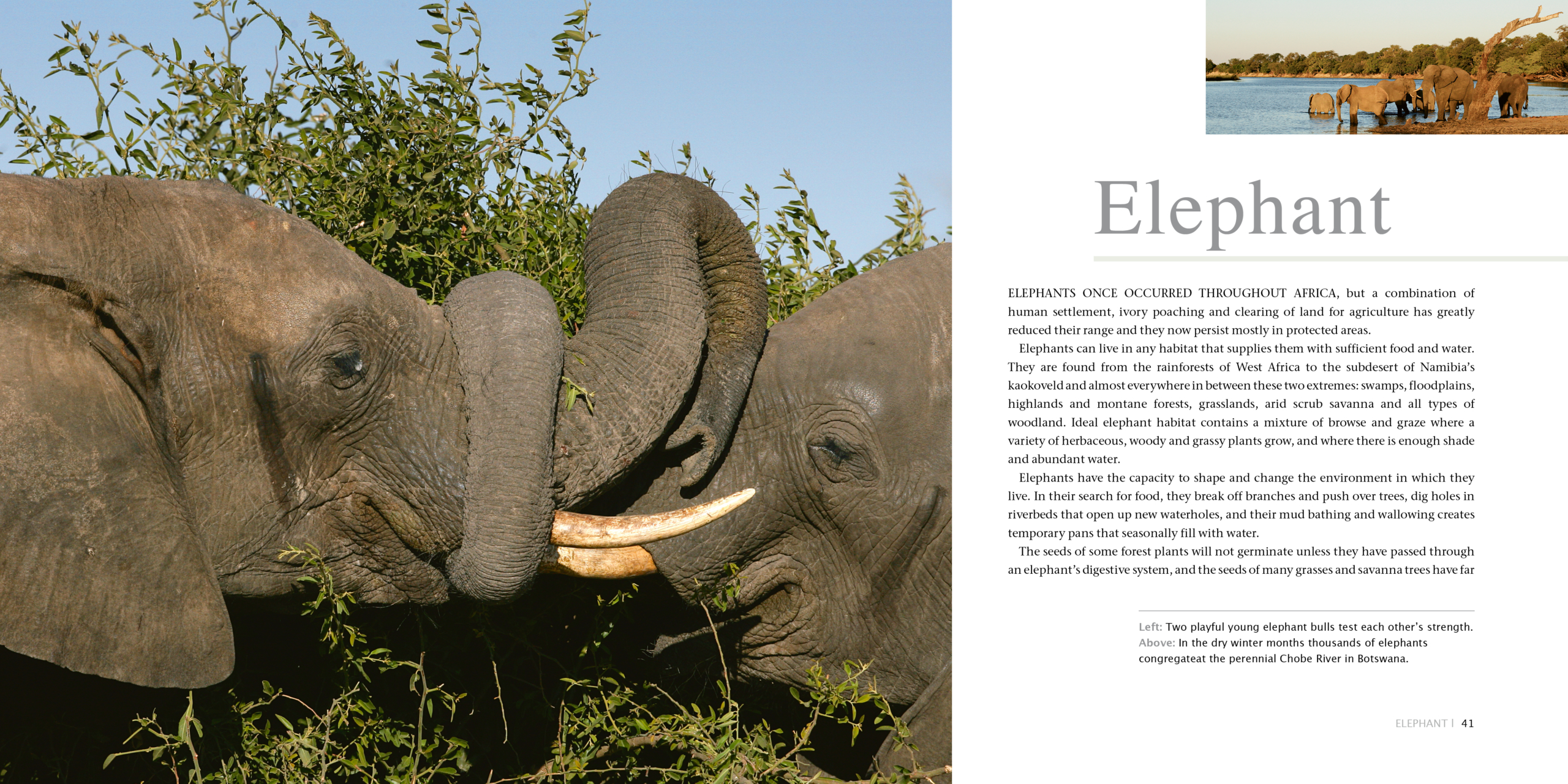
Think of an African safari and the ‘Big Five’ – lion, leopard, rhino, buffalo and elephant – immediately come to mind. Award-winning wildlife photographer Gerald Hinde has long been enthralled by these magnificent animals and has spent countless hours in the field, experiencing them in different moods and behaviours. Big Five of Africa beautifully reproduces some of the more remarkable moments he has captured on film during his visits to the wildlife sanctuaries of southern and East Africa. Brief but informative text introduces each animal in turn, providing interesting insights into the nature of these formidable, yet compelling, creatures.
In stock
Customer Reviews
There are no reviews yet.
Related products
-

Behaviour Briefs
R100.00The ultimate compact, quick ID guide to southern and East African animal behaviour, and the latest in the popular series of ‘quick guides’ to wildlife. This title:
• describes and explains the habits of the more commonly found mammals of southern and East Africa;
• matches concise text with action photographs that capture characteristic behaviour;
• serves as a companion volume to more detailed field guides;
• provides a quick reference and easy read for anyone interested in understanding wild animals and their sometimes baffling rituals.
-

A Complete Guide to the Snakes of Southern Africa
R580.00This long-awaited third edition of A Complete Guide to the Snakes of Southern Africa has been updated, revised and expanded. New information based on scientific research relating to behaviour, identification, reproduction and snake venoms has been included in the species accounts. Features of this book:
– Covers all essential aspects of snake biology and behaviour.
– Species descriptions are accompanied by full-colour photographs and distribution maps.
– Simple icons make essential information available at a glance.
– A separate ‘key features’ box assists in quickly identifying species in the field.
– Chapters on classification and identification, keeping snakes, and the treatment of snakebite supplement the species accounts. -

Wildlife of Namibia: A Photographic Guide
Namibia is a fascinating land of contrasts, where floodplains, swamps and the world’s oldest desert have contributed to a rich biodiversity. Wildlife of Namibia is an easy-to-use guide to the country’s most conspicuous and interesting mammals, birds, reptiles, invertebrates and plants.
The book includes:
- An informative introduction to the country’s geography, climate and vegetation
- Accounts describing each species’ appearance, habits, size and conservation status, as well as information on habitat and best viewing localities
- Full-colour photographs of each species, along with distribution maps to show their range
- This all-in-one compact guide will prove invaluable to visitors to national parks, nature reserves and other wildlife-rich places in Namibia.
R400.00R280.00 -

Field Guide to Insects of South Africa (NE)
This trusted best-seller has been comprehensively updated and expanded to feature accounts of over 1,500 species and insect groups. Included are the most common, most economically and ecologically important, interesting and attractive insects in the region.
It features: vivid photographs, easy-to-read text, detailed accounts covering identification, biology, distribution and related species, a helpful introduction detailing the significance, life history, collection and photography of insects, and quick reference guides on the inside covers to facilitate identification.
Entomologists both amateur and professional, students, gardeners, farmers, tourists and anyone with an interest in the natural world will appreciate this illuminating and invaluable guide.
R610.00R427.00 -

‘n Volledige gids tot die slange van Suider-afrika
R580.00Hierdie langverwagte derde uitgawe van ‘n Volledige Gids tot die Slange van Suider-Afrika is ten volle opgedateer. Nuwe inligting gebasseer op wetenskaplike navorsing is ingesluit, en hou verband met gedrag, identifikasie, voortplanting en gif. Kenmerke van hierdie boek:
– Dek al die noodsaaklike aspekte van biologie en slang gedrag.
– Spesies se beskrywings word vergesel van volkleur fotos en verspreidingskaarte.
– Eenvoudige simbole maak belangrike inligting dadelik beskikbaar.
– ‘n Aparte ‘Kyk uit vir’ blokkie help om spesies in die veld gou te identifiseer.
– Hoofstukke oor klassifikasie en identifikasie, aanhou van slange, en die behandeling van slangbyte vul die inligting aan. -

Skullduggery – Quick ID Guide
R100.00In this short but informative guide, trusted authors Chris and Mathilde Stuart turn mammal ID on its head – literally. The identification of mammal skulls is the subject of this latest addition to the quirky ‘Quick Guide’ series, and covers the most common skulls readers are likely to encounter in the wild – from easily recognisable species such as elephant, hippo, rhino, baboons, antelope, whales and dolphins, to the more challenging family groups: dogs, cats, hyaenas, equids, pigs, civets and genets, mongooses, rats and mice, bats, sengis, shrews, moles, hares and rabbits, hyrax, and squirrels.
Each entry features:
Close-up photographs showing the entire skull, teeth and, where available, upper and lower jaws
Pointers to diagnostic features
Average measurement for skull length
Short description highlighting main features of each skull and tooth structure
Dental formula for teeth in upper and lower jaws
A brief introduction, with labelled photographs, covers anatomy as well as dentition; and a quick-reference photographic key to the main animal groups appears on the inside front cover.An ideal companion to mammal field guides, this book will be appeal to rangers, safari guides and all nature lovers wanting to deepen their understanding of life in the bush.
-

Scatalog
R100.00Here’s a quick and quirky identification guide to animal dung or droppings. Each animal group (carnivores, primates, antelope, rats and mice, reptiles, birds) is briefly introduced; but the main focus of this book is the photographs, mostly life-size. These images enable immediate identification of the animals responsible for the droppings. To confirm identity, summary tables give details of average width, length and typical contents of droppings (feathers, twigs, leaves, sand, etc.).
This should become a recommended reference for rangers and field guides in the region; and it will be of use to anyone with an interest in wildlife, and even to those who simply enjoy walking in the wild and observing the tracks and signs they encounter.
-

Guide to Dragonflies & Damselflies of South Africa (NE)
In this fully revised edition of A Guide to Dragonflies & Damselflies of South Africa, all 164 species known to occur in South Africa, Lesotho and Swaziland are described and illustrated, grouped according to family (six dragonfly and six damselfly families). The species entries feature scans of live insects (close-up and side-view images) and photographs of specimens in their natural environment and showing key behaviours. Detailed descriptions focus on size, identifying features and occurrence. An introductory chapter unpacks the life cycle, behaviour, biology and breeding of this fascinating group of insects. Presented in a classic field guide format, this revised edition now also features:
Expanded annotations to all illustrations, highlighting diagnostic features to ensure accurate identification
New distribution maps
Additional colour plates and photographsBeautifully presented, informative and authoritative, this book will appeal to anyone with an interest in South Africa’s insect life, and to nature lovers in general.
R500.00R350.00
Be the first to review “Big Five of Africa”
You must be logged in to post a review.