

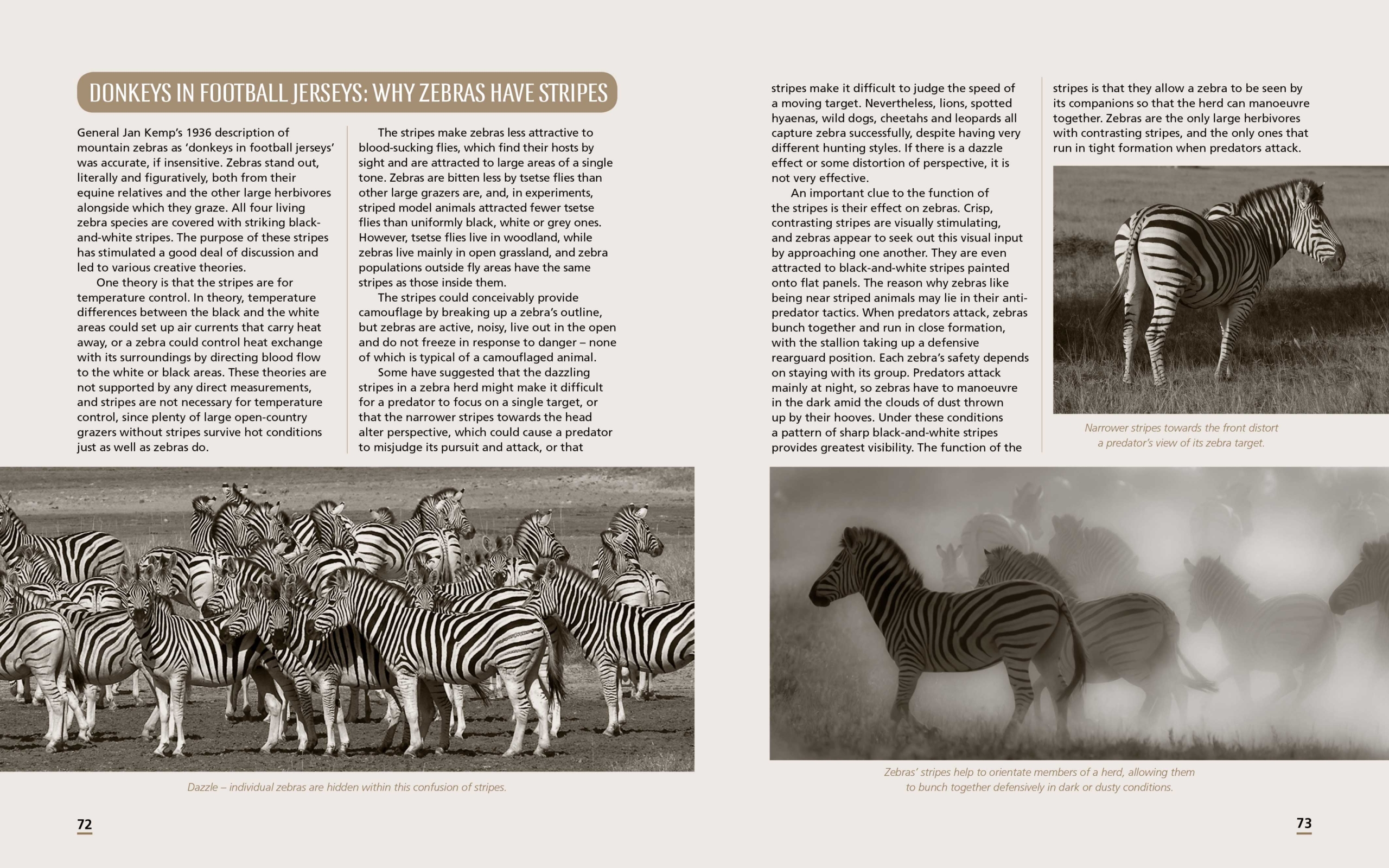
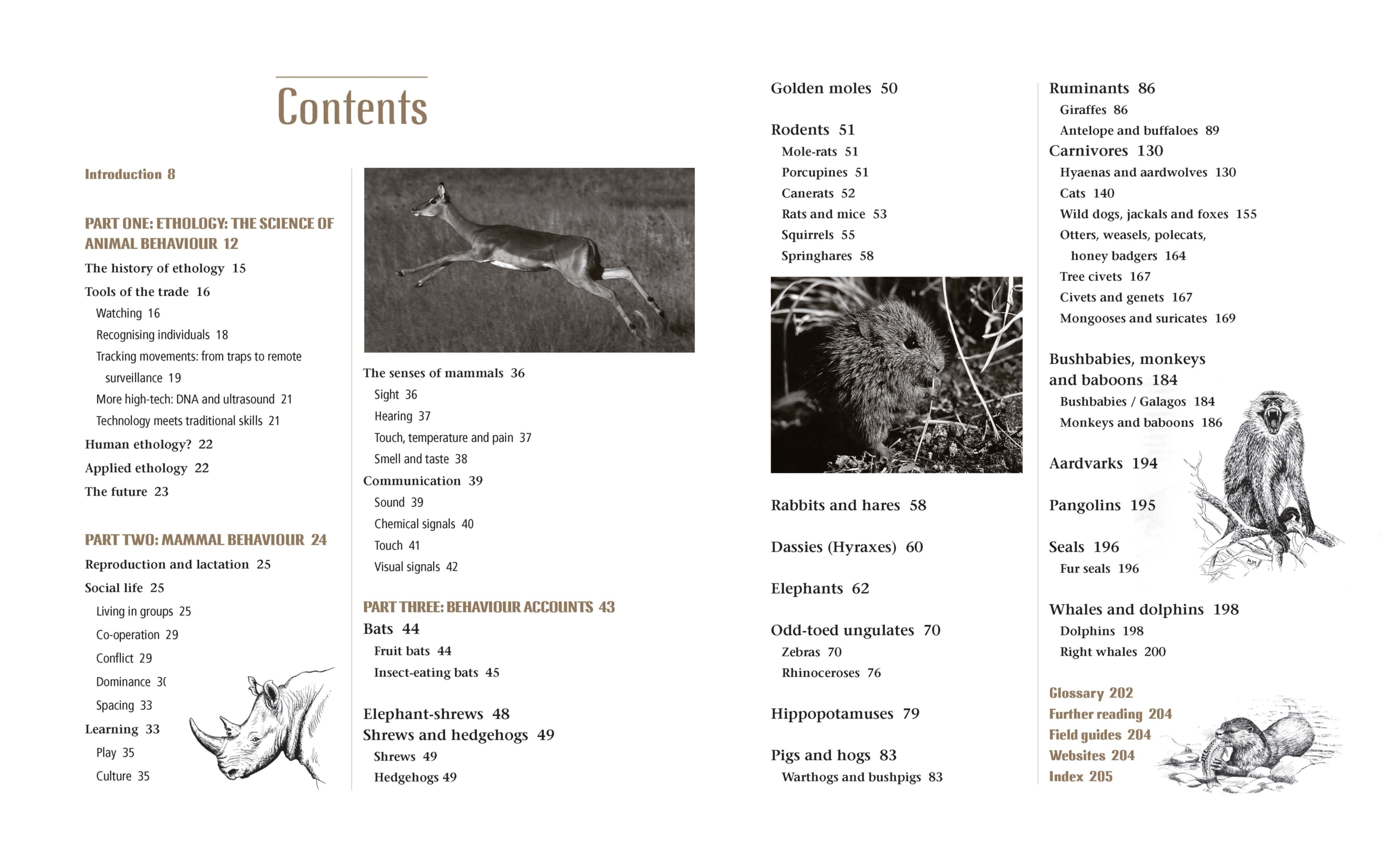
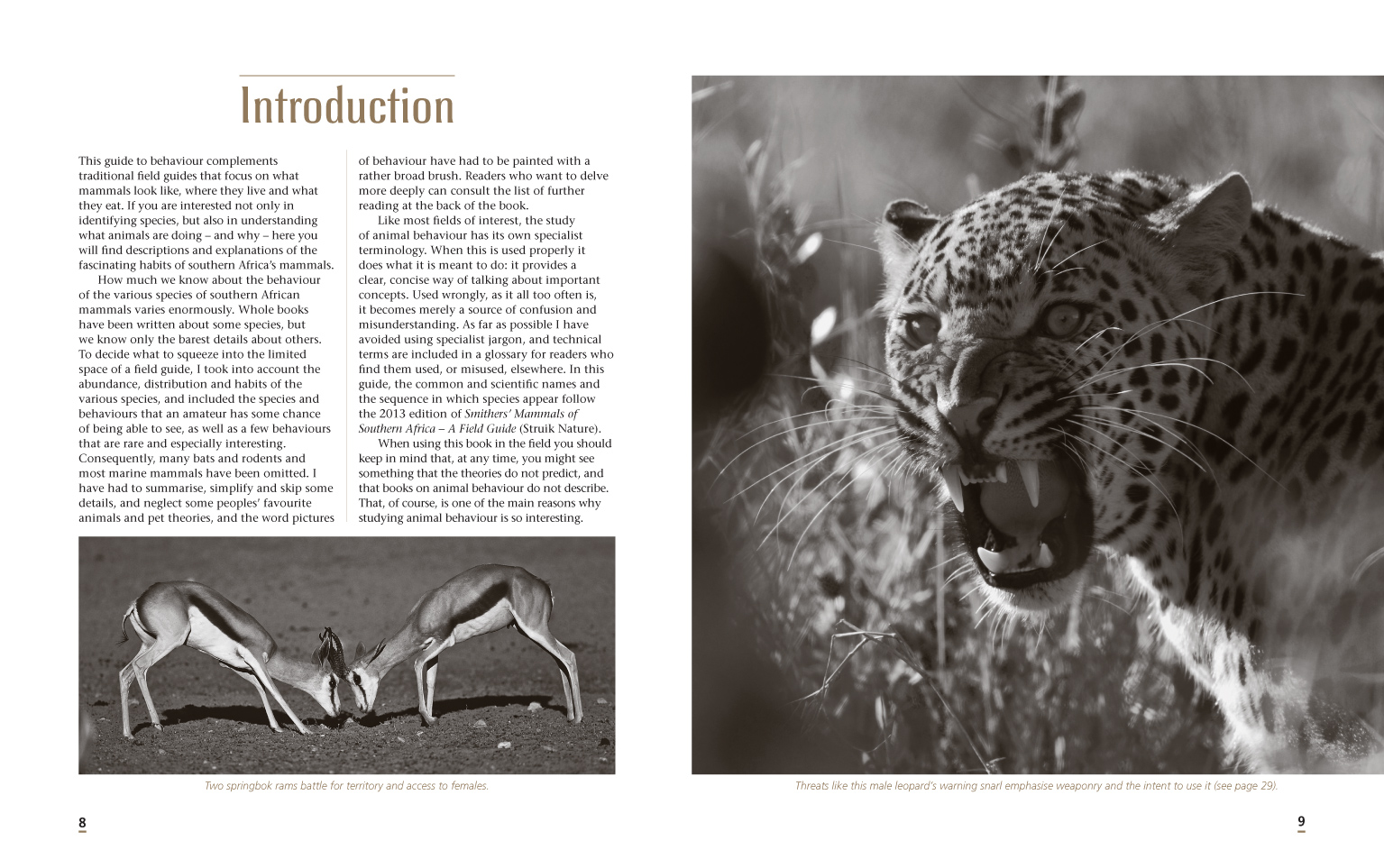
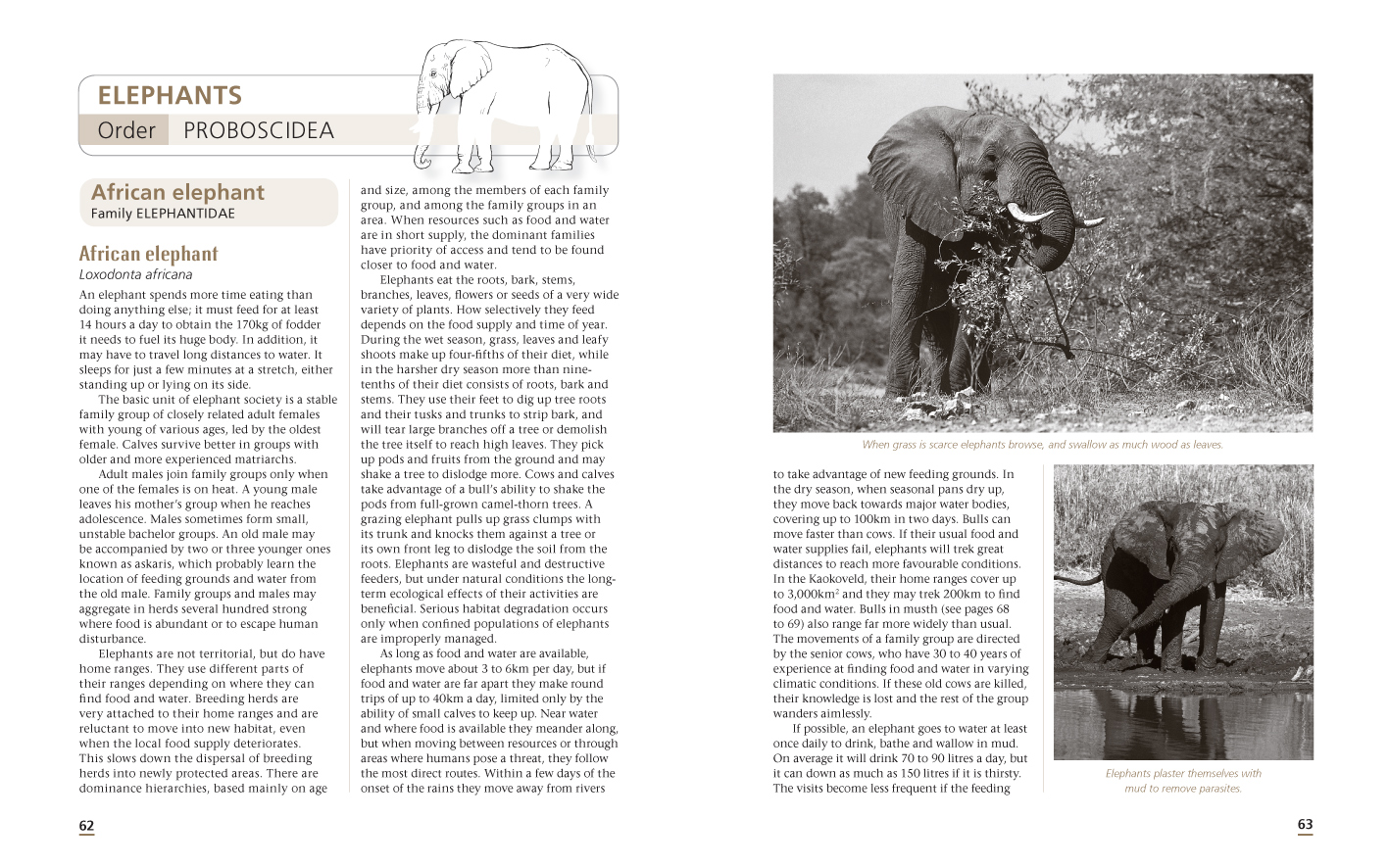
Wild Ways
TAKE A CLOSER LOOK
| Author: | Peter Apps |
|---|
R320.00
NEW EDITION MAY 2014
Wild Ways brings together all the latest studies of the behaviour of southern Africa’s rich and accessible mammal fauna, describing not only what mammals do, but also the often surprising reasons why they do it, and covers species as diverse as fruit bats, pangolins, lions, rats and whales.
Well-established as an invaluable resource for visitors to parks and reserves, hikers, hunters, farmers and outdoor enthusiasts, this classic guide has now been thoroughly updated and revised, has a fresh, lively design, and is packed with new and engrossing detail.
In stock
Customer Reviews
There are no reviews yet.
Related products
-

Wildlife of Namibia (German): A Photographic Guide
R400.00Namibia is a fascinating land of contrasts, where floodplains, swamps and the world’s oldest desert have contributed to a rich biodiversity. Wildlife of Namibia is an easy-to-use guide to the country’s most conspicuous and interesting mammals, birds, reptiles, invertebrates and plants.
The book includes:
An informative introduction to the country’s geography, climate and vegetation
Accounts describing each species’ appearance, habits, size and conservation status, as well as information on habitat and best viewing localities
Full-colour photographs of each species, along with distribution maps to show their rangeThis all-in-one compact guide will prove invaluable to visitors to national parks, nature reserves and other wildlife-rich places in Namibia.
-

Pangolins: Scales of Injustice
R230.00Smuggled into China and sold for meat in the live-animal markets of cities such as Wuhan, the pangolin has dominated world headlines. Is it the vector for Covid-19?
Pangolins have long been sustainably harvested by local communities for their meat and scales, but today the burgeoning trade in these mammals has reached crisis point. Eight pangolin species occur worldwide, four in Asia and four in Africa, and all face extinction if current rates of hunting and trading continue unabated.
Now the spotlight is on the world’s most trafficked mammal. Scientists have identified pangolins as the likely source of the coronavirus infection that has brought the world to its knees. This multi-trillion dollar disaster makes pangolins the most expensive meals ever eaten.
In this timely expose, Richard Peirce unpacks the horrors and dangers of the trade in this enigmatic, little-known mammal. He explains the links between wildlife and Covid-19, and details China’s response to the pandemic.
He also tells the story of a particular pangolin poached in Zimbabwe and brought to South Africa to be traded. Readers accompany an agent of the African Pangolin Working Group, assisted by the local police, on an actual sting operation to rescue the animal and capture the traffickers. And they follow the subsequent progress of the rescued pangolin, from near death to rehabilitation and release into the wild.
-

‘n Volledige gids tot die slange van Suider-afrika
R580.00Hierdie langverwagte derde uitgawe van ‘n Volledige Gids tot die Slange van Suider-Afrika is ten volle opgedateer. Nuwe inligting gebasseer op wetenskaplike navorsing is ingesluit, en hou verband met gedrag, identifikasie, voortplanting en gif. Kenmerke van hierdie boek:
– Dek al die noodsaaklike aspekte van biologie en slang gedrag.
– Spesies se beskrywings word vergesel van volkleur fotos en verspreidingskaarte.
– Eenvoudige simbole maak belangrike inligting dadelik beskikbaar.
– ‘n Aparte ‘Kyk uit vir’ blokkie help om spesies in die veld gou te identifiseer.
– Hoofstukke oor klassifikasie en identifikasie, aanhou van slange, en die behandeling van slangbyte vul die inligting aan. -

Scatalog
R100.00Here’s a quick and quirky identification guide to animal dung or droppings. Each animal group (carnivores, primates, antelope, rats and mice, reptiles, birds) is briefly introduced; but the main focus of this book is the photographs, mostly life-size. These images enable immediate identification of the animals responsible for the droppings. To confirm identity, summary tables give details of average width, length and typical contents of droppings (feathers, twigs, leaves, sand, etc.).
This should become a recommended reference for rangers and field guides in the region; and it will be of use to anyone with an interest in wildlife, and even to those who simply enjoy walking in the wild and observing the tracks and signs they encounter.
-

Southern African Mammals Made Simple
R300.00Southern African Mammals Made Simple enables users to distinguish between commonly confused mammals by applying the breakthrough methodology that made Southern African LBJs Made Simple so hugely popular.
The simple three-step system allows for quick and certain identification of mammals in the field. For each species featured, the book gives:range maps; full-colour illustrations and photographs; key identification pointers, and concise text describing height, weight, habits and habitat.
All of southern Africa’s most common and distinctive mammals are included, but the particular value of this book lies in separating the more challenging species, such as antelope, mongooses, genets, primates and many more. It will appeal to both local and foreign visitors to our game parks.
-

Field Guide to the Spiders of Southern Africa
R560.00Thoroughly revised and updated, this long-awaited new edition of Field Guide to the Spiders of South Africa remains the most comprehensive guide to South African spiders published to date. It features over 780 of the more common spider species encountered in the field and in homes and gardens, as well as representative species from some of the rarer spider families.
– ‘Quick Keys’ to the 72 South African spider families provide a useful starting point to identification.
– Succinct genus and species accounts cover identifying characteristics, breeding, behaviour, distribution and conservation status.
– Colour photographs and/or illustrations as well as distribution maps support each entry.
– Introductory chapter discusses spider morphology, spider life cycle, the functions of silk, as well as spider collection techniques.
– Section on venom identifies species that pose a danger to humans, unpacks neurotoxic and cytotoxic venom, and details the symptoms and treatment of spider bites. -

Field Guide to Tracks & Signs – East Africa NE
R590.00Originally published in 1994, A Field Guide to Tracks and Signs of Southern and East African Wildlife quickly became the standard reference to the subject in the region, reprinting many times. This new edition provides the most detailed coverage of tracks, droppings, bird pellets, nests and shelters and feeding signs, not only for mammals, but also for birds, reptiles, insects and other invertebrates. Greatly expanded, this extensive update now features: full colour throughout.
-

On Track – Quick ID Guide to Southern and East African Animal Tracks
R100.00Following the success of the earlier Scatalog: Quick ID guide to southern African animal droppings, here’s another quick and quirky identification guide, this time to tracks of the region’s most commonly found mammals, but also includes tracks of reptiles, rodents, birds and insects.
A simple key on the inside front cover directs users to any of 11 categories, such as ‘cloven hooves’, ‘paws’ or ‘tramline-like trails’. Nearly 100 animals or closely related groups of animals are depicted; for each, there is a silhouette of front and back feet and a colour photograph of the track; the average measurements for each track; a short description of the track; and information about the circumstances and likely habitat.
Concise and to-the-point, this pocket-sized reference will prove indispensable in the field, no matter the experience of the user.
Be the first to review “Wild Ways”
You must be logged in to post a review.