

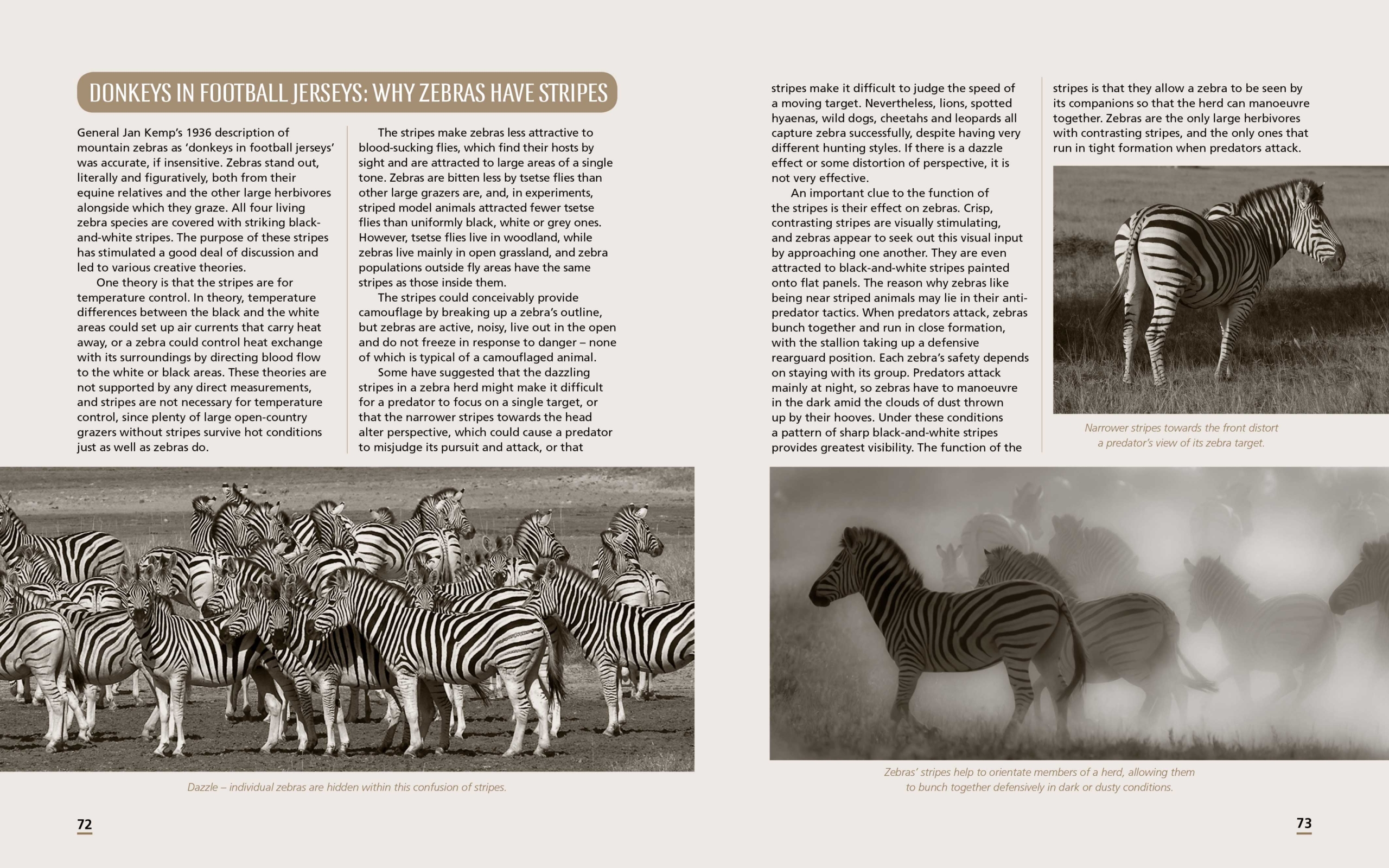
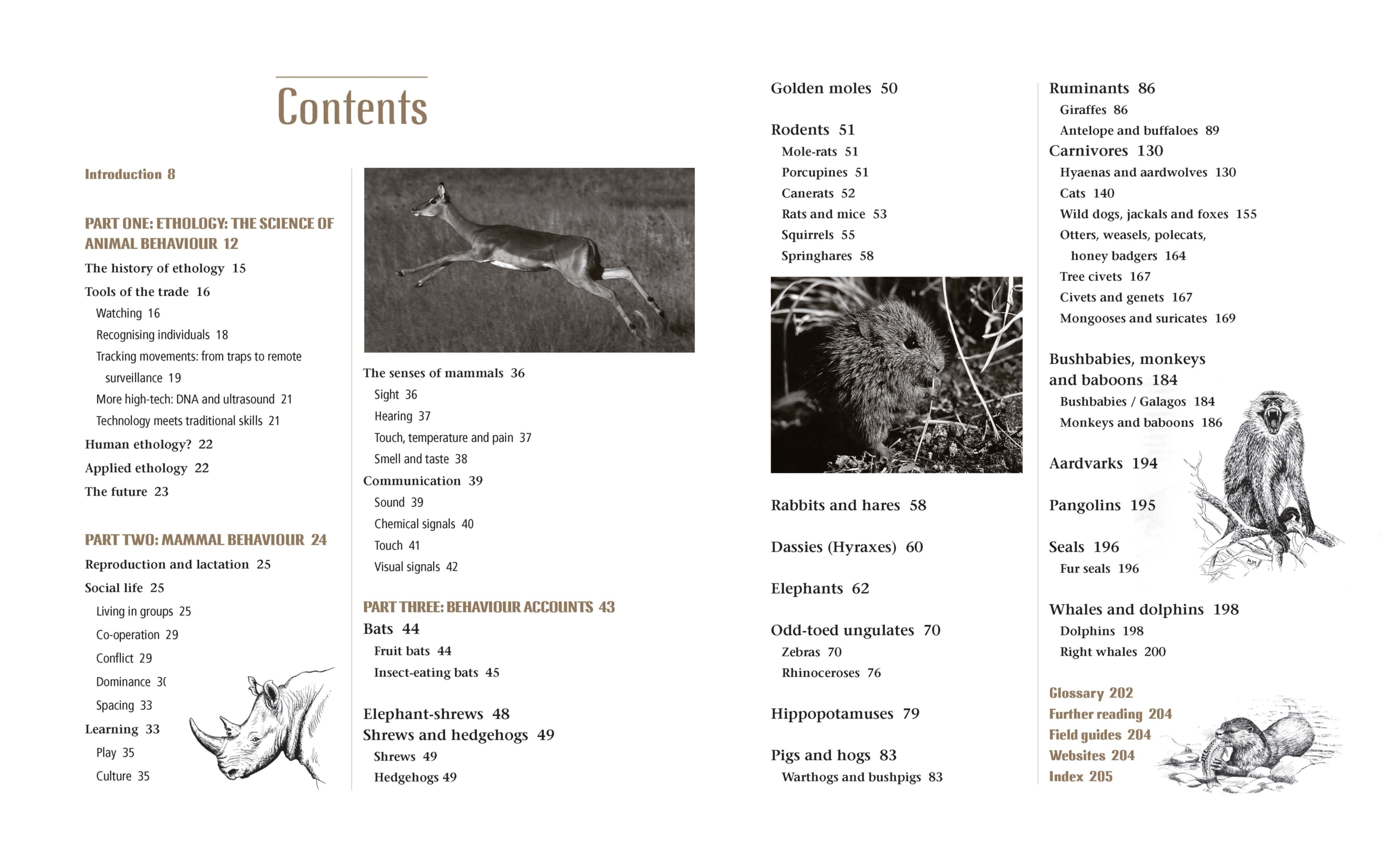
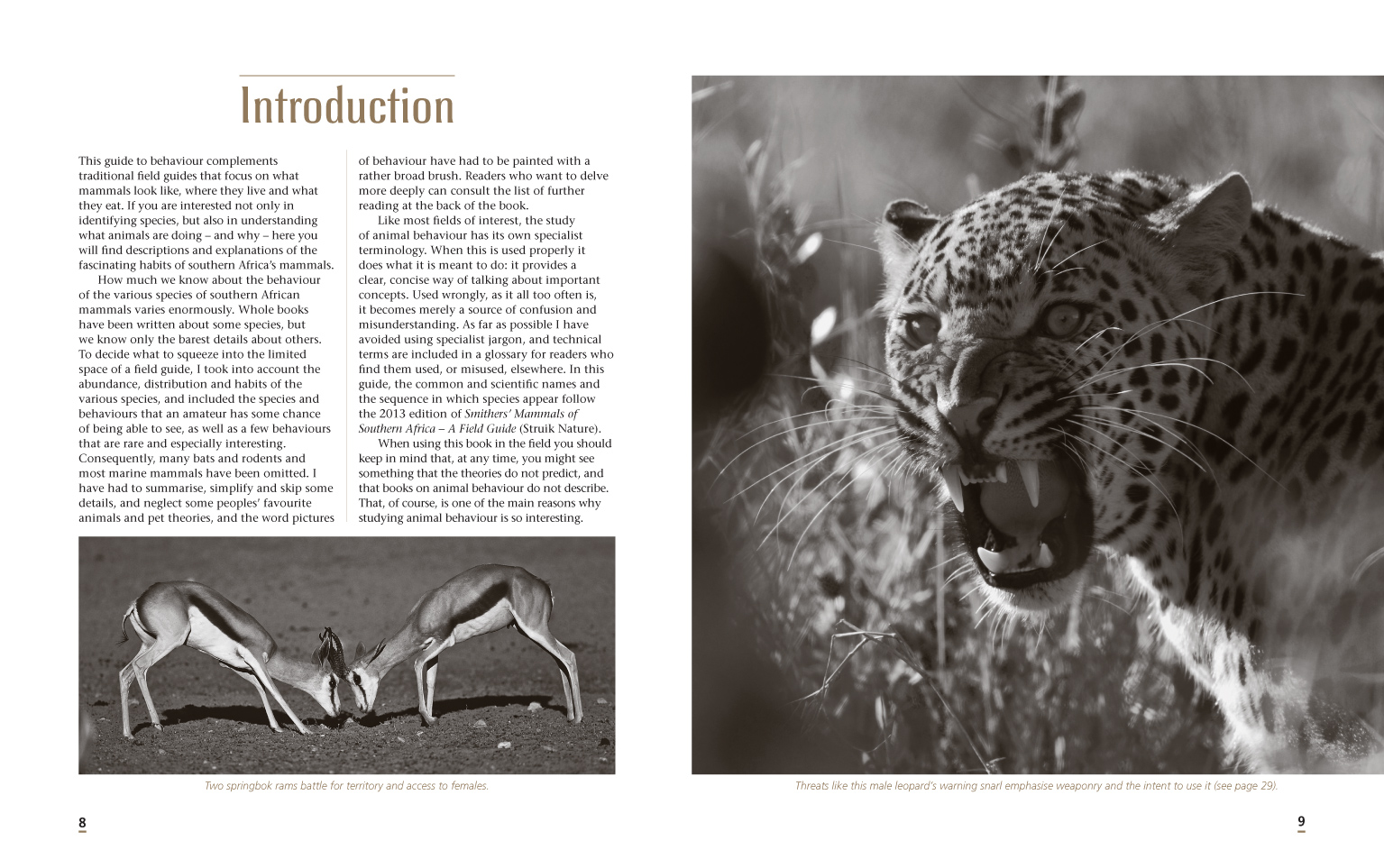
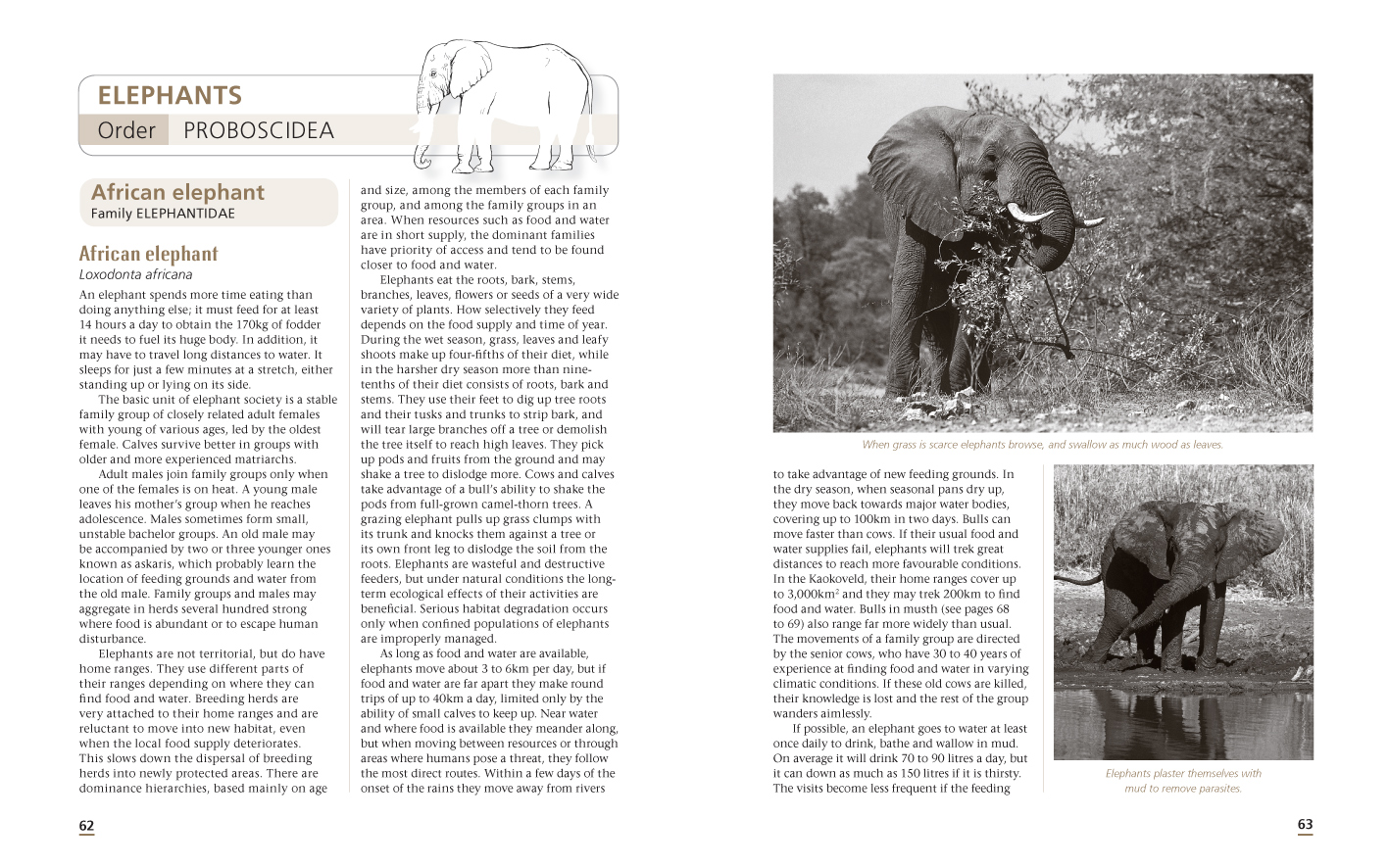
Wild Ways
TAKE A CLOSER LOOK
| Author: | Peter Apps |
|---|
R320.00
NEW EDITION MAY 2014
Wild Ways brings together all the latest studies of the behaviour of southern Africa’s rich and accessible mammal fauna, describing not only what mammals do, but also the often surprising reasons why they do it, and covers species as diverse as fruit bats, pangolins, lions, rats and whales.
Well-established as an invaluable resource for visitors to parks and reserves, hikers, hunters, farmers and outdoor enthusiasts, this classic guide has now been thoroughly updated and revised, has a fresh, lively design, and is packed with new and engrossing detail.
In stock
Customer Reviews
There are no reviews yet.
Related products
-

Shaping Addo: The Story of a Southern African National Park
R440.00More than a century ago elephants in the eastern Cape were systematically hunted – until only 16 were left . Today there are 650 elephants in the Addo Elephant National Park, the densest concentration of wild elephants anywhere on the planet. While elephants are undoubtedly still the park’s top drawcard, the past four decades have seen the emphasis shift from protecting a single species to conserving five biomes and the wild animals that occupy them. Today, Addo can boast the Big Seven: elephant, lion, leopard, buffalo, rhino, as well as great white shark and southern right whale.
Like Shaping Kruger, its successful predecessor, Shaping Addo expertly delves into the history of the park, detailing the positive impact that changing conservation practices have had on its development. Drawing on decades of groundbreaking research, the author provides fascinating insight into the lives and habits of the animals (both terrestrial and marine), examining individual species, the relationship between them, and the carefully crafted management strategies required to ensure the survival of all species.
Shaping Addo is an engrossing account of how a seemingly insigni cant sanctuary was transformed into an astonishingly successful mega-park, and the most ecologically diverse protected space in South Africa.
-

Shaping Kruger
R440.00The Kruger National Park is one of the world’s leading stewards of biological diversity. Its management requires ongoing monitoring and re-evaulation to ensure that species survive.
Shaping Kruger provides fascinating insight into the lives, habits and behaviour of the larger animals that significantly affect the workings of the park. It expertly synthesizes decades of ground-breaking research into the animals and their environment, examining along the way individual species; predator-prey relationships; mammal distribution, and browsing and grazing interactions.
This detailed look at how Park management has had to interpret, monitor and adapt the processes that allow species to survive – even thrive – in an ever-changing environment makes for an intriguing and enlightening read.
-

Nature Now Mammals of Kruger
R290.00This easy-to-read, fact-filled guide features over 80 mammal species found in the Kruger National Park, one of Africa’s most popular game-viewing destinations.
Packed with stunning photographs and engaging text, it provides brief pointers for accurate identification and highlights the most interesting facts about each species. Did you know that leopards are more dangerous than lions, elephants use their trunks to snorkel, giraffes give birth standing up, and no two zebras have the same stripe pattern?Aimed at nature enthusiasts of all ages, this compact guide:
– Covers the Park’s rich diversity of mammals – from the world-famous Big Five to the miniature mongooses seen dashing across the road
– Unpacks each animal’s most interesting characteristics and behaviours
– Notes the record-breakers: who has the longest horns, strongest jaws or greatest appetite?
– Provides game-watching tips for successful safaris, as well as ‘Best viewing’ notes for each species
– Features striking photographs of Kruger’s wildlife in action -

Cuddle Me, Kill Me
R230.00Canned lion hunting sprang to the world’s attention with the 2015 launch of the documentary, Blood Lions. This movie blew the cover off a brutal industry that has burgeoned in the last decade or so, operating largely under the radar of public concern.In Cuddle Me Kill Me, veteran wildlife campaigner Richard Peirce reveals horrifying facts about the industry. He tells- The true story of two male lions rescued from breeding farms
- The exploitation and misery of these apex predators when they are bred in captivity
- How young cubs are removed from their mothers mere hours after birth
- How they are first used for petting by an adoring (and paying) public
- Their subsequent use for ‘walking with lions’ tourism
- And how, in the final stage of exploitation, they are served up in fenced enclosure for execution by canned hunters – or simply shot by breeders for the value of their carcass, a prized product in the East.
Well researched by Peirce with the help of an undercover agent, and illustrated with photos taken along the way, this is a disturbing and passionate plea to end commercial captive lion breeding and the re-purposing of wildlife to cater for human greed. -

The Reef Guide: East & South Coasts of Southern Africa
R500.00The Reef Guide: East & South Coasts of Southern Africa documents some 800 reef fishes and invertebrates found along the east and south coasts of southern Africa. Following on the success of Dennis King’s earlier two titles, this impressive new guide features 578 species of fish and includes sections on anemones, starfish, snails, crabs and shrimps. Full colour photographs and descriptive text for each species, along with useful and interesting information, make for easy identification. While focusing on southern Africa, the book is also applicable to the entire east coast of Africa, as well as the islands of the western Indian Ocean – Seychelles, Mauritius, Reunion, Madagascar, the Comoros and the Maldives.
Indispensable for divers, snorkelers and rock-pool enthusiasts, as well as fishermen and marine aquarists.
-

Behaviour Briefs
R100.00The ultimate compact, quick ID guide to southern and East African animal behaviour, and the latest in the popular series of ‘quick guides’ to wildlife. This title:
• describes and explains the habits of the more commonly found mammals of southern and East Africa;
• matches concise text with action photographs that capture characteristic behaviour;
• serves as a companion volume to more detailed field guides;
• provides a quick reference and easy read for anyone interested in understanding wild animals and their sometimes baffling rituals.
-

Field Guide to Insects of South Africa (NE)
R610.00This trusted best-seller has been comprehensively updated and expanded to feature accounts of over 1,500 species and insect groups. Included are the most common, most economically and ecologically important, interesting and attractive insects in the region.
It features: vivid photographs, easy-to-read text, detailed accounts covering identification, biology, distribution and related species, a helpful introduction detailing the significance, life history, collection and photography of insects, and quick reference guides on the inside covers to facilitate identification.
Entomologists both amateur and professional, students, gardeners, farmers, tourists and anyone with an interest in the natural world will appreciate this illuminating and invaluable guide.
-

Field Guide to the Spiders of Southern Africa
R560.00Thoroughly revised and updated, this long-awaited new edition of Field Guide to the Spiders of South Africa remains the most comprehensive guide to South African spiders published to date. It features over 780 of the more common spider species encountered in the field and in homes and gardens, as well as representative species from some of the rarer spider families.
– ‘Quick Keys’ to the 72 South African spider families provide a useful starting point to identification.
– Succinct genus and species accounts cover identifying characteristics, breeding, behaviour, distribution and conservation status.
– Colour photographs and/or illustrations as well as distribution maps support each entry.
– Introductory chapter discusses spider morphology, spider life cycle, the functions of silk, as well as spider collection techniques.
– Section on venom identifies species that pose a danger to humans, unpacks neurotoxic and cytotoxic venom, and details the symptoms and treatment of spider bites.
Be the first to review “Wild Ways”
You must be logged in to post a review.