

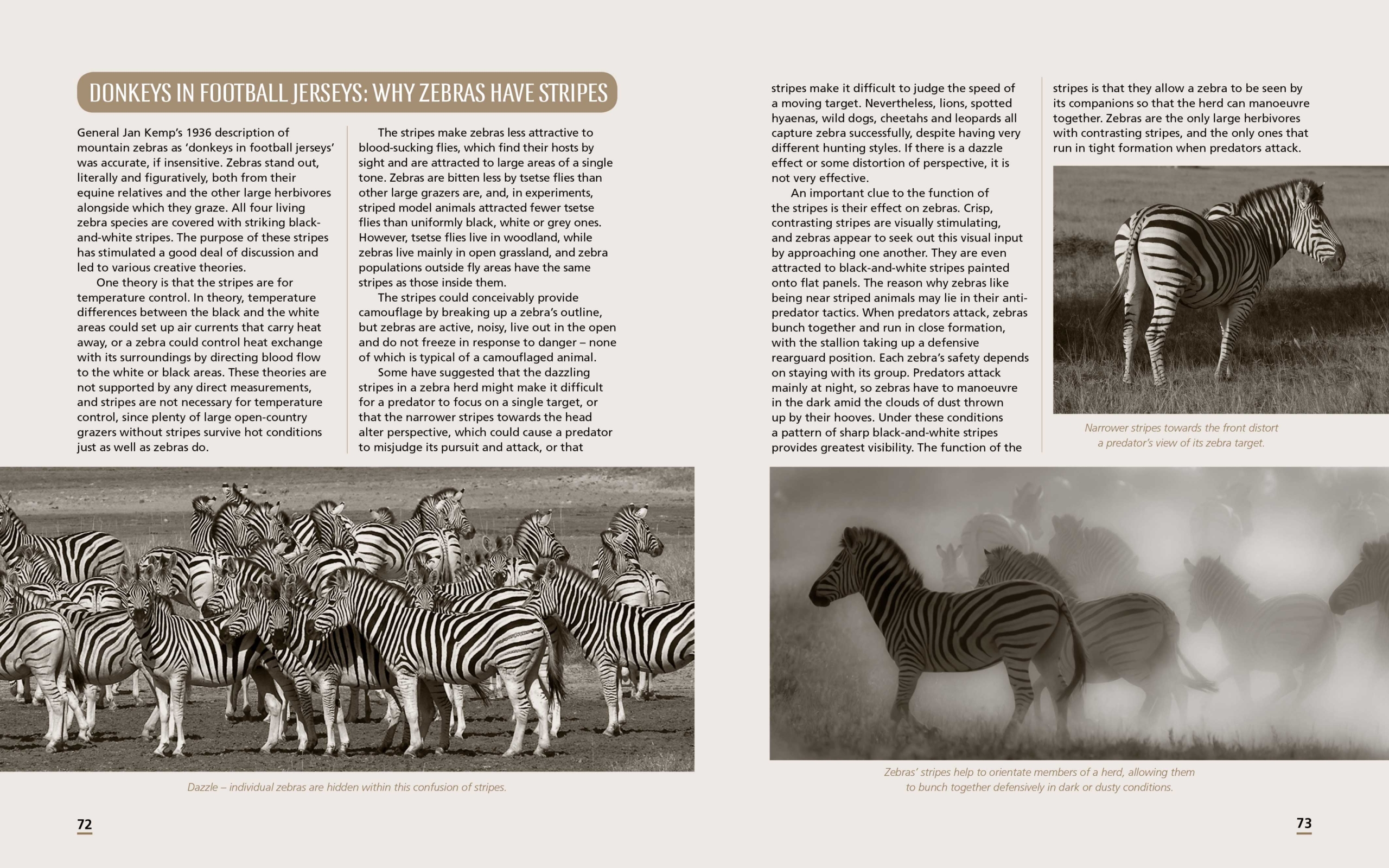
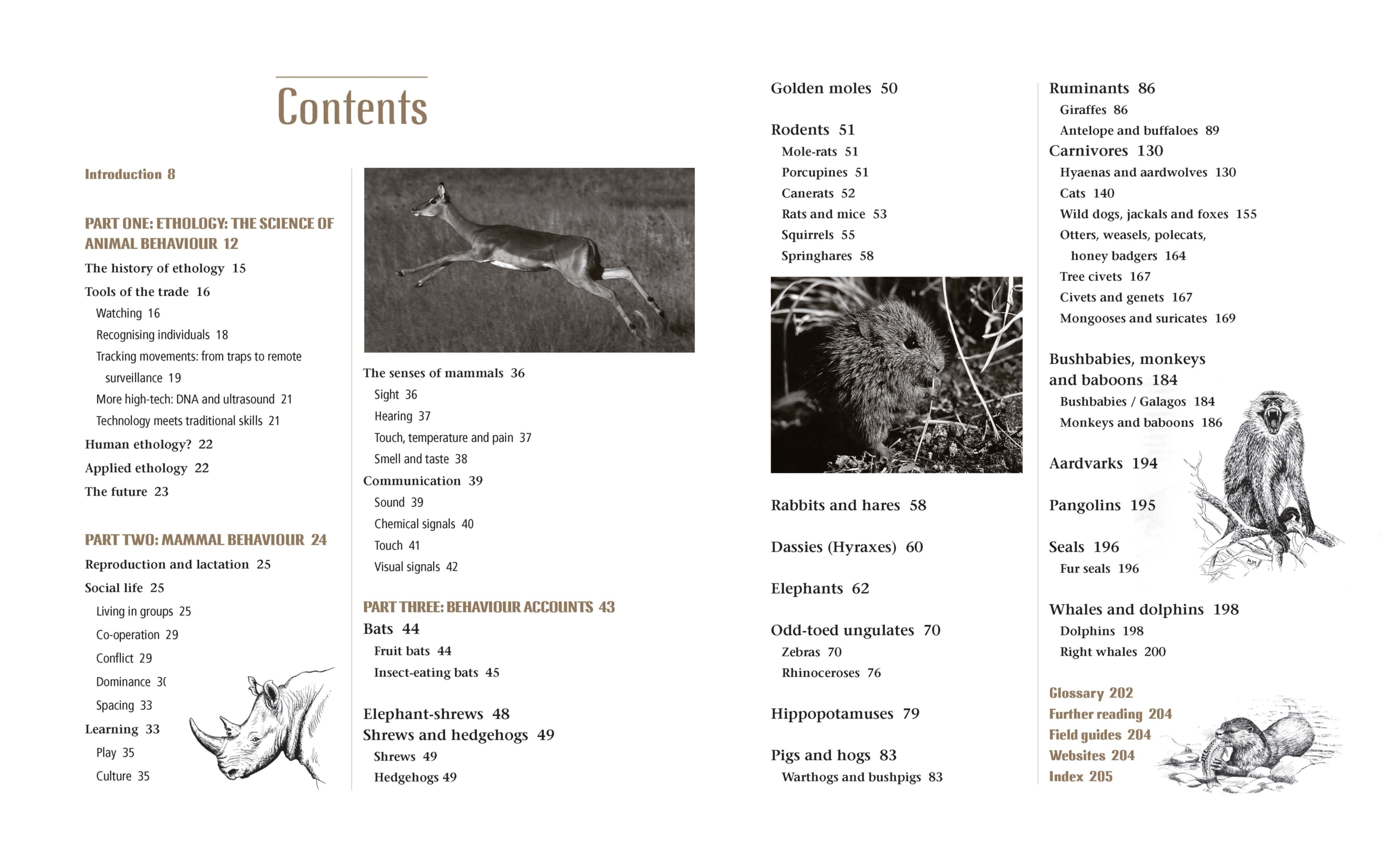
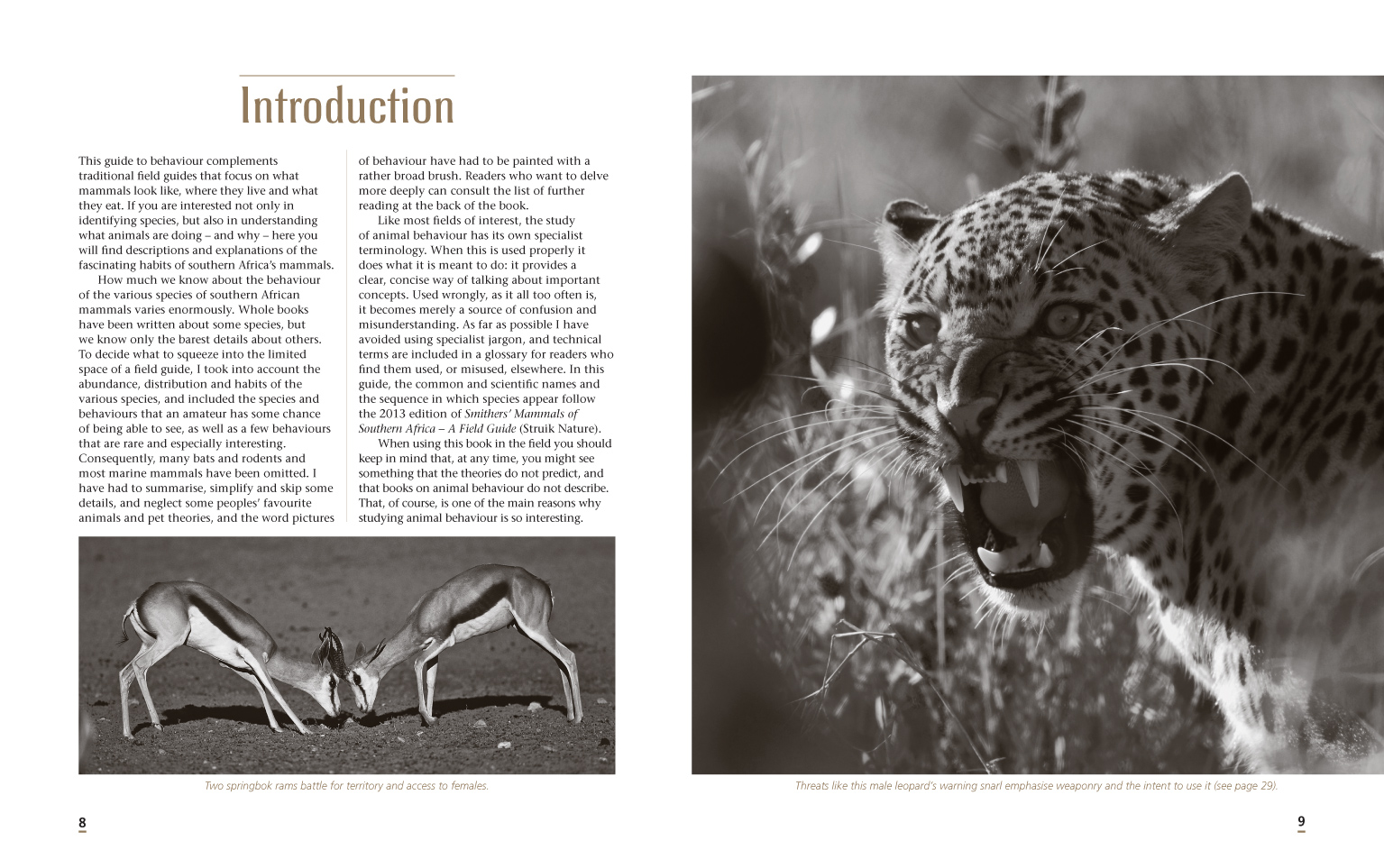
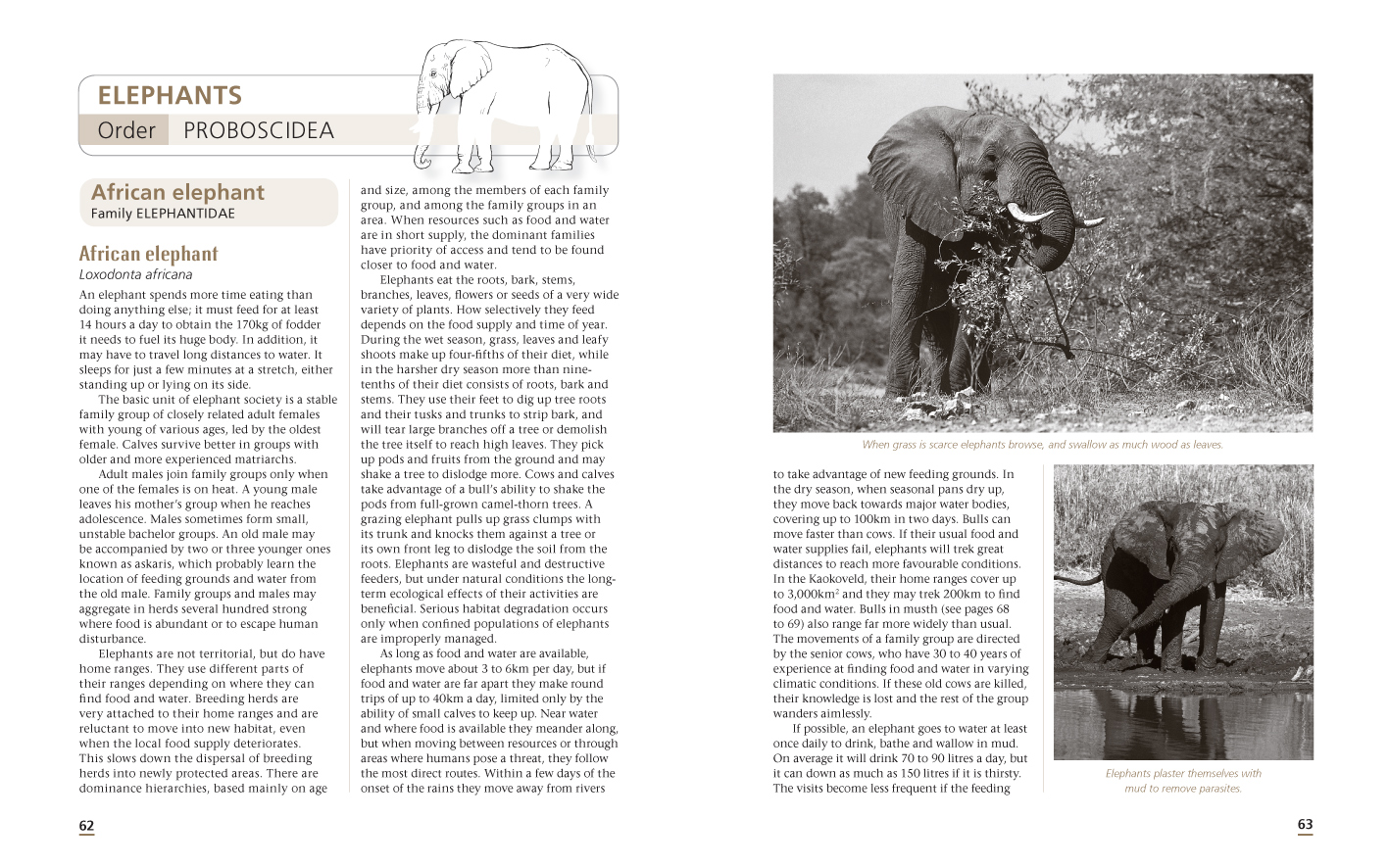
Wild Ways
TAKE A CLOSER LOOK
| Author: | Peter Apps |
|---|
R320.00
NEW EDITION MAY 2014
Wild Ways brings together all the latest studies of the behaviour of southern Africa’s rich and accessible mammal fauna, describing not only what mammals do, but also the often surprising reasons why they do it, and covers species as diverse as fruit bats, pangolins, lions, rats and whales.
Well-established as an invaluable resource for visitors to parks and reserves, hikers, hunters, farmers and outdoor enthusiasts, this classic guide has now been thoroughly updated and revised, has a fresh, lively design, and is packed with new and engrossing detail.
In stock
Customer Reviews
There are no reviews yet.
Related products
-

Kruger National Park: Q & A
R370.00Kruger National Park – Questions & Answers is a compilation of the questions most frequently asked by visitors to the Park, and their answers, given by a seasoned game park official. This new edition has been expanded, and reflects management decisions and changes that have occurred since the last edition appeared in 1992. It is packed with information on topics ranging from animals and their behaviour, ecology and poaching, to accommodation, activities, history of place names, safety, and code of conduct.
The text is easy-to-read, combining leisure and education, making it a highly entertaining companion in the vehicle. Species sections are enlivened by simple illustrations, and two maps illustrate the ecozones and layout of the Park. This book is ideal for both guides and visitors to the Kruger National Park.
-

Big Five of Africa
R420.00Think of an African safari and the ‘Big Five’ – lion, leopard, rhino, buffalo and elephant – immediately come to mind. Award-winning wildlife photographer Gerald Hinde has long been enthralled by these magnificent animals and has spent countless hours in the field, experiencing them in different moods and behaviours. Big Five of Africa beautifully reproduces some of the more remarkable moments he has captured on film during his visits to the wildlife sanctuaries of southern and East Africa. Brief but informative text introduces each animal in turn, providing interesting insights into the nature of these formidable, yet compelling, creatures.
-

Field Guide to the Spiders of Southern Africa
R560.00Thoroughly revised and updated, this long-awaited new edition of Field Guide to the Spiders of South Africa remains the most comprehensive guide to South African spiders published to date. It features over 780 of the more common spider species encountered in the field and in homes and gardens, as well as representative species from some of the rarer spider families.
– ‘Quick Keys’ to the 72 South African spider families provide a useful starting point to identification.
– Succinct genus and species accounts cover identifying characteristics, breeding, behaviour, distribution and conservation status.
– Colour photographs and/or illustrations as well as distribution maps support each entry.
– Introductory chapter discusses spider morphology, spider life cycle, the functions of silk, as well as spider collection techniques.
– Section on venom identifies species that pose a danger to humans, unpacks neurotoxic and cytotoxic venom, and details the symptoms and treatment of spider bites. -

Cuddle Me, Kill Me
R230.00Canned lion hunting sprang to the world’s attention with the 2015 launch of the documentary, Blood Lions. This movie blew the cover off a brutal industry that has burgeoned in the last decade or so, operating largely under the radar of public concern.In Cuddle Me Kill Me, veteran wildlife campaigner Richard Peirce reveals horrifying facts about the industry. He tells- The true story of two male lions rescued from breeding farms
- The exploitation and misery of these apex predators when they are bred in captivity
- How young cubs are removed from their mothers mere hours after birth
- How they are first used for petting by an adoring (and paying) public
- Their subsequent use for ‘walking with lions’ tourism
- And how, in the final stage of exploitation, they are served up in fenced enclosure for execution by canned hunters – or simply shot by breeders for the value of their carcass, a prized product in the East.
Well researched by Peirce with the help of an undercover agent, and illustrated with photos taken along the way, this is a disturbing and passionate plea to end commercial captive lion breeding and the re-purposing of wildlife to cater for human greed. -

On Track – Quick ID Guide to Southern and East African Animal Tracks
R100.00Following the success of the earlier Scatalog: Quick ID guide to southern African animal droppings, here’s another quick and quirky identification guide, this time to tracks of the region’s most commonly found mammals, but also includes tracks of reptiles, rodents, birds and insects.
A simple key on the inside front cover directs users to any of 11 categories, such as ‘cloven hooves’, ‘paws’ or ‘tramline-like trails’. Nearly 100 animals or closely related groups of animals are depicted; for each, there is a silhouette of front and back feet and a colour photograph of the track; the average measurements for each track; a short description of the track; and information about the circumstances and likely habitat.
Concise and to-the-point, this pocket-sized reference will prove indispensable in the field, no matter the experience of the user.
-

Giant Steps
R240.00Elephants have long been targeted by humans: not only are they killed for their ivory, but their extraordinary strength, intelligence and charisma have seen some of them captured, chained and effectively jailed for life.
Bully and Induna are two African elephants, both orphaned in organised culling operations and destined for lives in captivity. Growing up far apart and quite differently, Bully (a former animal film star) and the less fortunate Induna were both driven to react to their circumstances – Induna even killed one of his carers. Their individual situations reached a point where both were considered to be dangerous animals and were under threat of being put down.
This is the true story of their lives. Conservationist Richard Peirce presents their individual narratives and the twists and turns of their fortunes: the exploitation of these majestic but sensitive animals, how they each came to be trapped in unsuitable ‘employment’ and shunted about from one venue to the next, before finding one another – free at last – on a farm in southern Africa. It’s a gripping story, full of drama, danger, sadness and ultimate rescue.
-

Guide to Dragonflies & Damselflies of South Africa (NE)
R500.00In this fully revised edition of A Guide to Dragonflies & Damselflies of South Africa, all 164 species known to occur in South Africa, Lesotho and Swaziland are described and illustrated, grouped according to family (six dragonfly and six damselfly families). The species entries feature scans of live insects (close-up and side-view images) and photographs of specimens in their natural environment and showing key behaviours. Detailed descriptions focus on size, identifying features and occurrence. An introductory chapter unpacks the life cycle, behaviour, biology and breeding of this fascinating group of insects. Presented in a classic field guide format, this revised edition now also features:
Expanded annotations to all illustrations, highlighting diagnostic features to ensure accurate identification
New distribution maps
Additional colour plates and photographsBeautifully presented, informative and authoritative, this book will appeal to anyone with an interest in South Africa’s insect life, and to nature lovers in general.
-

Nature Now Mammals of Kruger
R290.00This easy-to-read, fact-filled guide features over 80 mammal species found in the Kruger National Park, one of Africa’s most popular game-viewing destinations.
Packed with stunning photographs and engaging text, it provides brief pointers for accurate identification and highlights the most interesting facts about each species. Did you know that leopards are more dangerous than lions, elephants use their trunks to snorkel, giraffes give birth standing up, and no two zebras have the same stripe pattern?Aimed at nature enthusiasts of all ages, this compact guide:
– Covers the Park’s rich diversity of mammals – from the world-famous Big Five to the miniature mongooses seen dashing across the road
– Unpacks each animal’s most interesting characteristics and behaviours
– Notes the record-breakers: who has the longest horns, strongest jaws or greatest appetite?
– Provides game-watching tips for successful safaris, as well as ‘Best viewing’ notes for each species
– Features striking photographs of Kruger’s wildlife in action
Be the first to review “Wild Ways”
You must be logged in to post a review.