

Wild Ways
TAKE A CLOSER LOOK
| Author: | Peter Apps |
|---|
R320.00
NEW EDITION MAY 2014
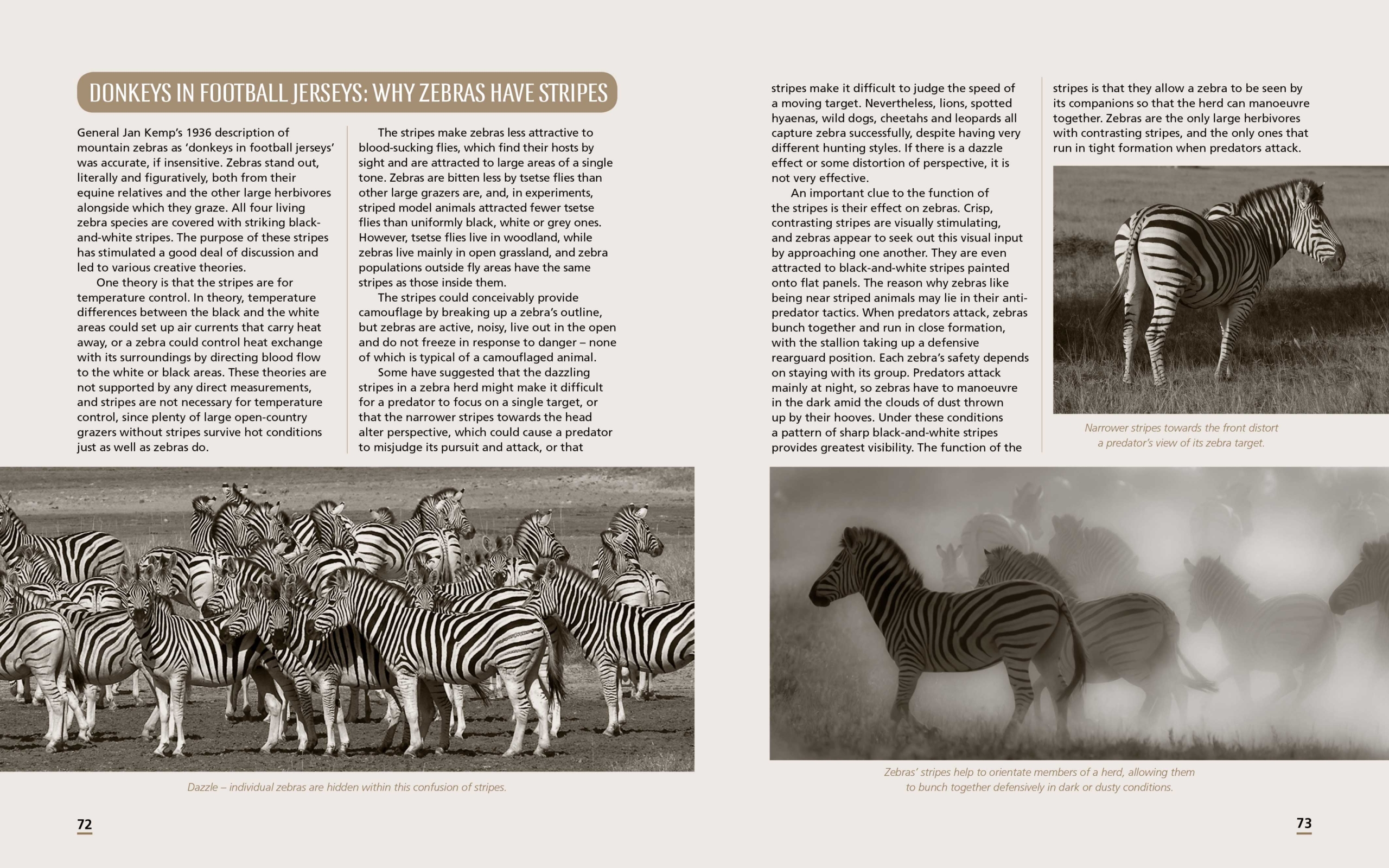
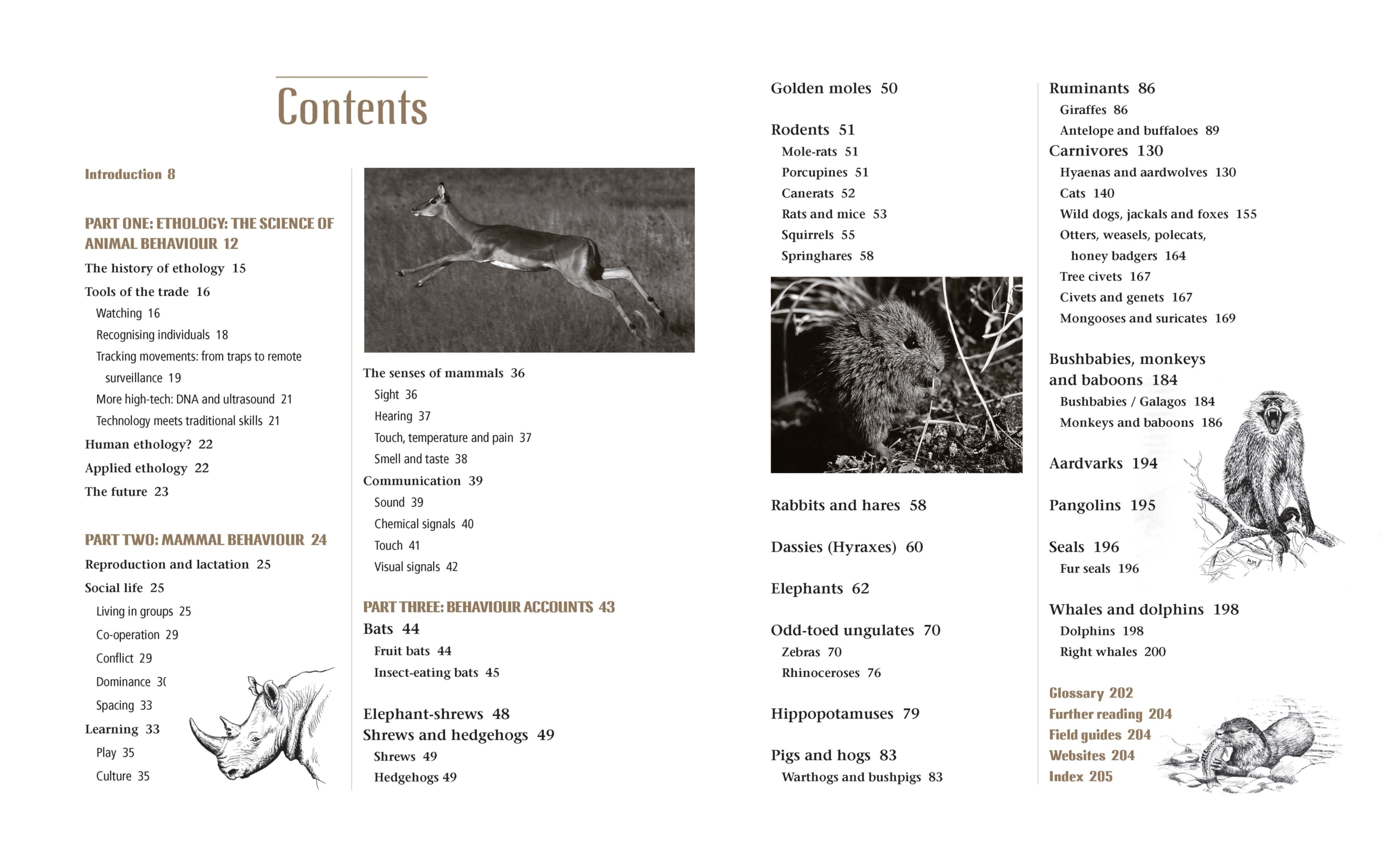
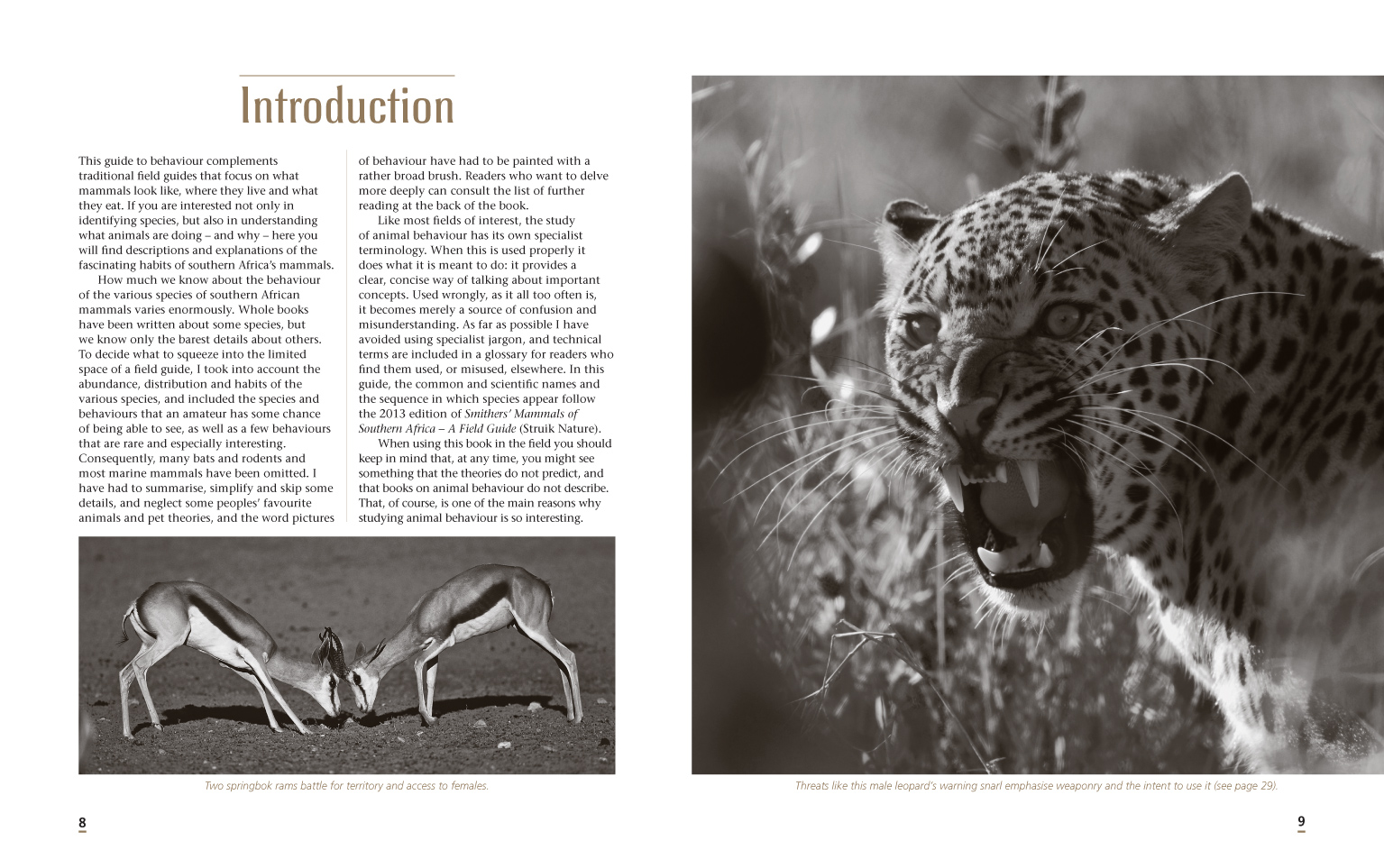
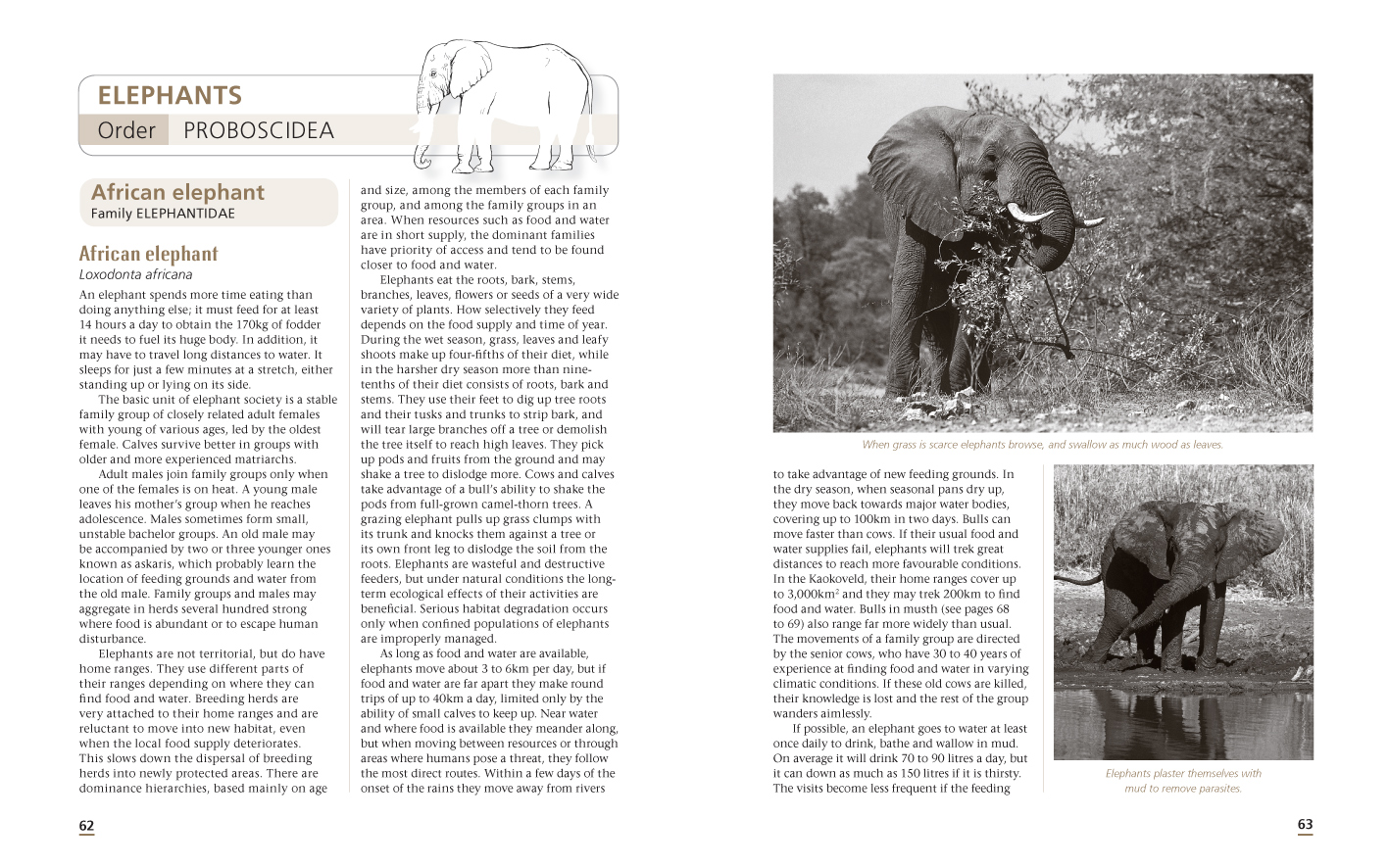
Wild Ways brings together all the latest studies of the behaviour of southern Africa’s rich and accessible mammal fauna, describing not only what mammals do, but also the often surprising reasons why they do it, and covers species as diverse as fruit bats, pangolins, lions, rats and whales.
Well-established as an invaluable resource for visitors to parks and reserves, hikers, hunters, farmers and outdoor enthusiasts, this classic guide has now been thoroughly updated and revised, has a fresh, lively design, and is packed with new and engrossing detail.
In stock
Customer Reviews
There are no reviews yet.
Related products
-

Field Guide to the Spiders of Southern Africa
R560.00Thoroughly revised and updated, this long-awaited new edition of Field Guide to the Spiders of South Africa remains the most comprehensive guide to South African spiders published to date. It features over 780 of the more common spider species encountered in the field and in homes and gardens, as well as representative species from some of the rarer spider families.
– ‘Quick Keys’ to the 72 South African spider families provide a useful starting point to identification.
– Succinct genus and species accounts cover identifying characteristics, breeding, behaviour, distribution and conservation status.
– Colour photographs and/or illustrations as well as distribution maps support each entry.
– Introductory chapter discusses spider morphology, spider life cycle, the functions of silk, as well as spider collection techniques.
– Section on venom identifies species that pose a danger to humans, unpacks neurotoxic and cytotoxic venom, and details the symptoms and treatment of spider bites. -

Wildlife of Namibia (German): A Photographic Guide
R400.00Namibia is a fascinating land of contrasts, where floodplains, swamps and the world’s oldest desert have contributed to a rich biodiversity. Wildlife of Namibia is an easy-to-use guide to the country’s most conspicuous and interesting mammals, birds, reptiles, invertebrates and plants.
The book includes:
An informative introduction to the country’s geography, climate and vegetation
Accounts describing each species’ appearance, habits, size and conservation status, as well as information on habitat and best viewing localities
Full-colour photographs of each species, along with distribution maps to show their rangeThis all-in-one compact guide will prove invaluable to visitors to national parks, nature reserves and other wildlife-rich places in Namibia.
-

Stuarts’ Field Guide to the Larger Mammals of Africa
R610.00Of the more than 5,500 mammals species worldwide, at least 1,200 occur in Africa. Stuarts’ Field Guide to the Larger Mammals of Africa concentrates on the more visible and easily distinguished larger species, as well as some of the more frequently seen smaller mammals.This new edition has been extensively revised, expanded and redesigned and includes:- the most recent research and taxonomy
- revised distribution maps and many new images
- colour-coded grouping of orders
- size icons
- detailed descriptions of each species, offering insight into key identification characters, typical behaviour, preferred habitat, food choice, reproduction and longevity
- whales and dolphins now featured too
-

Kruger National Park: Q & A
R370.00Kruger National Park – Questions & Answers is a compilation of the questions most frequently asked by visitors to the Park, and their answers, given by a seasoned game park official. This new edition has been expanded, and reflects management decisions and changes that have occurred since the last edition appeared in 1992. It is packed with information on topics ranging from animals and their behaviour, ecology and poaching, to accommodation, activities, history of place names, safety, and code of conduct.
The text is easy-to-read, combining leisure and education, making it a highly entertaining companion in the vehicle. Species sections are enlivened by simple illustrations, and two maps illustrate the ecozones and layout of the Park. This book is ideal for both guides and visitors to the Kruger National Park.
-

Eerste veldgids: Natuurlewe van Suider-Afrika
R130.00Hierdie gids is deel van ‘n nuwe reeks, Eerste veldgidse, en bied ‘n fassinerende blik op die natuurlewe van die streek.
Met behulp van kleurfoto’s en -verspreidingskaarte asook maklik leesbare teks, sal die beginner- en ontluikende natuurkenner die meer algemene diere van Suider-Afrika kan identifiseer, kan vasstel waar hulle voorkom, en meer te wete kom oor hul unieke gedrag en ongewone eienskappe.
-

Giant Steps
R240.00Elephants have long been targeted by humans: not only are they killed for their ivory, but their extraordinary strength, intelligence and charisma have seen some of them captured, chained and effectively jailed for life.
Bully and Induna are two African elephants, both orphaned in organised culling operations and destined for lives in captivity. Growing up far apart and quite differently, Bully (a former animal film star) and the less fortunate Induna were both driven to react to their circumstances – Induna even killed one of his carers. Their individual situations reached a point where both were considered to be dangerous animals and were under threat of being put down.
This is the true story of their lives. Conservationist Richard Peirce presents their individual narratives and the twists and turns of their fortunes: the exploitation of these majestic but sensitive animals, how they each came to be trapped in unsuitable ‘employment’ and shunted about from one venue to the next, before finding one another – free at last – on a farm in southern Africa. It’s a gripping story, full of drama, danger, sadness and ultimate rescue.
-

Field Guide to Tracks & Signs – East Africa NE
R590.00Originally published in 1994, A Field Guide to Tracks and Signs of Southern and East African Wildlife quickly became the standard reference to the subject in the region, reprinting many times. This new edition provides the most detailed coverage of tracks, droppings, bird pellets, nests and shelters and feeding signs, not only for mammals, but also for birds, reptiles, insects and other invertebrates. Greatly expanded, this extensive update now features: full colour throughout.
-

Avian Architects Quick ID Guide
R100.00Another title in the ‘Quick Guide’ series, this compact little book is a handy identification guide to the surprising variety of nests built by southern African birds. Covering multiple species, it is arranged according to nest type – ground, woven, stick, cup, mud-pellet and domed, as well as nests in tree holes, on water, on cliffs and in scrapes on the ground. It is packed with photographs and illustrations showing the ingenuity of the designs, the birds that built them, and the eggs that are laid in them. In pithy fashion, the text – matched to the photographs – describes:
nesting site and nest structure
building materials used to construct outer and inner layers
nesting habits of the architects
clutch sizeA simple key to nest types on the inside front cover directs readers to the relevant section in the book.
Be the first to review “Wild Ways”
You must be logged in to post a review.