

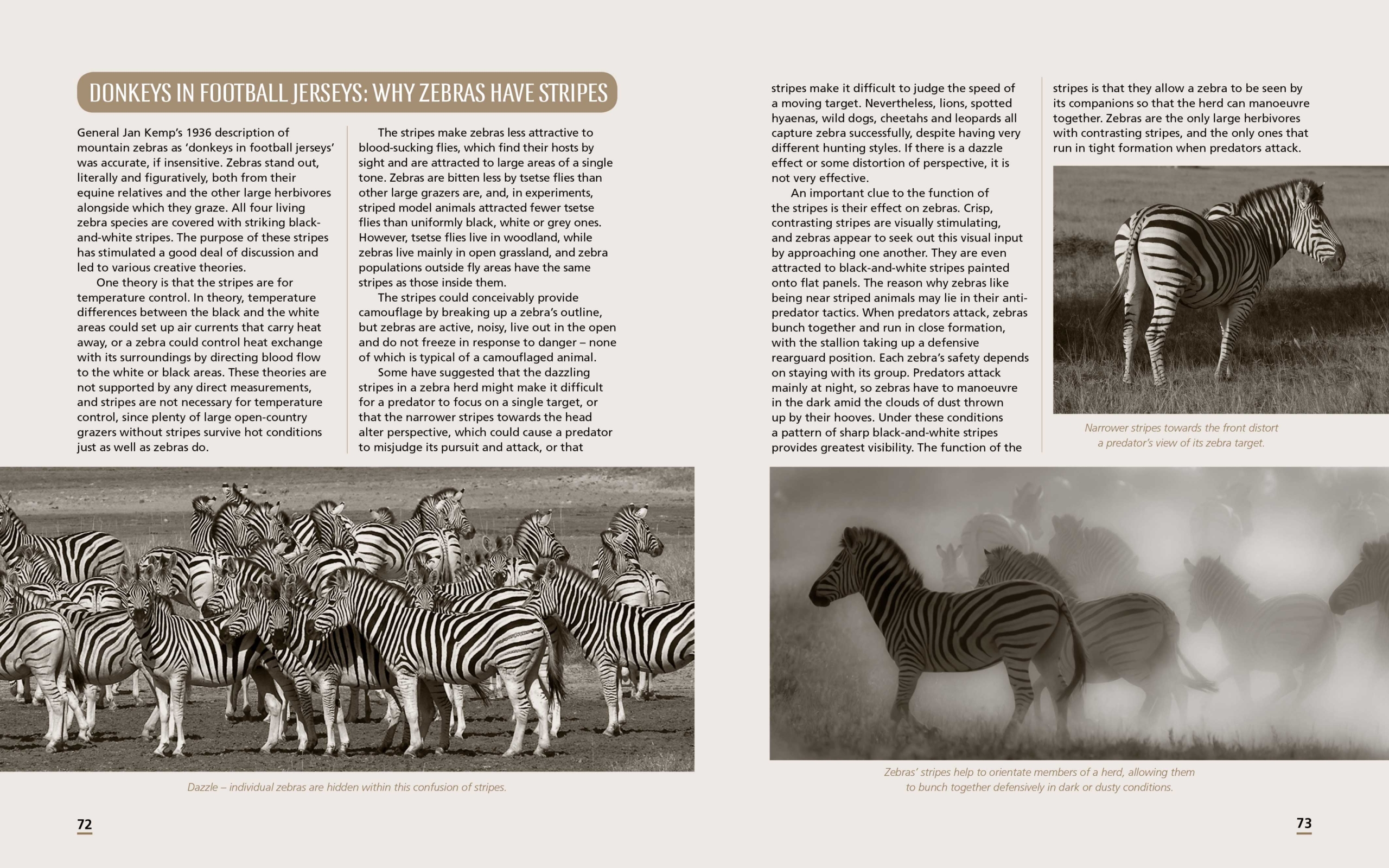
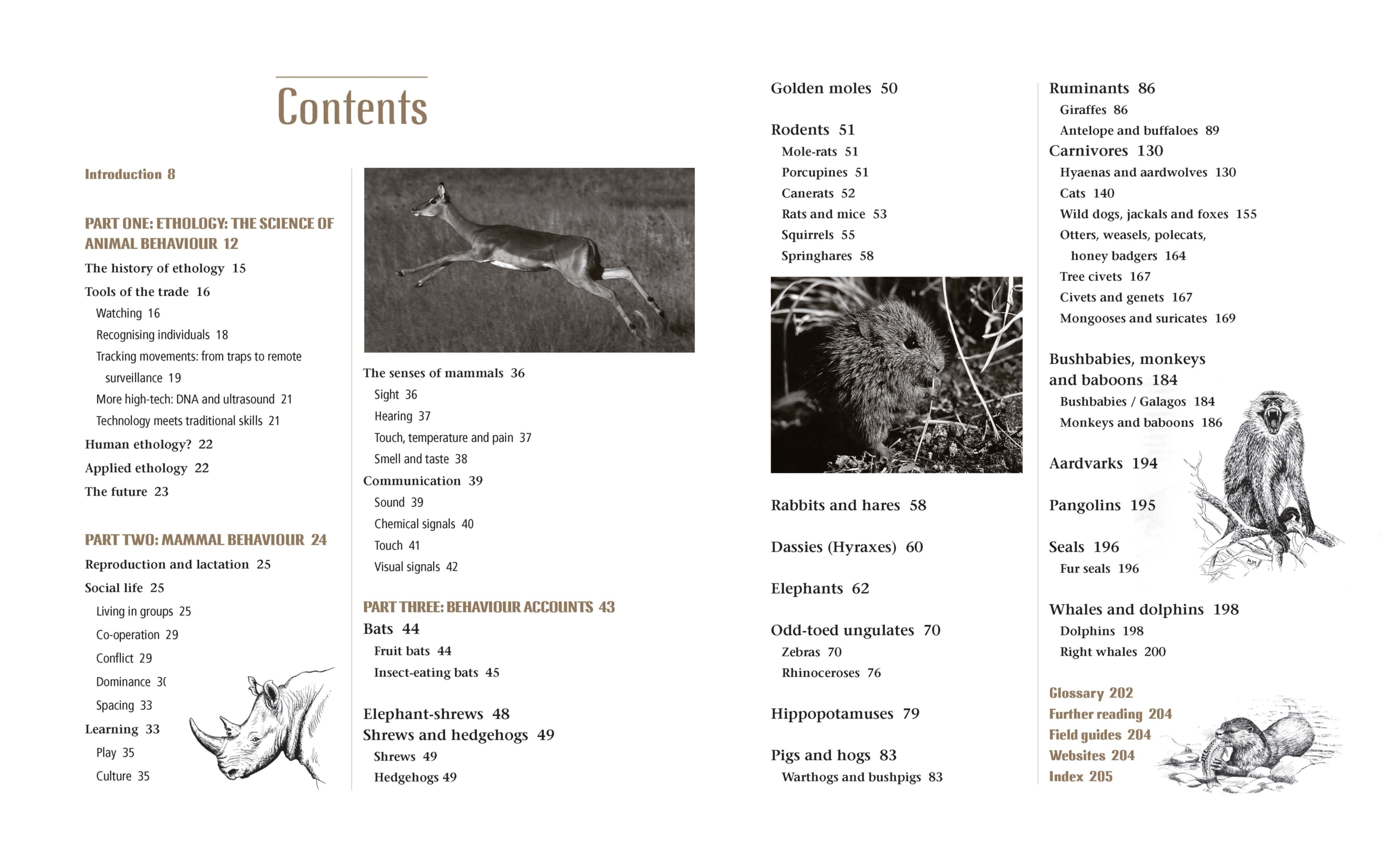
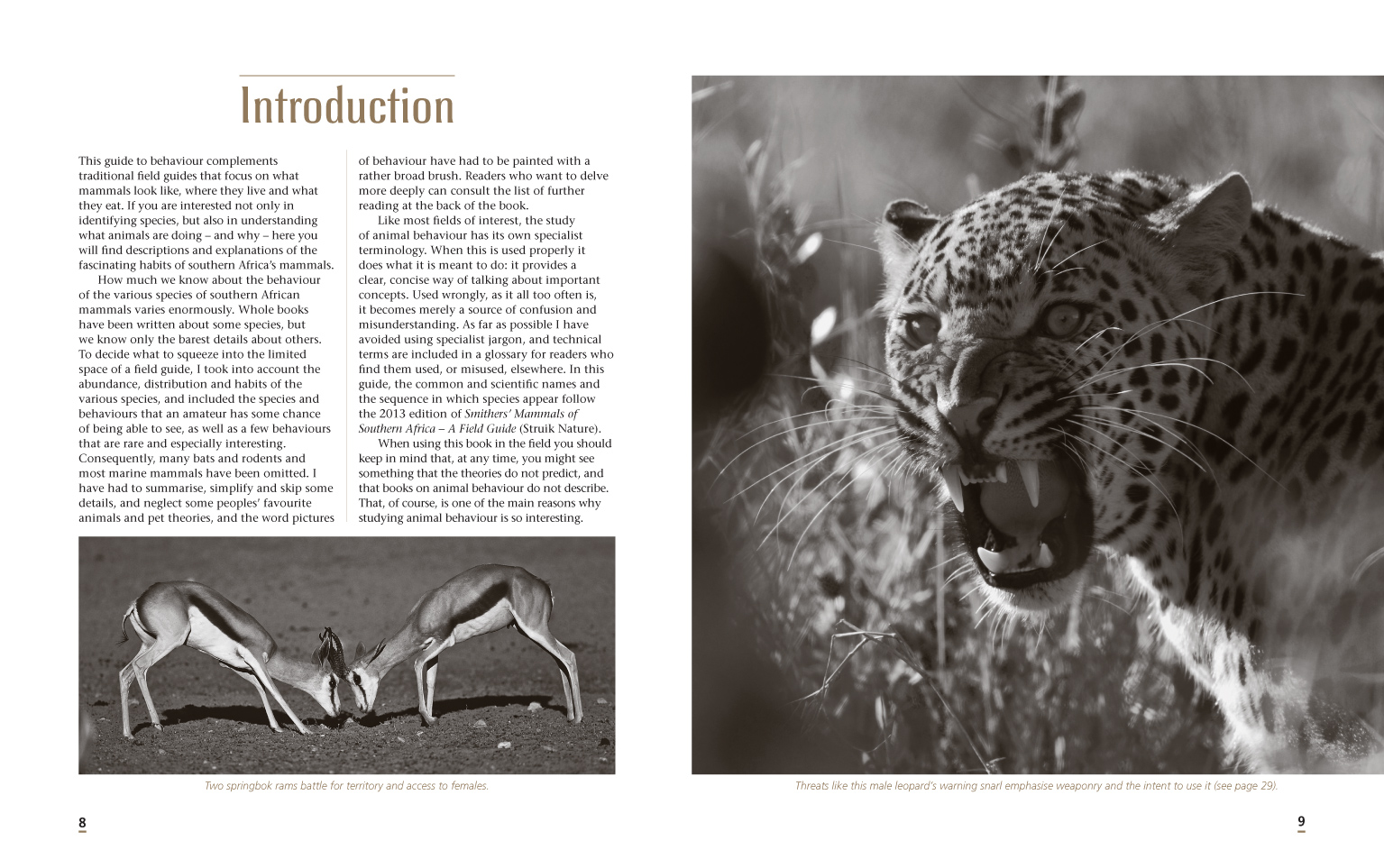
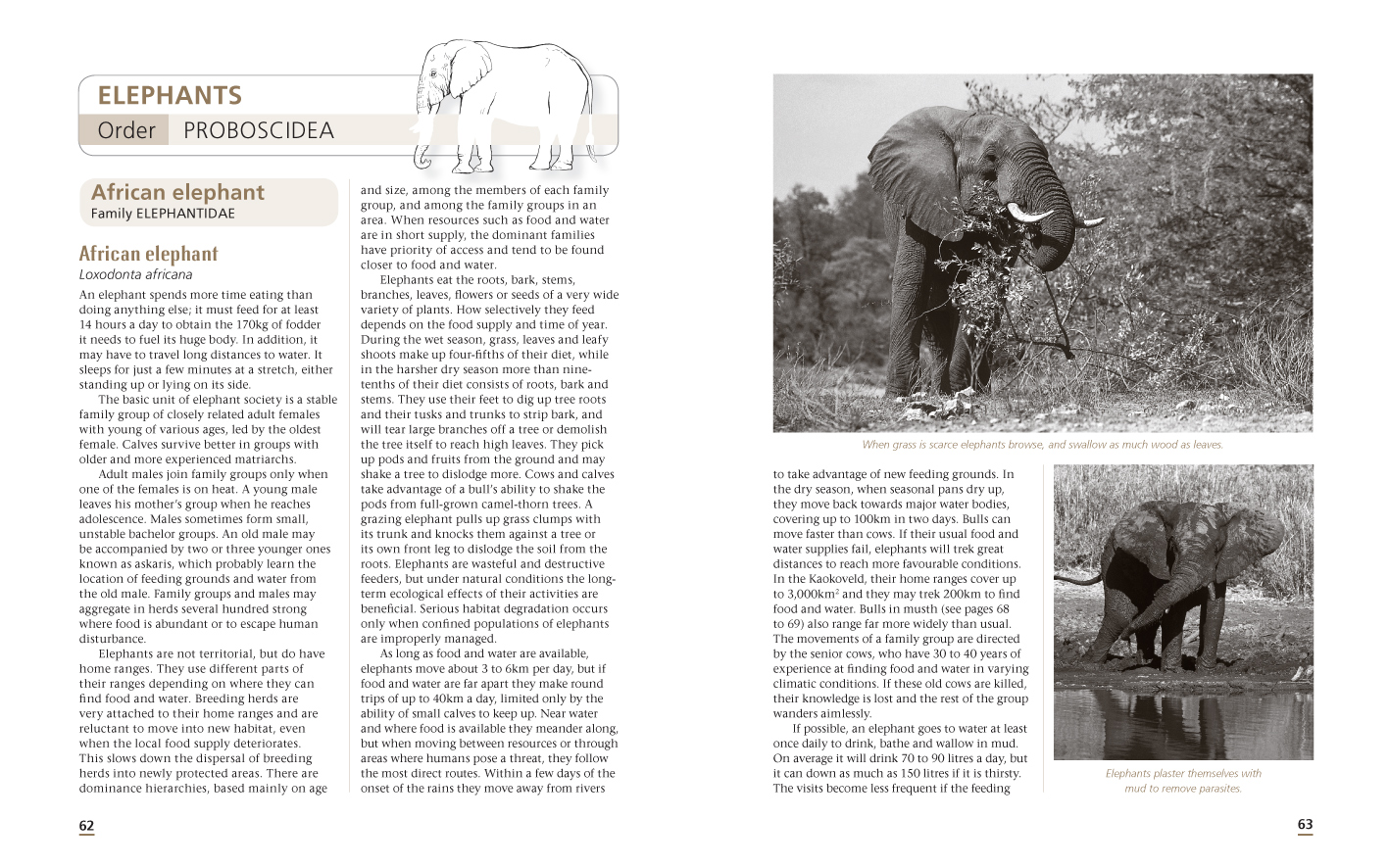
Wild Ways
TAKE A CLOSER LOOK
| Author: | Peter Apps |
|---|
R320.00
NEW EDITION MAY 2014
Wild Ways brings together all the latest studies of the behaviour of southern Africa’s rich and accessible mammal fauna, describing not only what mammals do, but also the often surprising reasons why they do it, and covers species as diverse as fruit bats, pangolins, lions, rats and whales.
Well-established as an invaluable resource for visitors to parks and reserves, hikers, hunters, farmers and outdoor enthusiasts, this classic guide has now been thoroughly updated and revised, has a fresh, lively design, and is packed with new and engrossing detail.
In stock
Customer Reviews
There are no reviews yet.
Related products
-

Behaviour Briefs
R100.00The ultimate compact, quick ID guide to southern and East African animal behaviour, and the latest in the popular series of ‘quick guides’ to wildlife. This title:
• describes and explains the habits of the more commonly found mammals of southern and East Africa;
• matches concise text with action photographs that capture characteristic behaviour;
• serves as a companion volume to more detailed field guides;
• provides a quick reference and easy read for anyone interested in understanding wild animals and their sometimes baffling rituals.
-

Pangolins: Scales of Injustice
R230.00Smuggled into China and sold for meat in the live-animal markets of cities such as Wuhan, the pangolin has dominated world headlines. Is it the vector for Covid-19?
Pangolins have long been sustainably harvested by local communities for their meat and scales, but today the burgeoning trade in these mammals has reached crisis point. Eight pangolin species occur worldwide, four in Asia and four in Africa, and all face extinction if current rates of hunting and trading continue unabated.
Now the spotlight is on the world’s most trafficked mammal. Scientists have identified pangolins as the likely source of the coronavirus infection that has brought the world to its knees. This multi-trillion dollar disaster makes pangolins the most expensive meals ever eaten.
In this timely expose, Richard Peirce unpacks the horrors and dangers of the trade in this enigmatic, little-known mammal. He explains the links between wildlife and Covid-19, and details China’s response to the pandemic.
He also tells the story of a particular pangolin poached in Zimbabwe and brought to South Africa to be traded. Readers accompany an agent of the African Pangolin Working Group, assisted by the local police, on an actual sting operation to rescue the animal and capture the traffickers. And they follow the subsequent progress of the rescued pangolin, from near death to rehabilitation and release into the wild.
-

Kruger National Park: Q & A
R370.00Kruger National Park – Questions & Answers is a compilation of the questions most frequently asked by visitors to the Park, and their answers, given by a seasoned game park official. This new edition has been expanded, and reflects management decisions and changes that have occurred since the last edition appeared in 1992. It is packed with information on topics ranging from animals and their behaviour, ecology and poaching, to accommodation, activities, history of place names, safety, and code of conduct.
The text is easy-to-read, combining leisure and education, making it a highly entertaining companion in the vehicle. Species sections are enlivened by simple illustrations, and two maps illustrate the ecozones and layout of the Park. This book is ideal for both guides and visitors to the Kruger National Park.
-

Scorpions of Southern Africa (NE)
R320.00Scorpions of Southern Africa, the go-to guide for identifying southern Africa’s rich scorpion fauna, has now been freshly designed, updated and expanded. It includes 12 additional species, new images and distribution maps, and a chapter on how to go about identifying scorpions.
An invaluable guide for the amateur naturalist and professional alike, this accessible book describes:
- scorpion anatomy and behaviour,
- the strategies that enable scorpions to survive harsh conditions,
- their use of venom, and
- other aspects of their successful existence over millions of years.
-

Wildlife of Namibia (German): A Photographic Guide
R400.00Namibia is a fascinating land of contrasts, where floodplains, swamps and the world’s oldest desert have contributed to a rich biodiversity. Wildlife of Namibia is an easy-to-use guide to the country’s most conspicuous and interesting mammals, birds, reptiles, invertebrates and plants.
The book includes:
An informative introduction to the country’s geography, climate and vegetation
Accounts describing each species’ appearance, habits, size and conservation status, as well as information on habitat and best viewing localities
Full-colour photographs of each species, along with distribution maps to show their rangeThis all-in-one compact guide will prove invaluable to visitors to national parks, nature reserves and other wildlife-rich places in Namibia.
-

Guide to Dragonflies & Damselflies of South Africa (NE)
R500.00In this fully revised edition of A Guide to Dragonflies & Damselflies of South Africa, all 164 species known to occur in South Africa, Lesotho and Swaziland are described and illustrated, grouped according to family (six dragonfly and six damselfly families). The species entries feature scans of live insects (close-up and side-view images) and photographs of specimens in their natural environment and showing key behaviours. Detailed descriptions focus on size, identifying features and occurrence. An introductory chapter unpacks the life cycle, behaviour, biology and breeding of this fascinating group of insects. Presented in a classic field guide format, this revised edition now also features:
Expanded annotations to all illustrations, highlighting diagnostic features to ensure accurate identification
New distribution maps
Additional colour plates and photographsBeautifully presented, informative and authoritative, this book will appeal to anyone with an interest in South Africa’s insect life, and to nature lovers in general.
-

On Track – Quick ID Guide to Southern and East African Animal Tracks
R100.00Following the success of the earlier Scatalog: Quick ID guide to southern African animal droppings, here’s another quick and quirky identification guide, this time to tracks of the region’s most commonly found mammals, but also includes tracks of reptiles, rodents, birds and insects.
A simple key on the inside front cover directs users to any of 11 categories, such as ‘cloven hooves’, ‘paws’ or ‘tramline-like trails’. Nearly 100 animals or closely related groups of animals are depicted; for each, there is a silhouette of front and back feet and a colour photograph of the track; the average measurements for each track; a short description of the track; and information about the circumstances and likely habitat.
Concise and to-the-point, this pocket-sized reference will prove indispensable in the field, no matter the experience of the user.
-

Stuarts’ Field Guide to the Larger Mammals of Africa
R610.00Of the more than 5,500 mammals species worldwide, at least 1,200 occur in Africa. Stuarts’ Field Guide to the Larger Mammals of Africa concentrates on the more visible and easily distinguished larger species, as well as some of the more frequently seen smaller mammals.This new edition has been extensively revised, expanded and redesigned and includes:- the most recent research and taxonomy
- revised distribution maps and many new images
- colour-coded grouping of orders
- size icons
- detailed descriptions of each species, offering insight into key identification characters, typical behaviour, preferred habitat, food choice, reproduction and longevity
- whales and dolphins now featured too
Be the first to review “Wild Ways”
You must be logged in to post a review.