

Also available in e-book format:

Amazon Kindle

Google Books

Snapplify Reader
Grasses of East Africa
TAKE A CLOSER LOOK
| Author: | Dino J. Martins |
|---|
R400.00
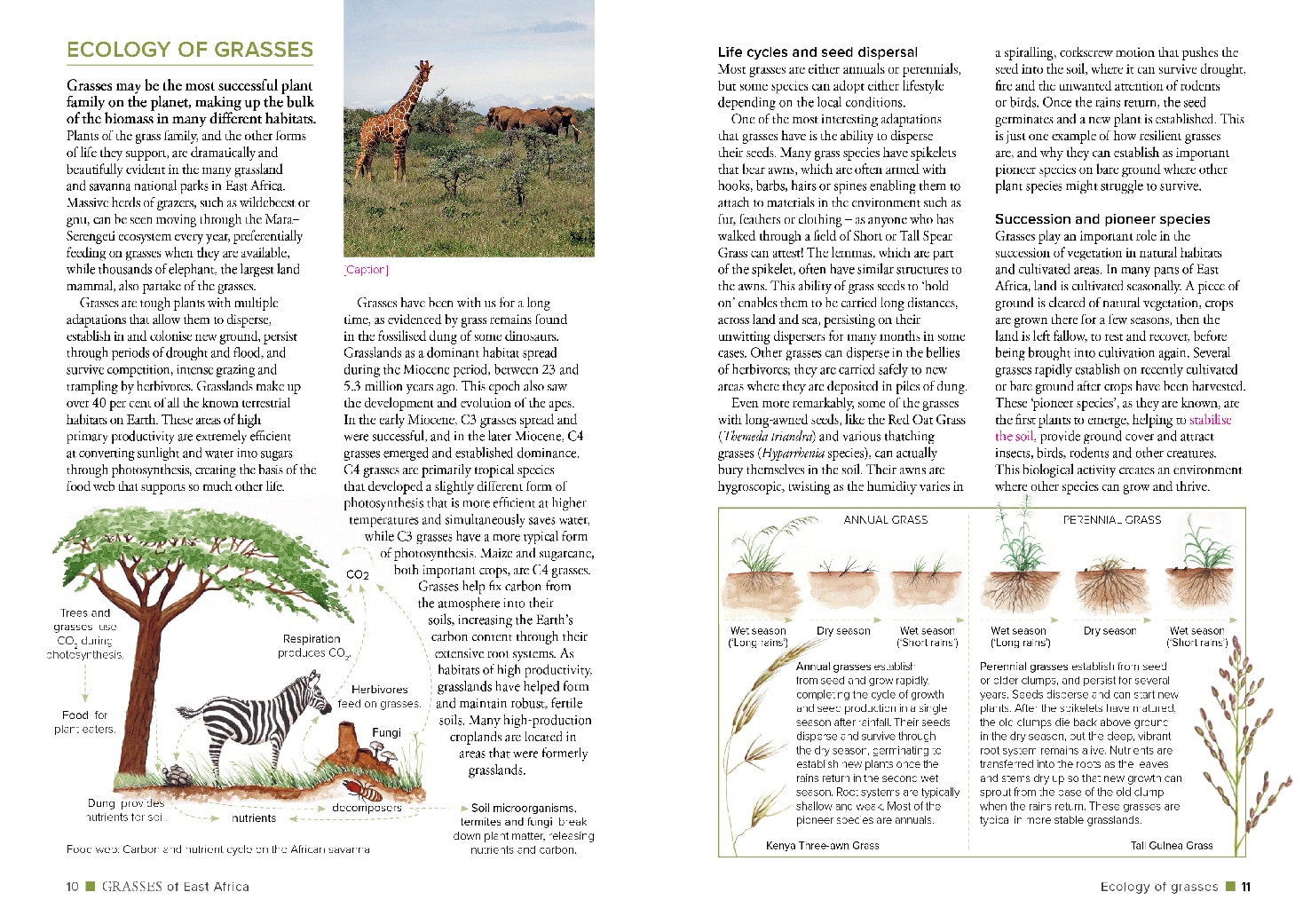
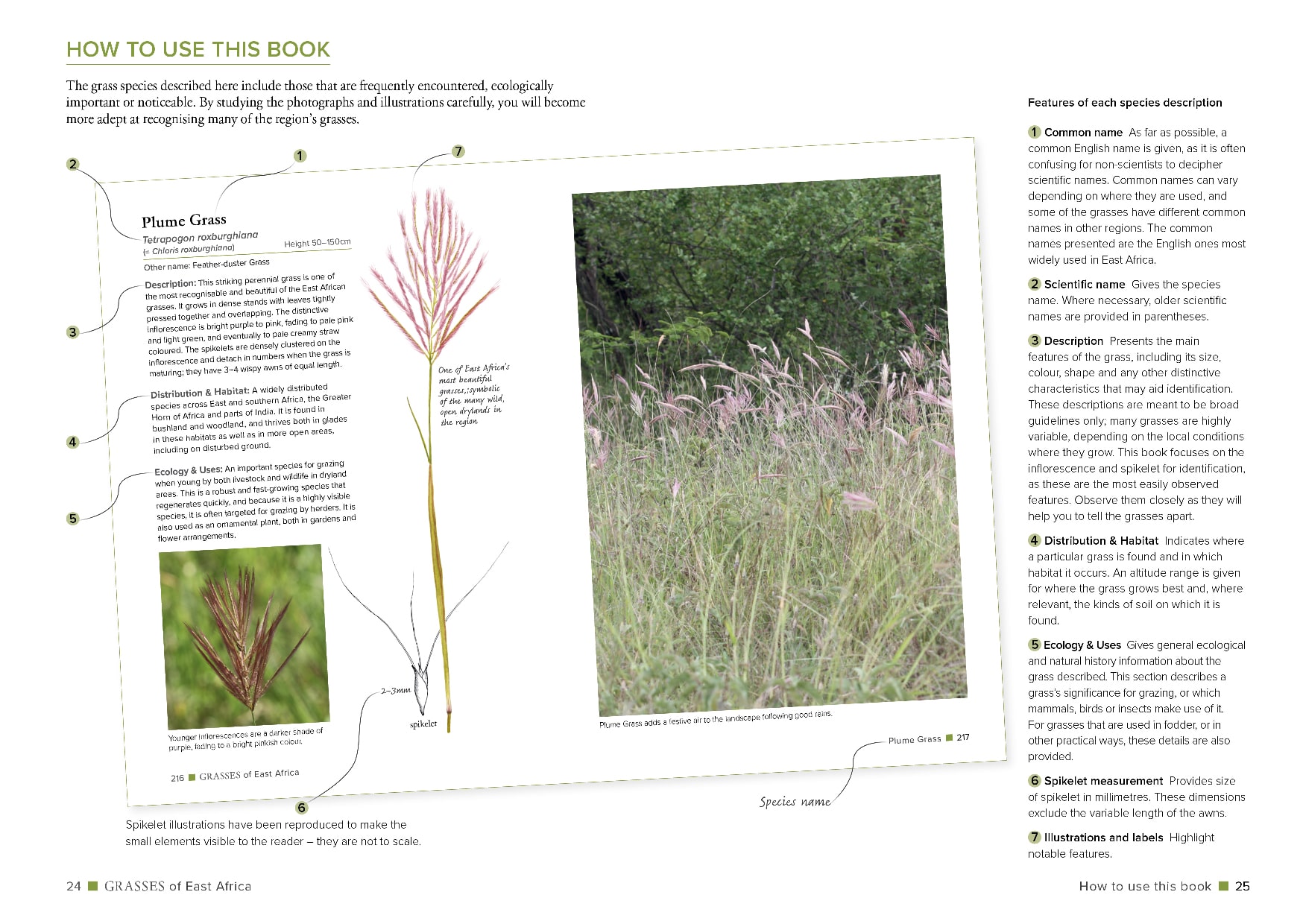
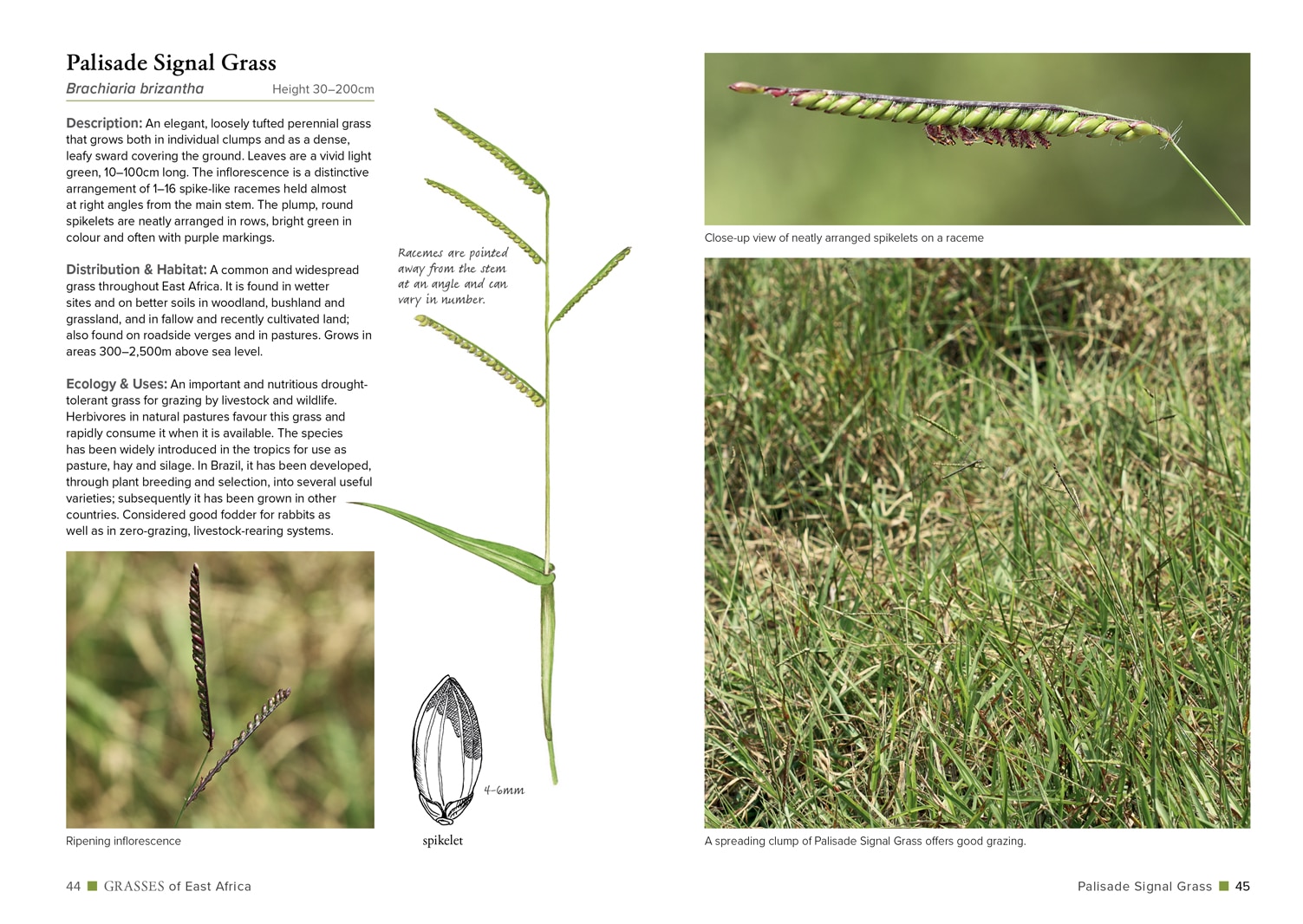
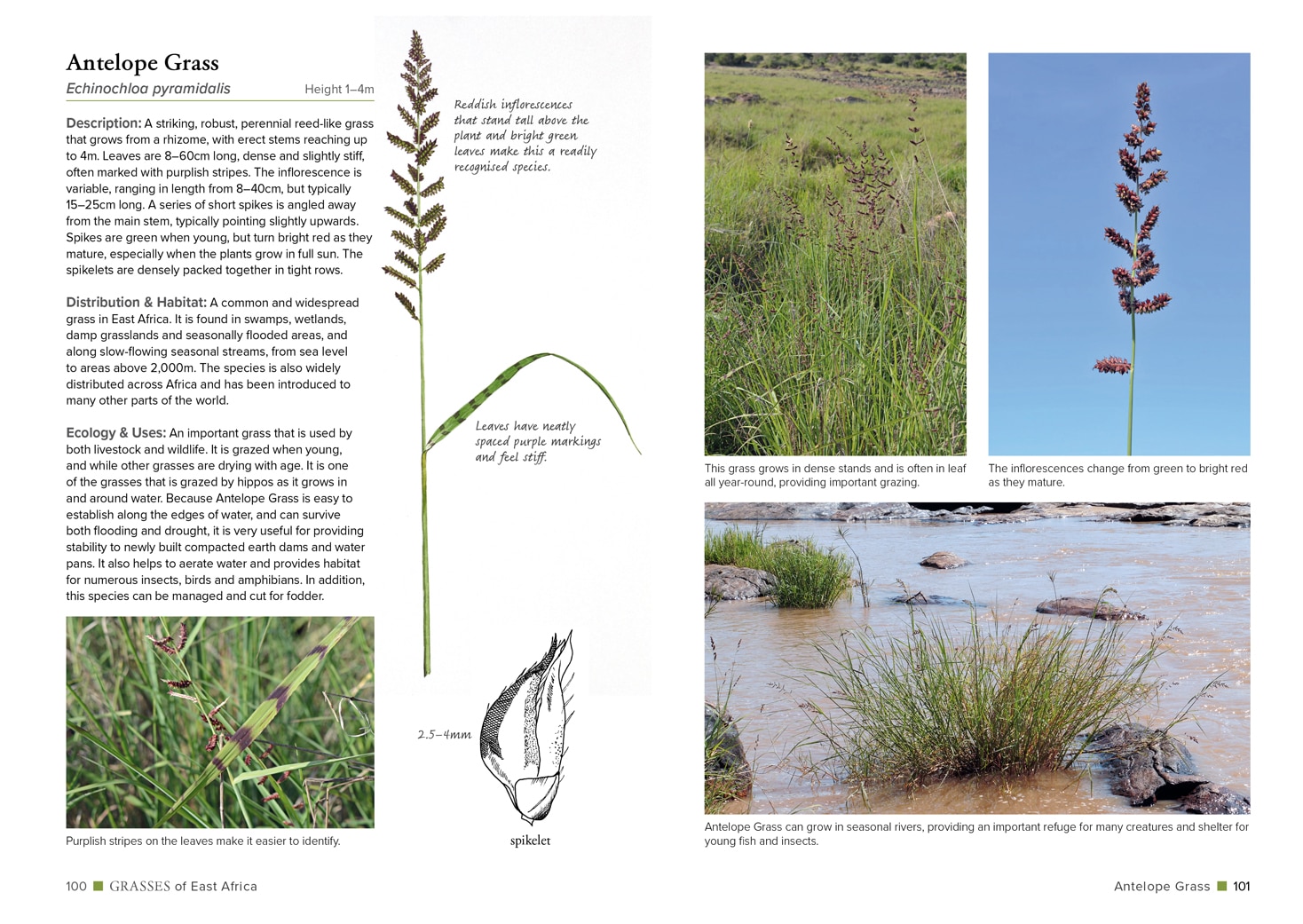
Grasses of East Africa describes 100 species of common, ecologically important or remarkable grasses found in Kenya, Tanzania, Uganda, Rwanda and Burundi. Grasses comprise one of the largest plant families on Earth, but are possibly the most overlooked. Yet it is these ubiquitous and important plants that have the greatest impact on our daily lives – providing a wide range of staple foods for humans globally, a fundamental source of grazing for livestock, and food and shelter for an infinite variety of wildlife.
In stock
Customer Reviews
There are no reviews yet.
Related products
-

Field Guide to the Amaryllis Family of Southern Africa and Surrounding Territories
R500.00The Amaryllidaceae family is distributed in warm temperate and tropical parts of the world. With 18 genera and 265 taxa occurring in the region, southern Africa is recognised as a major centre of diversity for this intriguing family. This compelling guide features all the species found in the region, conveniently grouped according to the biome of their natural habitat, and includes a useful key to genera and species.
Species accounts feature:
– Comprehensive text suitable for laypersons and scientists
– Information on distribution, similar taxons, life cycle and flowering period
– Notes on cultivation, history, medicinal properties and conservation
– Distribution maps
– Colour photographs and watercolour platesAn invaluable addition to the library of any plant or nature lover.
-

An Illustrated Guide to Medicinal Plants of East Africa
R500.00Medicinal Plants of East Africa is the first photographically illustrated guide to showcase the most important healing plants of the region. e book describes 136 plant species in everyday use in Kenya, Tanzania and Uganda. Brief descriptions of each species cover that plant’s appearance, ecology and specific medicinal uses. To aid identification, more than 600 colour photographs have been included. Also included are recipes for remedies to treat a wide range of ailments. An easy-to-understand summary of the science behind the treatments concludes each section.
Supplementary features:
– Introduction to the medicinal virtues and active ingredients of plants
– Common methods of preparing medicines from plant materials
– Summary of ailments and the plants prescribed to treat them
– Glossaries of medical and botanical terminology and extensive reference lists.Medicinal Plants of East Africa will appeal to ethnobotanists, health and wellness practitioners, travellers and all with an interest in the remarkable healing properties of plants.
-

Field Guide to Wild Flowers of South Africa
R610.00This fully updated edition of Field Guide to Wild Flowers of South Africa covers more than 1,100 species of flora, focusing on the most common, conspicuous and ‘showy’ plants around the region. An informative introduction discusses plant diversity, vegetation types, and includes a key to identifying plant groups. Species descriptions follow and each is accompanied by:
- a vivid photograph
- a distribution map showing range, and
- an indication of the plant’s flowering season.
An invaluable, up-to-date guide provides the tools and information needed to identify flowering plants across South Africa.
-

Field Guide to Renosterveld of the Overberg
R550.00Part of the Fynbos biome, Renosterveld is one of the world’s most threatened vegetation types, with just 5% of its original extent remaining. Focusing specifically on the Renosterveld of the Overberg region in the Western Cape, this field guide is the first of its kind to cover this highly endangered ecosystem, characterised by nutrient-rich soil which has been exploited for agriculture.
An in-depth introduction sets the scene, defining what Renosterveld is and giving some historical background to the ecology of the area.
The plants section follows, featuring over 980 plant species from the common and ‘showy’ to the weird, obscure and often-overlooked.
A shorter section of 140 animal species showcases the diversity of creatures found here despite severe habitat loss and fragmentation.
Additional features include a glossary with supporting illustrations, guidelines for landowners and farmers, and a comprehensive index.
Field Guide to Renosterveld of the Overberg promises to be an enduring record of this unique and severely threatened ecosystem. It will be a vital addition to any nature lover’s bookshelf. -

Plants of the Baviaanskloof
R560.00Tucked away in the southwestern corner of the Eastern Cape lies a narrow valley, flanked by the Baviaanskloof and Kouga mountain ranges. Named after the chacma baboons that long ago made this 200-km-long kloof their home, the Baviaanskloof is part of the Cape Floral Region World Heritage Site. It is a meeting point of several different ecosystems, with almost all of South Africa’s eight biomes represented, making for an exceptional diversity of species, including many endemics.
Plants of the Baviaanskloof describes well over 1,000 plant species. It includes:
– Succinct descriptions of each plant species with full-colour photographs
– Brief family and genus descriptions, and species counts for the area
– An introduction covering the geology, climate and vegetation types of the regionCompiled over two decades, Plants of the Baviaanskloof is sure to become an enduring record of the diversity of plant life found here. The only botanical guide for this area, it is a must-have for botanists, gardeners, road-trippers, hikers, travellers and all who have a deep interest in plants.
-

Identifiseer die Bome van Suider-Afrika (NE)
R400.00‘n Regstreekse, voor die hand liggende en effektiewe gids tot boom-identifikasie.
Dié boek se titel sê dit alles! Hierdie bygewerkte tweede uitgawe verskaf ‘n duidelike uiteensetting van hoe bome saamgestel is en waarna om op te let wanneer ‘n boom geïdentifiseer word. Die boek bestaan uit twee dele:
Deel 1 beskryf en illustreer duidelik die verskillende dele van ‘n boom en hul rol in boomidentifikasie.
Deel 2 bevat ‘n sleutel tot 43 boomgroepe, gebaseer op maklik waarneembare stingel- en blaarkenmerke. Dit gee ‘n duidelike oorsig van elke groep, sowel as die Suider-Afrikaanse boomfamilies wat in die onderskeie groepe verteenwoordig word. Talle kleurfoto’s en verduidelikende illustrasies ondersteun die teks wat dié handleiding toeganklik en gebruikersvriendelik maak.Identifiseer die Bome van Suider-Afrika sal lesers toerus met ‘n goeie begrip van die bou van bome en waarna hulle moet oplet om dit korrek te kan identifiseer.
-

Field Guide to Trees & Shrubs of East Africa
R610.00Fully updated and expanded, this third edition of the top-selling Field Guide to Common Trees & Shrubs of East Africa now features more than 520 of the trees and shrubs – indigenous and naturalized exotics – commonly found in the region.
Each of the four sections – trees, shrubs, palms and mangroves – is arranged in alphabetical order according to scientific name. The book features:
An informative introduction to families.
Species accounts describing the plants’ habitat, bark, leaves, flowers and fruit.
General and commercial applications and uses in traditional medicine.
Almost 2,000 photographs depicting the species, its fruit, flowers and bark.
Glossaries, both textual and illustrated, of botanical and medical terms. -

100 Trees to See on Safari
R260.00East Africa is a premier wildlife destination, well known for its mass migrations of herds and fearsome predators. But as iconic are the trees that grow there: among them mangroves, cycads, palms, marulas, acacias, sausage trees, fever trees, toothbrush trees and giant bamboos. This book showcases 100 of the region’s most visible and significant trees, arranged by the habitats in which they occur. It features:
Concise descriptions of each tree and its parts, plus notes about the various uses of the tree parts
Multiple images showing the full tree and key ID features, including flowers, leaves, fruit and bark
Where to see the trees, including the national parks and nature reserves
A brief introduction to the trees of the region and their vegetation zonesColourful, interesting and geared for quick tree identification, this handy guide will enhance any safari experience in East Africa.
Be the first to review “Grasses of East Africa”
You must be logged in to post a review.