


Also available in e-book format:

Amazon Kindle

Google Books

Snapplify Reader
Quick ID Guide to the Carnivores of Africa
TAKE A CLOSER LOOK
| Author: | Chris and Mathilde Stuart |
|---|
R100.00
Of all the animal groups, none looms larger in the imagination than the carnivores. Adapted for hunting and killing other animals, they represent the most powerful predators on Earth. This compact guide covers both the mighty and ferocious – big cats, wolves, foxes and hyaenas – and a variety of smaller but equally formidable hunters – otters, polecats, weasels, mongooses and civets.
In stock
Customer Reviews
There are no reviews yet.
Related products
-

Mammal Safari Activity Book
R190.00This lively activity book is jam-packed with puzzles, crosswords, quizzes, mazes and word games about African mammals, as well as interesting facts and did-you-knows. Over 70 species feature – from the towering giraffe to the tiny naked mole-rat. Ideal for children aged 6–9 years, this colourful, interactive book strikes a balance between simple activities, such as find-the-way, spot-the-difference and odd-one-out, and more challenging brainteasers as children read on and learn about African wildlife.
How do you tell a baby cheetah and leopard apart? Can you match the animals’ heads to their tails? Which mammals live underground? Which antelope are male and which are female? These riddles, and many others, are designed to ignite imagination of young minds while also providing hours of entertainment.
Engaging and enchanting, the Mammal Safari Activity Book will take children on a wild adventure through the African bush – whether as a companion on safari or at home in their own dens.
-
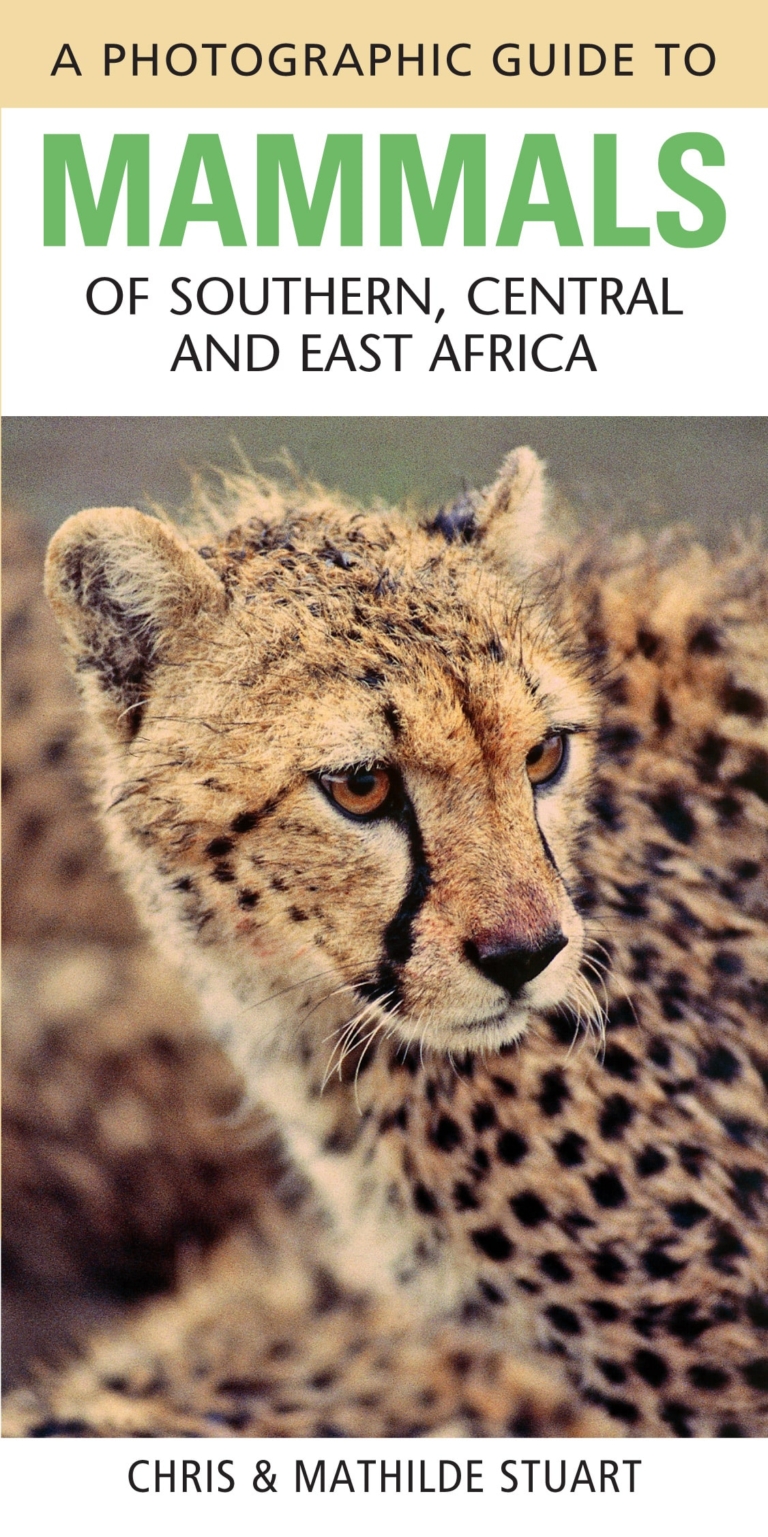
Mammals of Sthn/Cntrl & East Africa: A Photographic Guide
R280.00More than 1 000 mammal species occur in Africa south of the Sahara Desert. These creatures vary in size from the massive elephant to the tiniest bats, shrews and mice. A Photographic Guide to Mammals of Southern, Central and East Africa was compiled with a view to easing identification of many of the larger and more conspicuous mammals in the region, as well as some of the smaller and more unusual ones. This compact, easy-to-use guide features: 152 of the region’s mammal species; key identification features showing how to differentiate between similar species; distribution maps and a list of major parks and reserves indicating where species are likely to be seen; quick reference key on inside cover; thumbnail silhouettes of each family group for quick identification.
This new revised edition is an ideal pocket-sized travelling companion for nature lovers and visitors to nature reserves and wildlife areas.
-

Nature Now Mammals of Kruger
R290.00This easy-to-read, fact-filled guide features over 80 mammal species found in the Kruger National Park, one of Africa’s most popular game-viewing destinations.
Packed with stunning photographs and engaging text, it provides brief pointers for accurate identification and highlights the most interesting facts about each species. Did you know that leopards are more dangerous than lions, elephants use their trunks to snorkel, giraffes give birth standing up, and no two zebras have the same stripe pattern?Aimed at nature enthusiasts of all ages, this compact guide:
– Covers the Park’s rich diversity of mammals – from the world-famous Big Five to the miniature mongooses seen dashing across the road
– Unpacks each animal’s most interesting characteristics and behaviours
– Notes the record-breakers: who has the longest horns, strongest jaws or greatest appetite?
– Provides game-watching tips for successful safaris, as well as ‘Best viewing’ notes for each species
– Features striking photographs of Kruger’s wildlife in action -

My First Book of Southern Africa Mammals
R180.00Mammals come in a huge variety of shapes and sizes, from tiny bats and mice to massive elephants and whales. My First Book of Southern African Mammals introduces a cross-section of southern African mammals – 58 animals illustrated in full colour, along with simple text and visual clues as to the animals’ size, their tracks and what they eat. Written by a mammal specialist, My first book of Southern African Mammals will appeal to young readers, as well as to learners of all ages who wish to improve their knowledge of other languages.
All text appears in English, Afrikaans, Xhosa and Zulu.
-

Marine Mammals: A guide to the whales, dolphins and seals of Southern Africa and the Southern Ocean
R210.00This easy-to-use identification guide to the whales, dolphins and seals found in Southern African waters and the Southern Ocean is compact yet comprehensive. Close to 50 species occur in the region: from the demonstrative Humpback Whale and Dusky Dolphin to the striking Leopard Seal and massive Blue Whale.
-

Stuarts’ Field Guide to the Larger Mammals of Africa
R610.00Of the more than 5,500 mammals species worldwide, at least 1,200 occur in Africa. Stuarts’ Field Guide to the Larger Mammals of Africa concentrates on the more visible and easily distinguished larger species, as well as some of the more frequently seen smaller mammals.This new edition has been extensively revised, expanded and redesigned and includes:- the most recent research and taxonomy
- revised distribution maps and many new images
- colour-coded grouping of orders
- size icons
- detailed descriptions of each species, offering insight into key identification characters, typical behaviour, preferred habitat, food choice, reproduction and longevity
- whales and dolphins now featured too
-

Cuddle Me, Kill Me
R230.00Canned lion hunting sprang to the world’s attention with the 2015 launch of the documentary, Blood Lions. This movie blew the cover off a brutal industry that has burgeoned in the last decade or so, operating largely under the radar of public concern.In Cuddle Me Kill Me, veteran wildlife campaigner Richard Peirce reveals horrifying facts about the industry. He tells- The true story of two male lions rescued from breeding farms
- The exploitation and misery of these apex predators when they are bred in captivity
- How young cubs are removed from their mothers mere hours after birth
- How they are first used for petting by an adoring (and paying) public
- Their subsequent use for ‘walking with lions’ tourism
- And how, in the final stage of exploitation, they are served up in fenced enclosure for execution by canned hunters – or simply shot by breeders for the value of their carcass, a prized product in the East.
Well researched by Peirce with the help of an undercover agent, and illustrated with photos taken along the way, this is a disturbing and passionate plea to end commercial captive lion breeding and the re-purposing of wildlife to cater for human greed. -

Understanding Elephants
R210.00Elephants are arguably Africa’s most charismatic animals, and among the biggest drawcards to our game reserves. While the burgeoning game-park industry may be increasing our access to these magnificent creatures, rising human-elephant encounters are an inevitable outcome – sometimes, sadly, fatal. Such encounters could likely have been avoided had those involved understood elephant behaviour, and particularly how these intelligent animals interface with traffic through their territory. This book describes elephant family life, from rearing of infants to establishing dominance within a herd; it unpacks regular elephant behaviour, the matriarchal system, the particular dangers of males in musth, and many other aspects of their lives. Most of all, it provides guidelines for ensuring safe and enjoyable encounters with these majestic animals. This is an essential guide for those planning visits to reserves: aside from the interest factor, being able to read the tell-tale signs may just save lives.
Be the first to review “Quick ID Guide to the Carnivores of Africa”
You must be logged in to post a review.