


Also available in e-book format:

Amazon Kindle

Google Books

Snapplify Reader
Geological Wonders of Namibia
TAKE A CLOSER LOOK
| Author: | Anne-Marie and Michel Detay |
|---|
R400.00
This stunning depiction of geology in Namibia combines searingly beautiful photography with clear explanations of how the varied landscapes formed.
Arranged chronologically (starting 13.8 billion years ago), the chapters each deal with a particular event or process that has resulted in the formation under discussion. These include the early beginnings of the Earth, meteorites, canyons and limestone caves, vast desert landscapes, moonscapes and bizarrely-shaped rocks, and Namibia’s astonishing underwater lakes and reservoirs.
Picture-driven, with accessible text, this book features all the highlights of Namibian landscapes and landforms. A treat for travellers real and virtual – those on the road as well as those in armchairs.
In stock
Customer Reviews
There are no reviews yet.
Related products
-
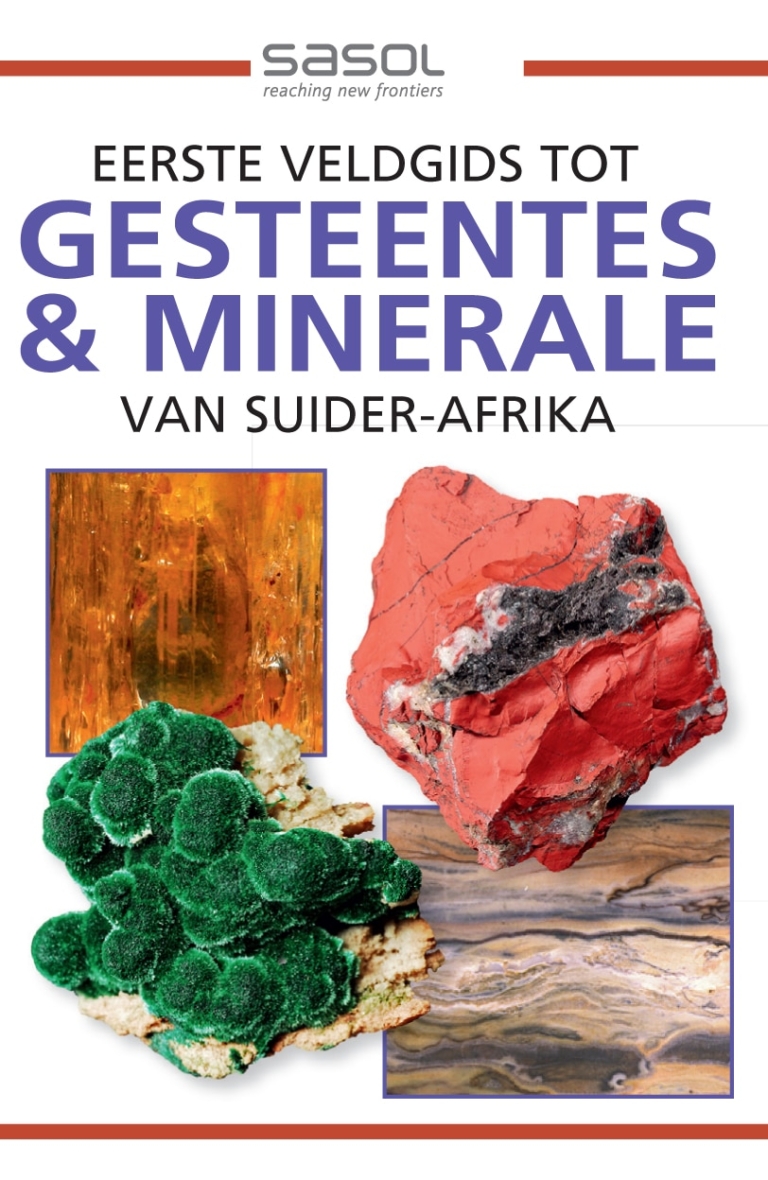
Eerste veldgids tot Gesteentes & Minerale van Suider-Afrika
R130.00Eerste Veldgids tot Gesteentes & Minerale, die jongste toevoeging tot die gewilde Struik Nature-reeks, stel die belangrikste en interessantste gesteentes en minerale van ons geologies opwindende streek bekend.
Die gids beskryf 30 minerale en 18 belangrike soorte gesteentes, met die klem op dié wat die bekendste of algemeenste is. ’n Kort inleiding gee ’n oorsig van die onderwerp; kleurryke foto’s van die gesteentes en minerale sowel as van die besondere terrein waarin hulle voorkom, vul die helder teks deurgaans aan en help met uitkenning in die veld.
Eerste Veldgids tot Gesteentes & Minerale is ’n nuttige hulpmiddel vir die aspirant-geoloog, weetgierige amateur, of enigeen met ’n ontluikende belangstelling in Suider-Afrika se unieke geologiese erfenis.
Also available in English
-

Makgadikgadi Pans
Tucked away between the perennial waterways of the Okavango Delta and the arid Kalahari to the south are the legendary Makgadikgadi Pans. Some 12,000 square kilometres in extent, these salt flats, consisting of two large salt pans, Sowa and Ntwetwe, and a myriad smaller ones, are Botswana’s best-kept secret and one of its fastest-growing tourist attractions.
In this first guidebook on the pans and their environs, Makgadikgadi Pans – A Traveller’s Guide to Botswana’s Salt Flats explores this fascinating region, bringing to life its geology, wildlife, vegetation, climate, local economy and key destinations: Nata Bird Sanctuary, Lekhubu Island, the Boteti River, Mosu Escarpment, Makgadikgadi and Nxai Pan National Park, and the towns and villages that fringe the pans. Full-colour maps and lively photographs support the text.
Additional features include advice on where to stay; sights to see and how to get there; activities on offer throughout the year; contact details; and a travel advisory. Informative, practical and user-friendly, Makgadikgadi Pans is an inspiring guide for all visitors to Botswana and the alluring salt sea of the Makgadikgadi.
R300.00R210.00 -

Field Guide to Renosterveld of the Overberg
Part of the Fynbos biome, Renosterveld is one of the world’s most threatened vegetation types, with just 5% of its original extent remaining. Focusing specifically on the Renosterveld of the Overberg region in the Western Cape, this field guide is the first of its kind to cover this highly endangered ecosystem, characterised by nutrient-rich soil which has been exploited for agriculture.
An in-depth introduction sets the scene, defining what Renosterveld is and giving some historical background to the ecology of the area.
The plants section follows, featuring over 980 plant species from the common and ‘showy’ to the weird, obscure and often-overlooked.
A shorter section of 140 animal species showcases the diversity of creatures found here despite severe habitat loss and fragmentation.
Additional features include a glossary with supporting illustrations, guidelines for landowners and farmers, and a comprehensive index.
Field Guide to Renosterveld of the Overberg promises to be an enduring record of this unique and severely threatened ecosystem. It will be a vital addition to any nature lover’s bookshelf.R550.00R385.00 -

Ardmore: We are because of others HB
R720.00Giraffe stretch out their necks and bat-eared foxes curl their tails to make handles for jugs, vases and tureens. Inquisitive monkeys peer over the edge of a planter, teasing the leopards below them. Magical creatures wear cloaks of flowers, spots and stripes; a turbanned Zulu figure sits astride a hippo…
Colourful, imaginative, vibrant, delicate and dramatic – these are just some of the hallmarks of the artworks that have garnered international accolades for Ardmore Ceramic Art in rural KwaZulu-Natal. It is here, in South Africa’s most successful ceramics studio set in the verdant Midlands, that exquisitely handcrafted and highly detailed figurative works and functional ware are created by more than fifty artists who draw on Zulu traditions and folklore, history, the natural world, and their own lives for inspiration.
In turn, it is the lives of the sculptors and painters of Ardmore that fire the vision of the woman behind it all: Fée Halsted is an artist whose love of teaching and determination to fight poverty and AIDS have set others on the path of creative self-discovery and ultimately worldwide acclaim.
Ardmore – We Are Because of Others tells the extraordinary story of this famous studio – from its humble beginnings in a poverty-stricken corner of South Africa to its fame as a producer of exceptional and irresistible objets d’art prized by collectors, galleries and museums throughout the world. It is also the story of the indomitable Fée Halsted who is the driving force behind the enterprise, and the artists whose inventive spirit and fearless creativity are at the heart of Ardmore.
-

Minerals and Gemstones of Southern Africa
R580.00Southern Africa is home to many important and interesting minerals, as well as a wide array of beautiful gemstones – including diamonds from South Africa, emeralds from Zimbabwe and tourmalines from Namibia. Minerals & Gemstones of Southern Africa is not only the most up-to-date publication on the minerals of Botswana, Eswatini, Lesotho, Namibia, South Africa, southern Mozambique and Zimbabwe, but also the first to feature the region’s gemstones. Mineral species descriptions detail their gemological properties, history, occurrence and uses, and are illustrated with striking fullcolour photographs. The book includes:
– An introduction to the geology of the region
– Detailed descriptions of minerals, including their gemological properties, history, occurrence and uses
– Multiple full-colour photographs of the species -

Secret Namibia HB
Namibia is a vast, ancient place, its legacy and endless expanse of desert sand fringed by coastal plain and rugged mountain terrain, and dotted with geological wonders that remain the country’s most impressive features. Intrigued by the scenic splendour and entranced by the everchanging landscape that emerges beyond every corner, every towering dune and every mountaintop, Lily and Marcel Jouve travelled the length and breadth of the country to discover the varying facets of the land and its geology. In Secret Namibia, they share their exploration of the terrain, and reveal its secrets – from the geomorphological make-up to the best routes to follow and the finest places to stay. From the famed Spitzkoppe to Kaokoland, Etosha National Park to the Fish River Canyon, Sossusvlei to Sandwich Harbour, this is Namibia through their lens, their celebration of its rock and sand, valley, canyon and plain – and the unique flora and fauna found in these landscapes. Secret Namibia is an invitation to discover, through word and image, the intriguing natural features of this wild country.
R420.00R294.00 -

Fishes Okavango Delta & Chobe River
R270.00A comprehensive guide to the freshwater fishes of the Okavango Delta and Chobe River, this book offers background information on the diverse aquatic habitats of the region and on fish feeding, breeding and survival strategies. It also provides useful hints for anglers. The species entries describe each fish in detail, with key ID points and information on habits and occurrence. Each account is accompanied by a colour illustration or photograph. The book concludes with information on how best to utilise and conserve the fishes of the delta system and Chobe River.
This is the only such guide to fishes of the region and will be invaluable to local and visiting fishermen, naturalists, conservationists, as well as the many tourists who visit this spectacular African paradise.
-

Plants of the Baviaanskloof
Tucked away in the southwestern corner of the Eastern Cape lies a narrow valley, flanked by the Baviaanskloof and Kouga mountain ranges. Named after the chacma baboons that long ago made this 200-km-long kloof their home, the Baviaanskloof is part of the Cape Floral Region World Heritage Site. It is a meeting point of several different ecosystems, with almost all of South Africa’s eight biomes represented, making for an exceptional diversity of species, including many endemics.
Plants of the Baviaanskloof describes well over 1,000 plant species. It includes:
– Succinct descriptions of each plant species with full-colour photographs
– Brief family and genus descriptions, and species counts for the area
– An introduction covering the geology, climate and vegetation types of the regionCompiled over two decades, Plants of the Baviaanskloof is sure to become an enduring record of the diversity of plant life found here. The only botanical guide for this area, it is a must-have for botanists, gardeners, road-trippers, hikers, travellers and all who have a deep interest in plants.
R560.00R392.00
Be the first to review “Geological Wonders of Namibia”
You must be logged in to post a review.